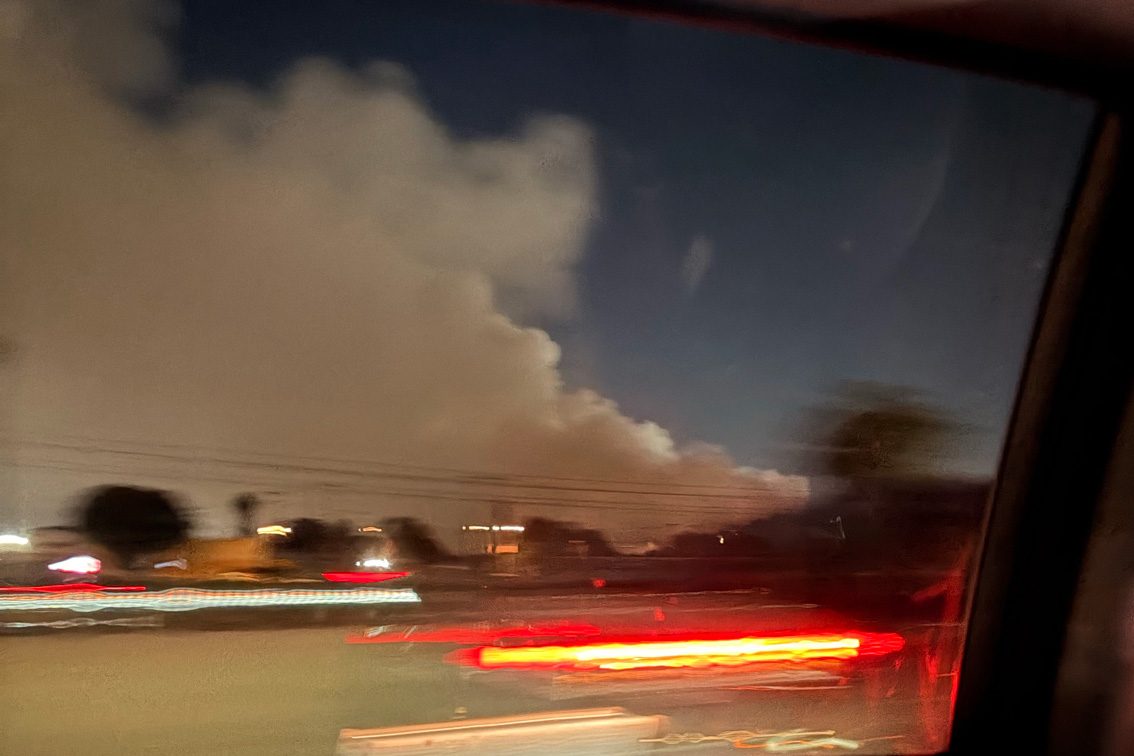
On June 17, a fire broke out at a cold storage warehouse in Boyle Heights. It burned for eight days, sending smoke and toxic fumes across the neighborhood and beyond, triggering shelter-in-place orders, school closures, and health warnings that are still unfolding. As of June 24, the fire is out, but the impact is ongoing.
We have received $2.05 million in donations so far to support Boyle Heights residents through what comes next — the health concerns, the lost wages, the stress of not knowing what you breathed in or what it will cost you.
We have granted out $1.5 million to more than 20 community partners to support immediate relief for impacted residents, and will be making additional grants to support ongoing and evolving community needs.
Below you’ll find the organizations we’re funding, the resources they offer, and how to reach them.
If you need help, they’re ready.
| Community Organization | How They're Helping | Contact |
|---|---|---|
| Adventist Health White Memorial | Medical assistance, Food distribution, Household supplies, Mental health support, Air Purifiers/PPE | Click here |
| AltaMed | Medical assistance, Mental health support, Air Purifiers/PPE | Click here |
| Barrio Action Youth & Family Center | Direct Cash Assistance through Angeleno Cards | Click here |
| Centro de Ayuda | Direct Cash Assistance through Angeleno Cards | Click here |
| Clinica Romero | Medical assistance, Mental health support, Air Purifiers/PPE | Click here |
| East LA Community Corporation | Air Purifiers/PPE | Click here |
| East Yard Communities for Environmental Justice | Advocacy outreach, Direct relief | Click here |
| Esperanza Community Housing Corporation | Household supplies, Mental health support, Air Purifiers/PPE | Click here |
| Housing Equity & Advocacy Resource Team | Food distribution, Medical assistance, Temporary shelter, Mental health support, Financial assistance | Click here |
| Inclusive Action for the City | Financial assistance | Click here |
| 211LA | Food distribution, Temporary shelter, Household supplies, Financial assistance, Air Purifiers/PPE | Click here |
| Inner City Struggle | Advocacy outreach, Health screenings | Click here |
| In Partnership with the City of Los Angeles - Air Purifiers | Air Purifiers | Click here |
| LAUSD Education Foundation | Air Purifiers/PPE, Financial assistance, Household supplies | Click here |
| Los Angeles Regional Food Bank | Food distribution, Air Purifiers/PPE | Click here |
| Meztli Projects | Air Purifiers/PPE, Mental health support | Click here |
| New Economics for Women – NEW Business Source Center | Direct Cash Assistance for small business owners | Click here |
| Proyecto Pastoral | Food distribution, Household supplies, Financial assistance, Air Purifiers/PPE | Click here |
| St. John's Community Health | Medical assistance, Mental health support, Air Purifiers/PPE | Click here |
| The Salvation Army Southern California Division | Food distribution, Household supplies, Financial assistance, Air Purifiers/PPE | Click here |
| Via Care Community Health Center | Medical assistance, Mental health support, Air Purifiers/PPE | Click here |
| YMCA of Metropolitan Los Angeles | Food distribution, Household supplies, Mental health support, Air Purifiers/PPE, Financial assistance | Click here |
This response is made possible by the way the California Community Foundation has worked for over a century. When this fire broke out, we didn’t have to start from scratch — we already have relationships with organizations trusted by Boyle Heights residents, and we are able to get funding to them fast.
That’s what we do: connect donors who want to help with communities that need it, quickly and transparently.
In addition, the City of Los Angeles is making resources and information available to support residents throughout the response and recovery process:
- Click here for the comprehensive Incident Response page, which includes public health guidance and county updates.
- Click here to learn more about air quality conditions and smoke advisories.
- For access to the masks, air purifiers, and other resources the City of Los Angeles is providing you can call 3-1-1, download the MyLA311 app, or click here to be taken to the my311LA website.
- If you are a resident of Council District 14, click here for additional resources.
- For emergencies, dial 9-1-1.
If you’d like to learn more about the model behind the California Community Foundation’s funding, or support future emergency responses like this one, read on.
OUR VISION: A GOOD LIFE FOR ALL IN LOS ANGELES COUNTY
The CCF Impact Fund brings to life our strategic framework vision shaped by 2,000+ community voices across all 88 cities: a Los Angeles County where everyone — regardless of zip code, immigration status, or income — has access to stable housing, quality healthcare, economic opportunity, and the dignity of a good life. This is our North Star. The Impact Fund is how we get there — meeting urgent needs today while building the systems change that creates lasting access to opportunity for all.
The nonprofits we partner with — organizations with proven track records and deep community trust — know exactly what families need today to survive and what communities need tomorrow to thrive. That’s the power of the Impact Fund: urgent response grounded in long-term vision.
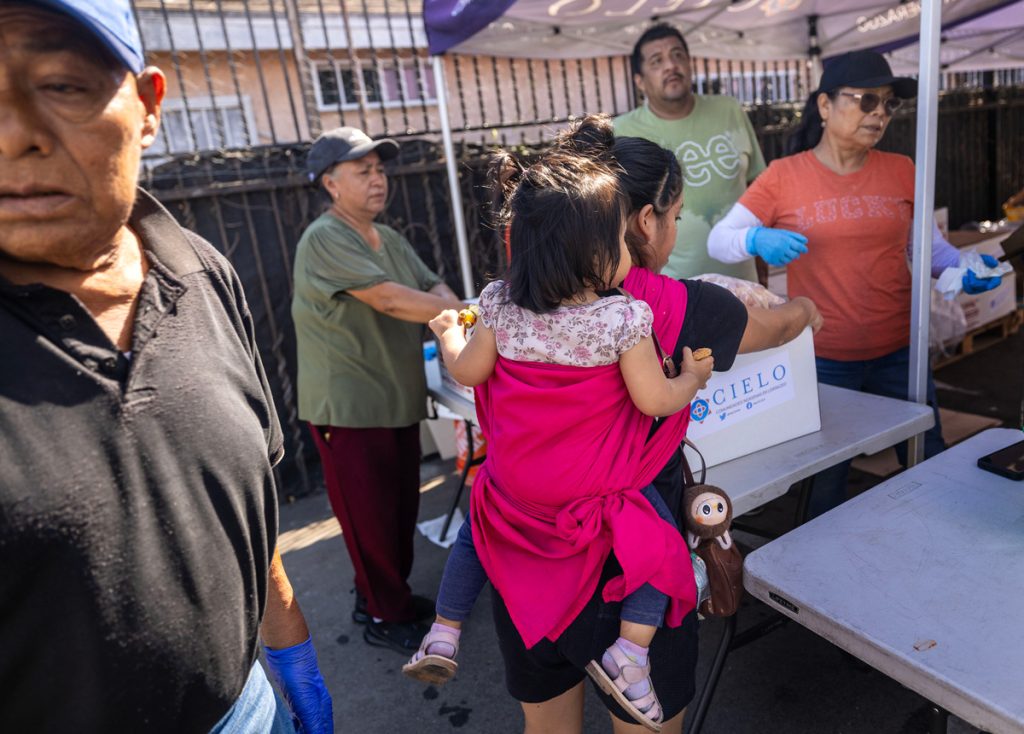
THE IMPACT FUND: WHERE URGENCY MEETS STRATEGY
The CCF Impact Fund is built on 110 years of community relationships and guided by our strategic framework priorities. We deploy flexible resources within weeks — not months — because our trusted nonprofit partners tell us what’s urgent. Your gift advances five interconnected priorities that together create pathways to a good life:
Meeting Basic Needs – Emergency food, stable housing, healthcare access (urgent relief + long-term stability)
Building Economic Opportunity – Education, living-wage jobs, financial security (today’s support + tomorrow’s prosperity)
Creating Safe, Resilient Communities – Disaster response, climate adaptation, neighborhood safety
Ensuring Communities Have a Voice – Civic engagement, advocacy, organizing (power to shape their future)
Supporting Healing & Renewal – Community restoration, wellness, connection
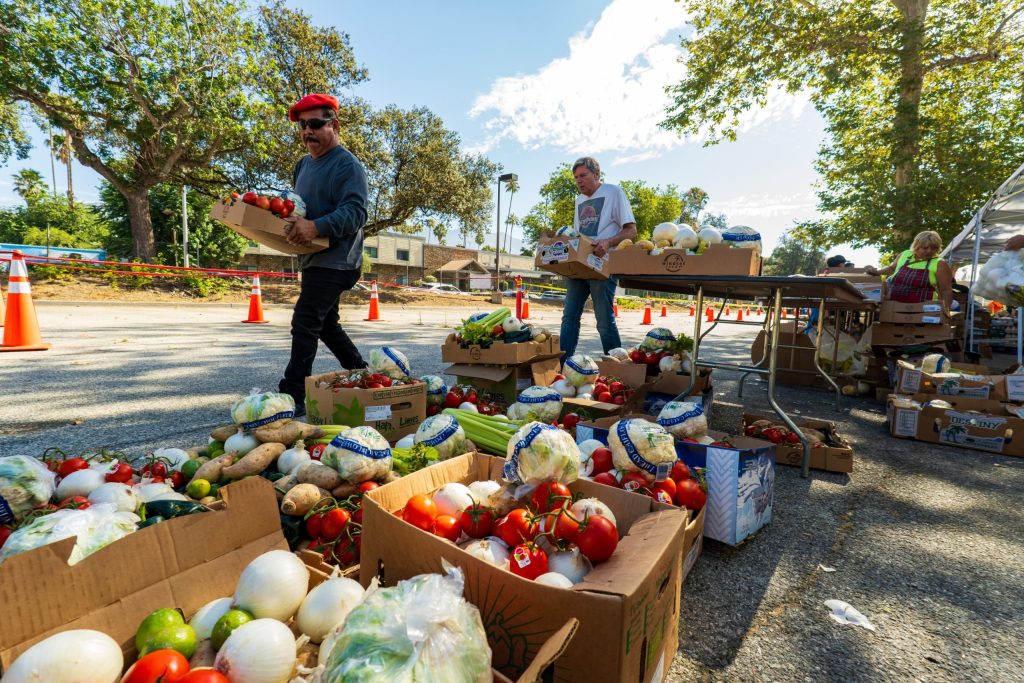
WHY CCF: SPEED, RELATIONSHIPS, PROVEN RESULTS
For 110 years, CCF has been there when Los Angeles needs us most—from the Great Depression through earthquakes, wildfires, and pandemics. We’ve built relationships across all 88 cities with nonprofit organizations that have proven impact and deep community trust. Our 2,000+ partners provide real-time intelligence about urgent needs and emerging opportunities.
When the 2025 wildfires struck, we immediately activated our network: within days, we were coordinating with frontline nonprofits to understand gaps; within weeks, we mobilized over $100 million to get resources to affected families by funding nonprofits working on the ground — emergency shelter, food, clothing, mental health support. We didn’t wait for lengthy proposals. We listened to trusted partners who knew exactly what their neighbors needed and deployed funds fast.
This same approach powers the LA Neighbors Support Fund, which pivots as community needs evolve, and our collaborative funds that have channeled millions to urgent priorities. We understand what families need now because communities tell us directly. And we know how to build toward the good life they deserve because they helped us create the strategic framework roadmap.
THREE WAYS TO INVEST IN
URGENT ACTION + LASTING CHANGE
- Maximum Impact: Trust CCF to deploy where need is most urgent today while advancing long-term systems change
- Focused Support: Direct your gift to one priority area (e.g., Meeting Basic Needs for food security + housing or Ensuring Communities have a voice )
- Specific Organizations: Continue supporting specific nonprofits through your donor-advised fund
FREQUENTLY ASKED QUESTIONS
How quickly will my gift be deployed?
We move quickly, within weeks for urgent needs, with an eye toward lasting impact. When our nonprofit partners identify immediate crises like food insecurity or displacement, we respond quickly. Our trust-based relationships eliminate lengthy applications. Simultaneously, we invest in the organizing, advocacy, and systems change that prevents future crises.
How do you balance urgent response with long-term vision?
That’s the power of flexible funding guided by strategy. We listen to 2,000+ nonprofit partners working directly with communities every day—they tell us what’s urgent now and what systemic changes are needed. The Impact Fund can support emergency food distribution today AND the policy advocacy for living wages tomorrow. For example, in crisis years, 50% might flow to immediate Basic Needs. In stable years, we balance across all five strategic priorities building toward a good life for all.
Will I see the impact of my gift?
Yes! Reports will show you both immediate relief and progress toward systemic change—families housed, children fed, policies shifted, organizing victories won. We’ll share impact stories from our nonprofit partners demonstrating how your gift created urgent help today and built pathways to a good life for tomorrow.
How is this different from other CCF funds?
The Impact Fund uniquely combines speed with strategy. It’s built for rapid deployment (unlike slower grant cycles) while remaining anchored in our community-informed strategic framework (unlike reactive crisis funds). It complements our Future of L.A. Fund (endowed for unknowable challenges) by addressing known urgent needs today. ‘Impact Now + Legacy Forever.’
Can I give from my donor-advised fund?
Absolutely! Whether you have a donor-advised fund with CCF or another provider, you can recommend a grant to the Impact Fund. It’s fast, easy, and tax-efficient.
Why does flexible, unrestricted funding matter?
Crises don’t fit into neat categories. A family displaced by fire needs emergency shelter today, housing navigation this week, and policy advocacy for affordable housing next month. Flexible funding lets trusted community organizations address all three without bureaucratic barriers. It’s how we move at the speed of need while building toward the speed of change.
ANGELENOS: THIS IS OUR MOMENT. THIS IS HOW WE MEET IT.
Families need help now. Communities need systems change tomorrow. The CCF Impact Fund delivers both. Your gift provides emergency relief when crisis strikes and invests in the organizing, advocacy, and solutions that create lasting access to a good life. When a child goes to school hungry, we respond today. When policies keep families trapped in poverty, we fight tomorrow. Together, we’re building a Los Angeles County where zip code doesn’t determine destiny—where every person has the opportunity to thrive. Urgent action meets enduring vision. This is how we live our mission.

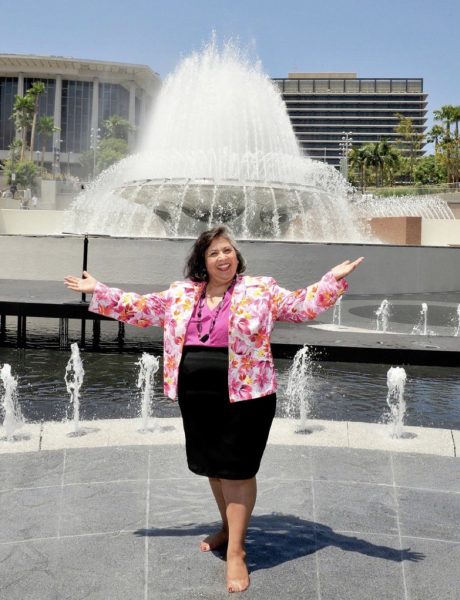
Gloria Molina was an unparalleled woman of many talents and titles – a political trailblazer, Chicana activist, masterful policy maker, relentless political watchdog, dynamic artist, and a true Chingona. She was a passionate woman who dedicated her entire life and heart to Angelinos, particularly those on the Eastside.
Gloria’s political career was a series of inspirational firsts – the first Latina Assembly member in California, the first Latina on the Los Angeles City Council, and the first Latina on the Los Angeles County Board of Supervisors, where she represented the First District for over 20 years. Through this career of firsts, Gloria paved the way for many Latino political representatives who follow in her footsteps. Gloria was publicly known for keeping bureaucrats, developers and colleagues accountable, responsive and honest. She fought tirelessly and consistently for her constituents and community. Through her dedication to culture and the arts, we have her to thank for the development of LA Plaza de Cultura y Artes, a community hub where people gather to celebrate Latino culture and history; The Wellness Center at the Historic General Hospital that offers free programs and services focusing on improving the health and well-being of local residents; Gloria Molina Grand Park, a free and accessible community green space in Downtown LA (recently named in her honor in 2023); not to mention dozens of libraries, community centers and so much more. Click here to learn more about Gloria’s career.
After retirement from the Board of Supervisors in 2014, she committed her time to philanthropic efforts, including joining the Board of Directors of the California Community Foundation in which she served as Chair of the Board from 2021-2023. She supported many arts organizations in East Los Angeles, from local community theater, Casa 0101 to Self Help Graphics and Arts, an organization that fosters the creation and advancement of new art works by Chicana/o and Latino artists. She raised the bar for cultural institutions in Los Angeles, ensuring that LA Plaza expand its footprint and storytelling platform, ideating LA Cocina, a space dedicated to teaching and celebrating Mexican cuisine. Although we lost Gloria to cancer on May 14, 2023, her dedication and legacy to her community was nowhere near complete.
The Gloria Molina Legacy Fund will aim to keep her philanthropic and mission-driven passions alive, supporting causes that were not only important to her, but also important to her beloved family. Your generous support of this fund will provide grant opportunities for nonprofit organizations supporting children, families, arts education and equal opportunities for Angelinos and beyond.
To make a secure, tax-deductible donation online, click on the button below. You may also send checks payable to the California Community Foundation, noting that the donation is for Gloria Molina Legacy Fund in the memo line. Checks should be mailed to:
California Community Foundation
717 W Temple St.
Los Angeles, CA 90012

R&S Kayne philanthropy catalyzes positive change through strategic investments in education, economic mobility, arts, and other meaningful initiatives. The R&S Kayne Fund is one way peer funders can join us and co-invest in people and collaborate with communities to empower positive change.
Through this website you can donate to the R&S Kayne Fund in support of initiatives in Aotearoa New Zealand or locally in Los Angeles. This includes Mangawhai Education Trust, Tara Iti Whānau Charitable Trust, Acorn Neurodiversity, and Graeme Dingle Foundation. For any aligned or pooled funding related to LA-based programs, please email hello [@] kaynefoundation [.] org to discuss further.
You may also send checks payable to the California Community Foundation, noting that the donation is for the R&S Kayne Fund. Please contact donorrelations [@] calfund [.] org to process a donation via wire or stock transfer.
Checks should be mailed to:
California Community Foundation
717 W Temple St.
Los Angeles, CA 90012
For any questions about processing your contribution, please contact the Donor Relations team by emailing donorrelations [@] calfund [.] org.
Contributions to the California Community Foundation represent irrevocable gifts subject to the legal and fiduciary control of the foundation’s board of directors. This charge will appear on your credit card statement as a payment to “Calif Comm Fdn – CCF”. In addition, California Community Foundation incurs a third-party administrative fee of 2.7 percent for credit card contributions. The foundation will charge the fee directly to the individual fund.

The Webb Family Fund for Parity was created to honor the enduring legacies of Dr. Geraldine “Rene” Webb and Dr. Reginald “Reggie” Webb. Both Rene and Reggie epitomize servant-leadership, tirelessly advocating for the belief “we all do better when we ALL do better.” Their commitment to this principle lives on through the pursuit of PARITY—ensuring fairness and equity for all.
The Webb Family Fund for Parity continues Rene and Reggie’s life’s work by supporting organizations and initiatives that promote equitable outcomes in Southern California and beyond. With your generous support, we can further Rene and Reggie’s vision, fostering a world where their values and impact continue to flourish.
Overview
The Department of Public Health (DPH), Office of Violence Prevention (OVP) has contracted with the California Community Foundation (CCF) to implement an American Rescue Plan Act (ARPA) funded project. The ARPA Trauma Prevention Partnerships’ goal is to prevent violent incidents, implement crisis response when violent incidents occur, address factors contributing to gun and gang violence, increase access to trauma informed care and healing centered services and supports; and invest in upstream youth programs, youth engagement, and youth leadership opportunities across Los Angeles County. The project will respond to communities that have been disproportionately impacted by the COVID-19 pandemic, which are also the same communities that have seen increases in violence that occurred during the pandemic.
The project will provide $22.7 million in direct funding to an estimated 45-60 community-based organizations to build on current strategies implemented by OVP and align with priorities that were defined in the OVP Strategic Plan based on input from community and County stakeholders, including:
- Street Outreach – intervention work to respond to violent incidents to calm tensions, mediate conflict, and link victims to services. Promote peace among neighborhoods and provide safe passages for young people.
- Hospital Violence Intervention Program (HVIP) – CBOs to support the capacity of hospital sites to support victims of violence.
- Crisis Response – a mix of evidence-based, emerging, and promising practices that promote trauma-informed, resilience-oriented practice, and culturally-responsive programming to the individuals and families directly affected by violent incidents.
- Community Hardship – a community fund that will provide resources to address immediate client needs, such as: clothing, rent, food, utilities, or school supplies. This is available to all current TPP awardees only.
- Peer-to-Peer Learning — training to build capacity for a multi-disciplinary cohort of peer specialists.
- School Based Safety – a pilot program to work on systems change in schools to holistically address violence and promote a positive climate by providing community organizations that have a partnership with schools or school districts with technical assistance and grant support.
- Youth Programs – a mix of evidence-based, emerging, and promising practices that promote positive youth development, and youth leadership and organizing efforts around anti-violence and peace promotion.
- Trauma-Informed Care/Community Healing – trauma-informed care and healing services that support survivor-centered individual and community mental health and wellbeing.
While additional community engagement will be conducted to further inform the project design, this project currently supports the above evidence-based Community Violence Intervention (CVI) programs, including capacity building trainings for peer specialists engaged in this work. Target populations are communities, families, and youth. Ideal grantee partners will provide intervention services, crisis response and healing services after an incident of violence occurs, programs for youth mentoring, engagement, and/or leadership in peace efforts.
Strategies will be implemented in communities in Los Angeles County with the highest rates of ongoing violence and violence exacerbated by the COVID-19 pandemic, and support healing for non-geographically concentrated populations impacted by multiple forms of violence. These efforts will inform policy, practice and systems change to build sustainable infrastructure for community-driven solutions to violence and healing that support communities and individuals who are most impacted by incidents of violence.
This project is being implemented with an equity framework. Due to historical oppression, racism and discrimination, people of color are often not provided the same opportunities and resources needed for individuals, including youth and families, to thrive. This investment provides an opportunity to support communities and individuals disproportionately impacted by violence tied to oppression and racism. Ideal grantee partners will demonstrate how their work is inclusive of an equity framework and survivor centered approaches to advance peace and healing. It is our intention, to the best of our ability, to ensure that as many community members and stakeholders as possible are informed of the ARPA-TPP opportunities for funding, and to support the ability of all agencies, including small, grassroots organizations to apply and receive funding.
CCF is pleased to share the following funding opportunities for Los Angeles County based community-based organizations.
As outlined within each RFP opportunity, TPP will provide the following attachments for review.
- Sample copy of the Lower Tiered Recipient Agreement
- Line-Item Budget Templates (found below next to each strategy).
- County Certification of No Conflict-of-Interest Sample Form.
- Subrecipient Profile Form.
- SAM.gov Entity Registration Checklist
- SAM.gov “Signing up vs. Registering”
- RFP Checklist
Past Opportunities:
Street Outreach – Funding is being awarded for intervention work to respond to violent incidents to calm tensions, mediate conflict, and link victims to services. This will also include the promotion of peace among neighborhoods and provide safe passages for young people.
View/Download RFP | Apply | TPP RFP Street Outreach Line-Item Budget
Hospital Violence Intervention Program – Funding awards will allow CBOs the ability to support the capacity of hospital sites to support victims of violence.
View/Download RFP | Apply | TPP RFP HVIP Line-Item Budget
Peer-to-Peer Learning Academy – Funding is being awarded to allow CBOs the ability to provide training to build capacity for a multi‐disciplinary cohort of peer specialists. Proposal Applications are due on August 4, 2023, at 5pm.
RFP| Apply | TPP RFP P2P Line-Item Budget |
Risk Assessment
Current Opportunities:
Youth Programs – Contracts and mini grants will be funded youth-serving organizations that provide a mix of evidence‐based, emerging, and promising practices that promote positive youth development, and youth leadership and organizing efforts around anti‐violence and peace promotion.
RFP | Apply | Application Line-Item Budget Template | Risk Assessment
School Based Safety – Contracts are being awarded to a pilot new program to work on systems change in schools to holistically address violence and promote a positive climate by providing community organizations that have a partnership with schools or school districts with technical assistance and grant support.
RFP | Apply | Application Line-Item Budget Template | Risk Assessment
Trauma Informed Care – Contracts will be awarded to provide trauma‐informed care and healing services that support survivor‐centered individual and community mental health and wellbeing.
RFP | Apply | Application Line-Item Budget Template | Risk Assessment
Crisis Response – Allowance of the expansion of a crisis response pilot program which is a mix of evidence‐based, emerging, and promising practices that promote trauma‐informed, resilience‐oriented practice, and culturally‐responsive programming to the individuals and families directly affected by violent incidents.
RFP | Apply | Application Line-Item Budget Template | Risk Assessment
Eligible Organizations
All applicants, both private and not‐for‐profit organizations, must have an active sam.gov account, and not be suspended or debarred from receiving federal funding. CCF will not award contracts to or consent to subcontractors with bidders, contractors, or affiliates that appear on any disqualified, suspended, or debarment list issued by any agency of the federal, state, or local government.
To sign‐up and activate your sam.gov account, please go to: https://sam.gov/content/entity‐ registration.
The website provides written instructions as well as a video that provides step‐by‐ step directions. Signing up is free of charge. Eligible applicants must also comply with all Conflict‐of‐Interest requirements. The Conflict-of-Interest forms must be fully completed by all parties identified in the proposal.
Organizations must be located in Los Angeles County.
- Street Outreach – Released March 24, 2023. Deadline May 2, 2023
- Hospital Violence Intervention Program – Released March 24, 2023. Deadline May 2, 2023
- Peer-to-Peer Academy – Released July 19, 2023. Deadline August 4, 2023.
- Youth Programs – Released August 31, 2023. Deadline September 29, 2023.
- Trauma Informed Care – Released August 31, 2023. Deadline September 29, 2023.
- Crisis Response – Released August 31, 2023. Deadline September 29, 2023.
- School Based Safey – Released August 31, 2023. Deadline September 29, 2023.
In order to promote fairness in the process and to abide by federal compliance guidelines, we ask that potential applicants submit all questions regarding the grant opportunities, processes, etc. in writing to CCF-TPP [@] calfund [.] org with the subject line “XXXXX XXXX RFP – Question(s).” Please do not call. All responses to questions submitted before the RFP Q&A deadline will be answered and posted on our website.
All proposals must be submitted via Survey Monkey Apply: https://calfund.smapply.org/ no later than the date and time outlined within each specific RFP opportunity. Please note that each date may be different. Applications will not be accepted via facsimile or paper submission.
For more information about CCF’s Trauma Prevention Partnerships program, contracting or grant opportunities, please contact CCF-TPP@calfund.org
Below you will find the answers to the most commonly asked questions about the RFP Strategies. Feel free to check out the specific program strategy’s RFP for related information as it relates to apply for these funding opportunities.
Youth Programs RFP:
- How will grant decisions be made?
Three (3) CCF staff, in partnership with two (2) DPH OVP staff will form a committee to review applications and make final grant recommendations. - What is the anticipated size and timeline for the grants?
For this funding opportunity, the grant period will be no less than 12 months, ending on December 31, 2024. There will be up to 15 awards, ranging from $200k to 300k, totaling $3,000,000. - If funded, how may the grant funds be used?
Grants must support direct service projects and therefore, funds should support programmatic costs. For indirect costs, if you have a current Negotiated Indirect Cost Rate Agreement (NICRA) established with a Federal cognizant agency, then you may use that rate. If an LTR does not have a NICRA, the recipient may elect to use the de minimis rate of 10% of the modified total direct costs pursuant to 2 CFR 200.414(f). - What are the data collection requirements for this grant?
All grantees will be responsible for sharing qualitative and quantitative data with our evaluation partner. Data will enhance our collective understanding of program strengths, challenges, and promising practices and will undergo policy and programmatic recommendations. The data will vary by program type and will be tied to each grantee partner’s grant objectives. - Will these funds need matching sources?
No. - What is TPP’s definition of activities included in “humanistic approaches” to reducing the impact of trauma…”
By “humanistic approaches” we are referring to approaches that don’t assume that one-size-fits-all. Every youth is different, and we are looking for organizations that recognize that uniqueness through their approach to social service provision. We seek to fund organizations that support the whole person, and that honor the unique experiences of individual youth. - Are these the priority areas for all the grants or are they different between the TPP funding areas?
Each funding strategy has different priority areas. Please refer to the RFP of the opportunity you are interested in to confirm the identified priority areas for that strategy. - Is there a standardized form or process and policies that we would use for Community Hardship funds?
Currently, there is no specific process in place, but we will develop tools and provide technical assistance to support organizations in managing funds and determining allowability. For example, we will use a data tracker to monitor the spending of funds once an award has been made. - Will opting into the Community Hardship Fund impact the competitiveness of our proposal?
No. An organization’s decision to apply for the Community Hardship Fund (CHF) will not have any impact on their main grant application. Additionally, an organization’s CHF application will not be considered during the scoring process. - Regarding the LETTER OF SUPPORT (Civic Leader). Can you elaborate on what/who is a civic leader? Are extensions considered for receiving this letter?
Public figures/civic leaders include community representatives such as board members, city mayors, etc. We do not plan to grant any extensions. Please follow guidelines outlined in the RFP. - Can an organization apply for multiple categories of funding? i.e., Trauma Informed Care, and Youth Programs.
There is no cap on the number of applications one organization can submit to TPP; as long as your organization is eligible, you are welcome to apply for multiple TPP opportunities. This is applicable even if you have already applied for or received a TPP award in the past. Please be sure to address the specific concern of the RFP. - How do we get to the survey monkey?
The link to the Survey Monkey is listed here: https://calfund.smapply.org/ as well as under each RFP opportunity. - Can more than one person work on the application at the same time?
Yes. Multiple team members can create accounts and be assigned to work on the application at the same time. - Our organization’s headquarters are located outside of LA County. However, we have an office in LA and have a chapter that serves LA county. Are we eligible to apply if we restrict the funding to LA county only?
Yes, you can apply as long as the funding will only support programming within LA County. Additionally, please note that in your application. - LTR Agreement SAMPLE: “Project Funds for the Project under this Agreement must be expended by November 30, 2024.”? Is this just a typo?
Please bear in mind that the sample LTR agreement is a sample document and may not be updated with information specific to the current funding opportunities. All funds awarded through the TPP program must be expended by December 31, 2024. Please see the current RFPs for more details. - “Has the Subrecipient received a Federal award or subaward to conduct programs similar to those covered under this proposed subaward agreement in the last two (2) fiscal years?” Is this question asking about possible federal funding that is rolled up within a state or local funding award? Or specifically and only about direct federal grants in which the agency has been named an awardee or as a subcontractor?
This refers to both federal funding as a direct funding source and/or via a third-party administrator. - When will payments be made to awarded organizations?
CCF will provide a cash advance immediately after an agreement (contract) has been executed. The cash advance varies from 25-50 % based on the risk assessment submitted by the organization. Thereafter, payment will take place on a reimbursement basis using an invoicing process. - We were wondering if under the “Non-geographically Concentrated Populations” section for System Involved Youth would the proposal need to be working with youth who are currently in the system, or would it be acceptable to work with youth who are at-risk of being system involved.
System Involved Youth is referring to youth that are currently involved in the system. Organizations that currently work with these youth are encouraged to apply for this specific non-geographically concentrated population. - Can an organization apply for more than one of the opportunities/RFPs?
There is no cap on the number of applications one organization can submit to TPP; as long as your organization is eligible, you are welcome to apply for multiple TPP opportunities. This is applicable even if you have already applied for or received a TPP award in the past. - In the webinar yesterday, I think I heard compliance officer Jose Najera say to submit a screenshot of our sam.gov — profile? We have a Unique Entity ID. Can you explain what else we are encouraged to submit regarding our active sam.gov registration?
Proof of SAM.gov registration includes a screenshot of the active registration download. We are also asking for you to provide your UEI number as well. - Can the City of Los Angeles submit a proposal to access these funds?
This Trauma Prevention Funding (TPP funding) is for community-based organizations. Cities are encouraged to provide letters of support for community-based organizations that are interested and eligible for the funding. - Would you accept proposals from a coalition of community-based organizations aligned in mission and programs with the RFP? / There are two separate organizations that are interested in partnering with our organization for this RFP. Can we submit multiple proposals for consideration or are we limited to one proposal per organization?
Applications must be made by single organizations only. Where two or more applicants desire to submit a single proposal in response to this RFP, they should do so as a prime Lower-Tiered Recipient and Subrecipient relationship, rather than as a joint venture or informal team. Thus a “lead” organization (Lower-Tiered Recipient) can apply and potentially identify subrecipients (in this case, partner organizations) to contract with during the project. If there are other organizations you plan to partner with to carry out the proposed project, these organizations need to be approved by CCF before contracting. - Regarding the support letters provided, do they need to mention the CCF funding opportunity or can they be general letters of support? Can they be ones we have used before?
As outlined within the RFP, each organization is required to submit letters of support that highlight the organization’s expertise in implementing youth development key components or related services and the nature of their relationship or partnership. Letters of support must include the entity’s name, contact person(s), phone number, a description of the services provided, signed, on organization letterhead with the dates services were provided. (RFP, page 9). We are asking for letters to be specific to the RFP being proposed. - Our youth programs mainly focus on prevention not intervention. Would we still be competitive, or do we also need to have a heavy focus on intervention?
It is recommended that you present your organization’s work as it relates to the RFP. If you only provide support in one service area, then your application should clearly reflect that. - Our service area is adjacent to, but not located within, the priority neighborhoods identified in the RFP. We are curious to know whether organizations outside of priority geographic areas received funding in past cycles (it seemed like there was one prior to this).
TPP has awarded organizations not aligned with the priority communities in the past, as more funding has been made available. We have also outlined non-geographic areas of interest, which funding has been allocated for. All organizations that are eligible are encouraged to apply, even if they do not serve an identified priority community. - Under Target Population Served, our choices are primarily adults, not youth. Am I correctly understanding “Justice-Involved” and “LGBTQ Community” as the only youth options? Is this grant primarily meant to serve workers who serve youth?
Please identify the population being serviced in “other”, if you are not able to find one that fits. You will not be deemed ineligible to apply if your population is not listed. The grant is meant to service children, youth and young adults. - What do you mean by “youth action plan” under Key Deliverables #1?
As outlined within the RFP, awardees will need to “develop a youth action plan that is tailored to each community’s unique needs and current drivers of violence.” (RFP, page 5) This is a required action plan that highlights the organization’s program and process for service delivery to youth. This plan will ideally be specific to the community and incorporate violence prevention models (including current drivers of violence). - In regard to this sentence in the RFP: “CBOs will be selected based on their ability to strengthen community relationships while providing prevention and intervention efforts, crisis response and/or youth and healing programs for children and young adults.” Does our plan need to include intervention to be considered?
No. CBOs that provide intervention or prevention efforts will be considered along with those that provide crisis response services and healing programs. We accept applications from a range of youth programs, and eligible organizations that provide any of the services listed will be considered. - Regarding the Required Form: Subrecipient Risk Assessment:“13. Does your organization at minimum have a process to verify and support salary charges compliant with the Uniform Guidance requirements?” Does this item simply refer to differentiated record keeping and maintenance of documentation for each project-funded staff member’s and/or sub-contractor’s hours of activity dedicated to the federally funded project as distinct from any other federally or non-federally funded hours and activities they perform (i.e., mechanisms such as functionalized time sheets)? If not, can you please clarify which of the 2 CFR 200 Uniform Guidance requirements you are referring to by Part and number? The 2 CFR 200 has multiple subsections and none of the sections referenced on the instruction page were specific to this question 13.
Yes, your interpretation is correct. We simply need to know that you have processes in place to properly document personnel charges to the program.
Guidance referenced is 2 CFR 200 Subpart E, section 200.430 Compensation – personal services. More specific to this, Subsection (i) Standards for Documentation of Personnel Expenses. We recommend that you review the entire Compensation section for full details. - We wanted to confirm the age range for the children, youth, and young adults the project is targeting. We currently work with transitional youth and young adults but do not have programs for children under 12 years of age. Are we still able to apply for this program?
TPP does not have a specific age range. Please be sure to include within your application how your organization defines youth and the age range. The youth programs RFP includes children, youth and young adults. - If the organization is applying for other TPP strategies, can we apply to this strategy too?
There is no cap on the number of applications one organization can submit to TPP; as long as your organization is eligible, you are welcome to apply for multiple TPP opportunities. This is applicable even if you have already applied for or received a TPP award in the past. - We serve low-income youth of color, with many of them being systems impacted youth and LGTBQ+ youth. We also serve youth residing in South LA and Central, with few from the priority geographies. Though we do not exclusively serve CCF’s priority populations, will we still be considered for a grant?
Yes. As long as your organization is eligible to apply, CCF will consider your application even if you do not service the identified priority communities. - We have a budget of about $500,000. Is priority being given to Community Based organizations of a specific budget range?
We will accept and review applications from all organizations that apply. We are looking to partner with organizations that historically have not had access to major (government) funding (i.e., grassroots, faith-based organizations, etc.). One component of the grant is to provide these organizations with technical assistance opportunities. - Our program is housed within a larger “home” organization. It is not a fiscal sponsorship, but our potential application would be by the home foundation specifically for our programs. Would we be eligible to apply for this opportunity?
Yes, based on your description your home foundation would be eligible to apply for this opportunity as long as it meets the eligibility requirements. Please see VI. Eligible Organizations section of the RFP, pg.6 for full details on eligibility. - Regarding the Required Form: Subrecipient Risk Assessment
Am I correct that his form is to be completed by the Applicant only and not by any partners included as subrecipients/subcontractors?
Yes, the Subrecipient Risk Assessment is to be completed by the applicant only.Crisis Response RFP:
- How will grant decisions be made?
Three (3) CCF staff, in partnership with two (2) DPH staff will form a committee to review applications and make final grant recommendations. - What is the anticipated size and timeline for the grants?
For this funding opportunity, the grant period will be up to December 31, 2024. There will be six (6) awards, ranging from $50k to $150k, up to $750,000. - If funded, how may the grant funds be used?
Grants must support direct service projects and therefore, funds should support programmatic costs. For indirect costs, if you have a current Negotiated Indirect Cost Rate Agreement (NICRA) established with a Federal cognizant agency, then you may use that rate. If LTR does not have a NICRA, the recipient may elect to use the de minimis rate of 10% of the modified total direct costs pursuant to 2 CFR 200.414(f). - What are the data collection requirements for this grant?
All grantees will be responsible for sharing qualitative and quantitative data with our evaluation partner. Data will enhance our collective understanding of program strengths, challenges, and promising practices and will undergo policy and programmatic recommendations. The data will vary by program type and will be tied to each grantee partner’s grant objectives. - Will these funds need matching sources?
No. - What is the expected size of grants and number of grants for the Crisis Response opportunity?
We will be granting a total of $750,000 for up to six (6) awards. - Do you expect to provide grants to cover all of the geographic and non-geographic priority areas that were listed?
Yes. We have outlined specific priority areas and dedicated funds for these priority areas (referred to as “priority communities” in the RFP). The priority communities (both geographic and non-geographic) along with their allotted funds can be found in each RFP. - Is there a comprehensive PDF of the application available without having to sequentially complete sections to assess space limits and other elements during team preparation?
We will post a mock application along with the video recording of the proposal conference. There are no space restrictions or minimum/maximum character counts for any of the application questions, and most of the application can be viewed without having to sequentially complete sections. - Will the video be available to view later and where?
The video will be available on Wednesday, September 13th, 2023, on our landing page website. - If the organization is applying for other strategies, can we apply to this strategy too?
There is no cap on the number of applications one organization can submit to TPP; as long as your organization is eligible, you are welcome to apply for multiple TPP opportunities. This is applicable even if you have already applied for or received a TPP award in the past. - Are there limits on what funds can be used for? (Salaries, overhead, etc.?)
No. The only limit is the indirect cost (MTDC 10%). For other expenses, such as salaries, personnel items, etc., there is no limit on what funds can be used for. We encourage you to include all potential costs to create the most complete budget possible. For more information regarding treatment of expenses and limits, please see the 2 CFR Part 200 Subpart E – Cost Principles - Is the “sub-recipient profile form” a new federal requirement? Does the subrecipient profile form need to be submitted in advance of notice of award? i.e., with application?
The sub-recipient profile form is a requirement to apply for this particular opportunity. If you know in advance that there is an agency you want to partner with, we ask that you include that agency’s information in your application so that we can vet that agency as soon as possible. Submitting this information can only benefit your application and cannot hurt your application in any way. Sub-recipient profiles can also be submitted after an award has been made once you have identified a partner agency. Note: It is the responsibility of the applicant to ensure that the agency has a sam.gov active registration and is also not suspended or debarred from receiving federal funds before entering into any sub-subrecipient agreements. - Are policies and procedures required to be submitted with the application or does that happen after notice of interest in making an award?
No. You can submit policies and procedures after you’ve been selected for an award. If you are not selected for an award, CCF will not need to consider those, and policies/procedures will not be part of the scoring/review process. - Is there a preference to fund nonprofits of a certain budget size?
We will accept and review applications from all organizations that apply. We are looking to partner with organizations that historically have not had access to major (government) funding (i.e., grassroots, faith-based organizations, etc.). One component of the grant is to provide these organizations with technical assistance opportunities. - Can larger nonprofits i.e., hospitals apply?
Yes. In fact, we initiated an HVIP TPP strategy through which a host of hospitals have received funding from us. While that funding opportunity has since closed, we encourage hospitals that are eligible for any of the strategies to apply. - If the org is currently applying for another CCF initiative, would they be considered for TPP?
Yes. As long as your organization is eligible, you are welcome to apply for multiple TPP opportunities. You can receive funding from TPP even if you have applied for or received a grant from another CCF initiative. - What cities does the Southeast LA (SD4) area include?
You can use this link as a guide to determine which cities are included in the Southeast LA (SD4) area. - Would it be possible to get directed to where CCF has their “Line-Item Budget” Templates?
Absolutely! On this page, click on the “Grant Opportunities” section. If you scroll down, you will see a subsection titled “Current Opportunities.” In this subsection, each of the RFPs has a short description. Below each description is a row of blue links, one of which is “Application Line-Item Budget Template” — simply click this link to download a copy of the budget template. - Are contracted orgs required to respond to all community incidents, or can they specialize with their population type?
Contracted organizations are not required to respond to all community incidents but would need to demonstrate the specialized population type within the proposal. - Does the response have to be in-person, or can it be remote?
Per the RFP “program components will include rapid in-home, or in-community connections to the individuals and families most directly affected by violent incidents (including homicide, suicide, hate violence, intimate partner violence, school incidents, other crisis events), prompt community-wide communication to promote healing and resources, and follow-up and referral processes linking affected residents to a network of participating social service, mental health, and healing services.” (RFP, page 3). Virtual can be a component but the organization must provide in-person services. - Does the Crisis Response coordinator notify agencies like us of cases to respond to? Is it through a certain system or would it be to our hotline?
This grant opportunity will not provide participant references to agencies for service support. The goal of this grant is to expound upon practices that are already being implemented within the proposed organization. Awarded organizations are expected to coordinate their own services, which includes fielding/sourcing and responding to cases from the community. - The RFP mentions this funding is to “to build on current strategies [already] implemented by OVP.” Given the small awards expected, are these funds set to be prioritized for folks who already began projects in the prior round under the pilot phases?
No, we accept and review applications from a range of crisis response projects. As long as an organization is eligible to apply, we will give their application equal consideration. Priority will not be given to organizations that have previously been awarded during the OVP pilot phase.
School Safety Transformation RFP:
- How will grant decisions be made?
Four (4) CCF staff, in partnership with three (3) DPH staff will form a committee to review applications and make final grant recommendations. - What is the anticipated size and timeline for the grants?
For this funding opportunity, the grant period will be up to December 31, 2024. There will be up to five (5) awards, up to $1,000,000 each. - If funded, how may the grant funds be used?
Grants must support direct service projects and therefore, funds should support programmatic costs. For indirect costs, if you have a current Negotiated Indirect Cost Rate Agreement (NICRA) established with a Federal cognizant agency, then you may use that rate. If LTR does not have a NICRA, the recipient may elect to use the de minimis rate of 10% of the modified total direct costs pursuant to 2 CFR 200.414(f). - What are the data collection requirements for this grant?
All grantees will be responsible for sharing qualitative and quantitative data with our evaluation partner. Data will enhance our collective understanding of program strengths, challenges, and promising practices and will undergo policy and programmatic recommendations. The data will vary by program type and will be tied to each grantee partner’s grant objectives. - Will these funds need matching sources?
No. - Where can a copy of OVP’s School Safety Innovation Plan be reviewed for reference in developing aligned activities?
OVP School Safety Innovation Plan can be found here. - Is there a high chance of continued funding for successful projects?
We understand the challenges with a short-term grant, and that systems change cannot be achieved in one year’s time. The ARPA funding is short term to address COVID-19 recovery. The grant will fund activities to support school district and CBO partners’ ongoing work to support safety and wellbeing, and help the county identify strategies that work and challenges the county can help address through the technical assistance process. OVP will be providing recommendations to the County Board of Supervisors on what works and what policy changes are needed and ask county leadership to identify funding to continue successful strategies. At this time the sunset date for spending down the award is December 31, 2023. - Can I get a link for the recording?
A recording of the proposal conferences and Q&As will be posted on the landing page by September 15th. - Is there any chance you could post the DRAFT OVP plan in advance of the 20th?
The Draft OVP plan will be posted and available on the TPP landing page on Wednesday, September 15th. Please refer to above OVP School Safety Innovation Plan link provided. - If project activities are planned for which costs won’t be requested from CCF-TPP, should they be included with 0 in the total costs cell, and the in-kind value recognized in the description cell?
Yes, it will help your narrative to include project-related costs that will not be requested from CCF. We want the project description and your budget to match. If you plan to pay for yourself or receive in-kind services related to the project, you can include these in the budget with a 0 balance to align with your project proposal. - What are the most common missteps, red flags, and challenges you all have experienced/seen in proposals, especially when it comes to compliance and budgets?
- Not calculating indirect costs properly. We created the MTDC tool to assist with this.
- Not submitting letters of support or erroneous downloads.
- Proper cost allocation plans
- Waiting until the last minute to acquire SAM.gov active registration. This causes contracting delays.
- Incomplete applications. We have posted a checklist that you can use to ensure that you submit everything appropriately. And it’s applicable across all TPP strategies.
- Tip: Take time to review the attachments you’ve uploaded and make sure they match what you intended to upload.
- Can a Coalition apply for the following grant? Or must it be 1 lead organization?
Please see VI. Eligible Organizations section of the RFP, pg.5-6 for details on eligibility.
Applications must be made by single organizations only. “Where two or more applicants desire to submit a single proposal in response to this RFP, they should do so as a prime Lower-Tiered Recipient and Subrecipient relationship, rather than as a joint venture or informal team” Thus the “lead” organization (Lower-Tiered Recipient) can apply and potentially identify subrecipients (in this case, coalition member organizations) to contract with during the project. If there are other organizations you plan to partner with to carry out the proposed project, these organizations need to be approved by CCF before contracting. Please see XI. Joint Offers section of the RFP, pg. 6-7) - “CBO applicants along with their school district partners will propose funding to implement up to 3 strategies from the following list of identified investment opportunities.” Does “three strategies” refer to the underlined subsections of “School Infrastructure Investments,” “Health & Wellbeing Investments,” and “Community Support Service Investments”? Or does it refer to individual bullet points? If strategies refer to individual bullet points, do we need to select one strategy from each focus area? Or can they be from one or two focus areas?
The “three strategies” language refers to the underlined subsections of School Infrastructure, Health & Wellbeing, and Community Support Service Investments, and includes the individual bullet points. Applicants are strongly encouraged to implement strategies in each of the 3 subsections, depending on the proposed school district’s needs. - The School Safety RFP does not identify priority areas. Are school districts located in the priority areas specified in the other three CCF-TPP RFPs be considered priority districts for funding?
There are no priority areas or districts for the school safety RFP. Applicants are asked to demonstrate need for school safety strategies, using data or other information, as well as commitment to a holistic approach. - Can you please advise us whether it is allowable to write our district into the budget in order to pay for extra payroll and other expenses required for project-specific staff, youth, family training, district-level coordination, and participation salary and/or incentive costs that are not currently funded through existing district resources?
We ask that all applicants complete their budget and include all costs necessary to complete all objectives, activities, and deliverables. If you feel that you need the detailed district items/expenses in order to run a successful program, please include them in your proposed budget. Note that the majority of the funding should go to the CBO applicant. You may fund school district staff or other resources, as long as it complies with the Treasury and 2 CFR guidelines. - Since the school district is a mandatory partner, would their costs need to be rolled up into a subrecipient/sub-contractor line item, or would they just be included as project expenditures in the relevant categories of expense?
Yes, you may include all total costs in one line item and label it “Subrecipient/Sub-contractor – School District” Please note that you would need to have an agreement with the district as a subrecipient/sub-contractor that includes a full line items budget (you may use the same template provided for this RFP) to reflect all project expenditures. - The Risk Assessment form instructs applicants to provide audited financial statements, and policies and procedures. However, in the Q&A, this guidance is given: “13. Are policies and procedures required to be submitted with the application or does that happen after notice of interest in making an award? No. You can submit policies and procedures after you’ve been selected for an award. If you are not selected for an award, CCF will not need to consider those, and policies/procedures will not be part of the scoring/review process.” To be sure we respond correctly, could you kindly advise us which documents you require for submission with the Risk Assessment tool? Also, where you would like them to be uploaded (i.e., Do you want audited financial statements to be made into additional pages of the Risk Assessment PDF or to be uploaded at another prompt?)
Policies and Procedures are not required to be submitted with Risk Assessment. We do ask that you provide audited financials and Single Audits (if applicable) as instructed in the Risk Assessment tool.
Please upload or submit audited financials and Single Audits (if applicable) as part of your Risk Assessment submission. Yes, you may combine items (risk assessment and audited financials and single audits, if applicable) and pdf to submit as one document.
Trauma Informed Care RFP:
- How will grant decisions be made?
Three (3) CCF staff, in partnership with two (2) DPH staff will form a committee to review applications and make final grant recommendations. - What is the anticipated size and timeline for the grants?
For this funding opportunity, the grant period will be up to December 31, 2024. There will be up to 15 awards, totaling $3,500,000. - If funded, how may the grant funds be used?
Grants must support direct service projects and therefore, funds should support programmatic costs. For indirect costs, if you have a current Negotiated Indirect Cost Rate Agreement (NICRA) established with a Federal cognizant agency, then you may use that rate. If LTR does not have a NICRA, the recipient may elect to use the de minimis rate of 10% of the modified total direct costs pursuant to 2 CFR 200.414(f). - What are the data collection requirements for this grant?
All grantees will be responsible for sharing qualitative and quantitative data with our evaluation partner. Data will enhance our collective understanding of program strengths, challenges, and promising practices and will undergo policy and programmatic recommendations. The data will vary by program type and will be tied to each grantee partner’s grant objectives. - Will these funds need matching sources?
No. - What is the “maximum” number of current letters of support?
Applicants may include up to three (3) letters of support in each category for a total of nine (9) letters of support in their application. However, only two (2) letters of support are required for TIC. As long as applicants include the two (2) required letters, they will meet this requirement. Extra points will not be given for additional letters, but they will lend more support your application. - Is the “school-based safety” reference in the letters of support slide just a typo for the Trauma project?
All letters of support should be directed to the particular strategy an applicant is applying for. Please refer to the respective RFP for more details. - What is the total amount of funding available for the trauma-informed category?
We will be granting a total of $3.5 million for up to fifteen (15) awards. - What is the expected size of grants and number of grants?
We expect to make up to fifteen (15) awards of $250,000 each. - Do you expect to provide grants to cover all of the geographic and non-geographic priority areas that were listed?
Yes. We have outlined specific priority areas and dedicated funds for these priority areas (referred to as “priority communities” in the RFP). The priority communities (both geographic and non-geographic) along with their allotted funds can be found in each RFP. - Is there a comprehensive PDF of the application available without having to sequentially complete sections to assess space limits and other elements during team preparation?
We will post a mock application along with the video recording of the proposal conference. There are no space restrictions or minimum/maximum character counts for any of the application questions, and most of the application can be viewed without having to sequentially complete sections. - If the organization is applying for other strategies, can we apply to this strategy too?
There is no cap on the number of applications one organization can submit to TPP; as long as your organization is eligible, you are welcome to apply for multiple TPP opportunities. This is applicable even if you have already applied for or received a TPP award in the past. - Will the video be available to view later and where?
The video will be available on Wednesday, September 13th, 2023, on our landing page website. - Can larger nonprofits i.e., hospitals apply?
Yes. In fact, we initiated an HVIP TPP strategy through which a host of hospitals have received funding from us. While that funding opportunity has since closed, we encourage hospitals that are eligible for any of the strategies to apply. - Are there limits on what funds can be used for? (Salaries, overhead, etc.?)
No. The only limit is the indirect MTDC at 10%. For other expenses, such as salaries, personnel items, etc., there is no limit on what funds can be used for. We encourage you to include all potential costs to create the most complete budget possible. For more information regarding treatment of expenses and limits, please see the 2 CFR Part 200 Subpart E – Cost Principles - Is the “sub-recipient profile form” a new federal requirement? Does the subrecipient profile form need to be submitted in advance of notice of award? i.e., with application?
The sub-recipient profile form is a requirement to apply for this particular opportunity. If you know in advance that there is an agency you want to partner with, we ask that you include that agency’s information in your application so that we can vet that agency as soon as possible. Submitting this information can only benefit your application and cannot hurt your application in any way. Sub-recipient profiles can also be submitted after an award has been made once you have identified a partner agency. Note: It is the responsibility of the applicant to ensure that the agency has a sam.gov active registration and is also not suspended or debarred from receiving federal funds before entering into any sub-subrecipient agreements. - Does the priority community of East LA include Boyle Heights or does it refer to unincorporated East LA?
The priority community of East LA refers to unincorporated East LA, which does not include Boyle Heights. Applicants are still encouraged to apply which would fall under the “Other service communities based on need” category. - While we are happy to provide community organization letters and government entity letters with names, contact persons, phone numbers, etc., because we deliver healthcare services, we are unable to provide these features for a previous client due to HIPAA regulations. Will the grant committee consider these letters without these identifying details?
Yes. We request that the client identify a first name only, but no other identifying information is required. Organizations may take the necessary steps to safeguard the confidentiality of the participant, however this letter is required. - When I go into the application, Question 1: Target Populations Served, those listed are different than the priority populations listed in the RFP (Target populations are communities, families, and youth). If we do not serve any of the populations listed in the application, Question 1, are we ineligible to apply? Additionally, should we write to the populations in Question 1 or the populations in the RFP?
Please identify the population being serviced in “other”, if you are not able to find one that fits. You will not be deemed ineligible to apply if your population is not listed. - Are for-profit business entities allowed to apply for this grant? If not, can they apply with a non-profit, 501c3 fiscal sponsor?
No, for profit business entities are not allowed to apply for this grant. Please see section VI. Eligible Organizations for more details on eligibility. Eligible organizations may apply and subcontract a portion of the work to business entities if they follow the proper procurement standards and protocols per 2 CFR 200.17-200.327. Please see section XII. Proposed Subrecipients of the RFP for further details. Also, please see section XI. Joint Offers if you choose to partner with another entity to apply. “Where two or more applicants desire to submit a single proposal in response to this RFP, they should do so as a primary Lower-Tiered Recipient and Subrecipient relationship, rather than as a joint venture or informal team. CCF intends to contract with single organizations, and not with multiple organizations doing business as a joint venture.” Note: The organization applying must meet the eligibility criteria. - Do fiscal sponsors need to be non-profit 501c3 entities?
Note: Confirm with Kelly
Yes, fiscal sponsor must be an organization with a 501(c)3 to apply. Please see section VI. Eligible Organizations for full details on eligibility. - Do fiscal sponsors need to be vetted and approved by CalFund prior to utilizing them in this capacity?
No. As long as the Fiscal Sponsor meets eligibility requirements, they can apply. We review all organizations that apply to ensure they meet eligibility criteria before moving forward with scoring. Please see section VI. Eligible Organizations for more details on eligibility. - Do fiscal sponsors need to be conducting business in the state of California?
Organizations must be located in Los Angeles County to apply. You must have an office or experience working in LA County. Priority is to fund local organizations. Please see section VI. Eligible Organizations for full details on eligibility. - Please provide any other detail regarding fiscal sponsors which may be beneficial to my understanding of their usage.
Please see answers below on this topic. Fiscal sponsors must meet the Eligibility requirements per section VI. Eligible Organizations to apply. Fiscal sponsors can apply and subcontract a portion of the work to business entities (although most of the funds should be given to nonprofit Community Based Organizations) if they follow the proper procurement standards and protocols per 2 CFR 200.17-200.327. Please see section XII. Proposed Subrecipients of the RFP for further details.
Also, please see section XI. Joint Offers if you choose to partner with another entity to apply. “Where two or more applicants desire to submit a single proposal in response to this RFP, they should do so as a primary Lower-Tiered Recipient and Subrecipient relationship, rather than as a joint venture or informal team. CCF intends to contract with single organizations, and not with multiple organizations doing business as a joint venture.” - Can TPP funding be used to enhance or expand existing programs?
Yes. In fact, “The primary goal of this project will be to fund organizations that demonstrate an ability to support and expound upon best practices for trauma informed care within their service support practices” (RFP, pg. 3). Through this opportunity, we seek to provide funding to organizations that have existing trauma-informed care programming so that they might enhance/expand their program scope and reach. - Is it required that grant funds are used to provide direct services? We are interested in using funds to develop capacity among staff to deliver enhanced TIC services to victims. Is this allowable or does this project require only direct services to be delivered to the community?
Grant funding may be used for capacity building opportunities for staff. In fact, we work with our awarded organizations to incorporate wellness/self-care initiatives and professional development opportunities as part of the grant, which can include hiring more staff. However, awarded organizations must be able to meet the key deliverables outlined in the RFP (pg. 5), which are all related to direct service. Please be sure to complete the budget to reflect the needs of the program you are proposing. - Letter of Support (LOS): pg. 9 of the RFP describes the details that each LOS must include. Can you please clarify there should be additional information in the letter or if each letter only needs to include the information described in pg. 9 (i.e., name, phone number, description of services, etc.)?
As outlined within the RFP, each organization is required to submit letters of support that highlight the organization’s expertise in implementing trauma informed care key components or related services and the nature of their relationship or partnership. Letters of support must include the entity’s name, contact person(s), phone number, a description of the services provided, signed, on organization letterhead with the dates services were provided. (RFP, page 9). - Letter of Support: The requirement that the LOS be on letterhead only applies to the letters from a community organization or government entity, correct? Previous client letters are not required to be on any letterhead?
Yes. Previous client letters are not required to be submitted on any kind of letterhead. - Letter of Support: There are many ethical concerns related to requesting a letter of support from an existing or previous client. It is our agency policy that we do not ask for such favors from clients in order to maintain the integrity and trust of the client and provider relationship should the individual ever wish to return as a client. This also compromises client protection and confidentiality, among other things. Additionally, we serve many unhoused and other transient victims of crime at our agency and thus, the ability to locate these individuals and their ability to actually provide us with a letter of support would be extremely difficult. Given these ethical and population specific considerations, will CCF please consider an alternative LOS that our agency may provide to fulfill this requirement?
Organizations may take the necessary steps to safeguard the confidentiality of the participant, however this letter is required. We request that the client identify a first name only, but no other identifying information is required.
- How will grant decisions be made?
Anna Cox passed away peacefully in April of this year. She was a passionate wife, mother, grandmother, friend, colleague and mentor. She led with creativity and wholehearted empathy in all her endeavors. Her passion and steadfast belief drove Anna to be a dedicated advocate for expanding health options and a defender of the freedom to access them.
Introduced to homeopathy in a bio-physics class at the American University of Complementary Medicine where she earned her doctorate, she subsequently established an innovative and evidence-based practice in classical homeopathy in Los Angeles. Through her pioneering practice, she drove unprecedented healing with homeopathy, transforming hundreds of lives of those she helped heal.
Beyond her practice, Anna dedicated her life to fostering a society where anyone could access and explore various healing modalities without judgment or restriction. She championed the cause of health freedom, believing in the fundamental right of individuals to make informed decisions about their well-being and advocating for the freedom to choose their healing paths.
To this end, she served on the board of directors for the North American Society of Homeopaths and worked with Americans for Homeopathic Choice and the National Health Freedom Coalition, leveraging her clear communication and coalition building to envision strategic paths to secure the right to practice and be treated by homeopathy and other alternative health modalities.
We mourn the loss of a courageous individual, but we also celebrate her life of purpose, conviction, learning, and healing. Her spirit will live on through those she inspired and whose lives she transformed, and her advocacy will continue to shape the discourse surrounding health and wellness for years to come.
Anna cherished her family and devoted her entire life to helping ensure they each lived life to its fullest. She is survived by her husband of 44 years, Brad; her daughter Courtney, son-in-law Andrew and grandchildren Austin, Arlo, and Tallulah; and her son Spencer, to be daughter-in-law Elianne and grandchild Sylvia.
The Anna Cox Health Freedom Fund has been set up to further the important work of three key not-for-profit organizations; outlined with links below:
- National Health Freedom Coalition (NHFC)
- North American Society of Homeopaths
- Americans for Homeopathic Choice
You may also send checks payable to the California Community Foundation, noting that the donation is for the Anna Cox Health Freedom Fund. The fund’s launching goal is $400,000. The family has seeded the goal with $250,000 and is offering an additional dollar-for-dollar match up to $50,000 for every donation made this year. The Fund donations to the three organizations will be stewarded by the Cox family.
Checks should be mailed to:
California Community Foundation
717 W Temple St.
Los Angeles, CA 90012
Anna’s family will also be collating a book of tributes, photos, and memories in celebration of her life. To contribute, please share via email to courtneycutcliffe [@] gmail [.] com.
In Support Of
Ocean Conservation, Music and Military/Veterans

Robert K. Wrede, Esq. (Bob to friends and Rob to family) was passionate about music, the ocean and veterans. He reveled in telling stories about attending the Metropolitan Opera as a boy and knew the libretto of every major work. He surfed, kayaked and dove the majority of his life and continued boogie boarding until his early 70s. Rob was committed to veterans’ causes. He was a Captain in the Army, 82nd Airborne, graduate of Valley Forge Military Academy and attended Cornell Law School as a veteran.
Rob had exceptional oratory skills and thrived in his chosen career as a trial attorney representing international corporations, professionals, actors and entertainment executives with zeal. His deep, robust voice and physique made him a force to reckon with in the courtroom.
Later in his career Rob shifted from “warrior” to “peacemaker.” He was awarded the first Master In Laws degree (L.L.M.) at the prestigious Strauss Institute of Dispute Resolution at Pepperdine Law School where he was an adjunct professor. As he grew older and wiser, he found he was extremely adept at resolving matters via mediation and reconciliation. It was not unusual for him to arrive home and report that the plaintiff and defendant were hugging one another at the end of the day.
Rob is survived by his wife Ranlyn Tilley Hill Wrede and their children Kendrick Randolph Wrede and Kendlyn Mercedes Wrede; and his adult children Christian Kendrick Wrede (Jason Szabo) and Suzanne Wrede, their mother Joan De Flumeri Wrede and his and Joan’s grandson Bastian Wrede. Rob believed each of his family members to be extraordinary. He was openly proud of them.
Robert Kendrick Wrede, aged 83, passed on June 24, 2023 as the sounds of classical music and opera hung suspended in the air.
Contributions will support Ocean Conservation, Music and Veterans in the places he lived, had friends, and returned to again and again. (Los Angeles/Santa Monica, Marin County, Ithaca and Sun Valley).
You may also send checks payable to the California Community Foundation, noting that the donation is for the Robert K. Wrede Memorial Fund. Checks should be mailed to:
California Community Foundation
717 W Temple St.
Los Angeles, CA 90012
Contributions to the California Community Foundation represent irrevocable gifts subject to the legal and fiduciary control of the foundation’s board of directors. This charge will appear on your credit card statement as a payment to “Calif Comm Fdn – CCF”. In addition, California Community Foundation incurs a third-party administrative fee of 2.7 percent for credit card contributions. The foundation will charge the fee directly to the individual fund.
The Warren Christopher Scholarship Fund was established in 1992 with a gift by the partners of O’Melveny & Myers LLP to honor Warren Christopher, its former chairman and senior partner, when he was appointed U.S. Secretary State. Secretary Christopher passed away on March 18, 2011, at the age of 85, but his willingness to help others and his enthusiasm for public service live on in the scholarship program that bears his name. LAUSD students are the only students eligible for this scholarship.
Scholarship Eligibility Criteria. Each LAUSD high school can nominate only one qualified candidate each year for possible designation as a Christopher Scholar. To be eligible for scholarship consideration, the student candidates must:
- Be a 10th-grade student for whom this designation, honor, and scholarship will make a decided difference – and who is more likely to remain in school if he or she receives it.
- Have a grade-point-average of 3.25 or higher from the 9th grade and through the first semester of 10th grade.
- Have demonstrated financial need; EOP criteria may serve as a guide.
- Have demonstrated a commitment to school and/or community involvement.
KEY DEADLINES:
Deadline 1: By 11:59 p.m. on February 17, 2026 (form opens January 20) – identify the ONE student who will submit the scholarship application from your school. Please be sure to notify the student of their nomination and provide the support materials, application link and password.
Deadline 2: By 11:59 p.m. March 19, 2026 (form opens February 19) – the deadline to submit an online application. Please follow up with the student nominee to ensure they have submitted the application. For students unable to submit online – please connect them to the following:
Dickson Perey, School Counseling Services
Division of Instruction
333 S. Beaudry Avenue, 25th Floor
Los Angeles, CA 90017
Email: dsp3985 [@] lausd [.] net
The purpose of the Foundation is to support and enhance fundraising efforts by offering matching donations for charitable events organized and sponsored by members of the JSS Tribe Peloton Community.
You may also send checks payable to the California Community Foundation, noting that the donation is for the JennsMenn Foundation. Checks should be mailed to:
California Community Foundation
717 W Temple St.
Los Angeles, CA 90012
Contributions to the California Community Foundation represent irrevocable gifts subject to the legal and fiduciary control of the foundation’s board of directors. This charge will appear on your credit card statement as a payment to “Calif Comm Fdn – CCF”. In addition, California Community Foundation incurs a third-party administrative fee of 2.7 percent for credit card contributions. The foundation will charge the fee directly to the individual fund.
YES! I WOULD LIKE TO SUPPORT POMONA!

As with all community foundations, the Pomona Community Foundation is a public charity that raises funds and makes grants to support local issues and causes, with one central goal:
To continue improving the quality of life for its community’s residents
Partners in Fundraising
To accomplish this goal, the Pomona Community Foundation and the California Community Foundation have partnered in fundraising for Pomona. Thank you for visiting our page on the California Community Foundation website to select the fund or other option best suited for your needs.
Give to an Existing Project or Fund.
As a donor, you may choose to support one of the Pomona Community Foundation’s existing funds, particularly if it holds special meaning for you.
We invite you to consider the following funds:
- Pomona Community Foundation – general
- Pomona Leadership Network
- Pomona Unified School District Student Scholarships
- In Memory of Sarah L Ross (PAA) – PUSD Student Awards
- Pomona’s Promise
- Jonah’s Light Superhero Fund
- Pomona Clean & Green
Contact Us
Please contact the Pomona Community Foundation with your questions, and we would be happy to send you the necessary information, answer any questions you may have, and set up your fund today.
Contributions to the California Community Foundation represent irrevocable gifts subject to the legal and fiduciary control of the foundation’s board of directors. This charge will appear on your credit card statement as a payment to “Calif Comm Fdn – CCF”. In addition, California Community Foundation incurs a third-party administrative fee of 2.7 percent for credit card contributions. The foundation will charge the fee directly to the individual fund.