CCF Mobilizes its Advocacy Network to Rally for Public Safety Bill in Sacramento
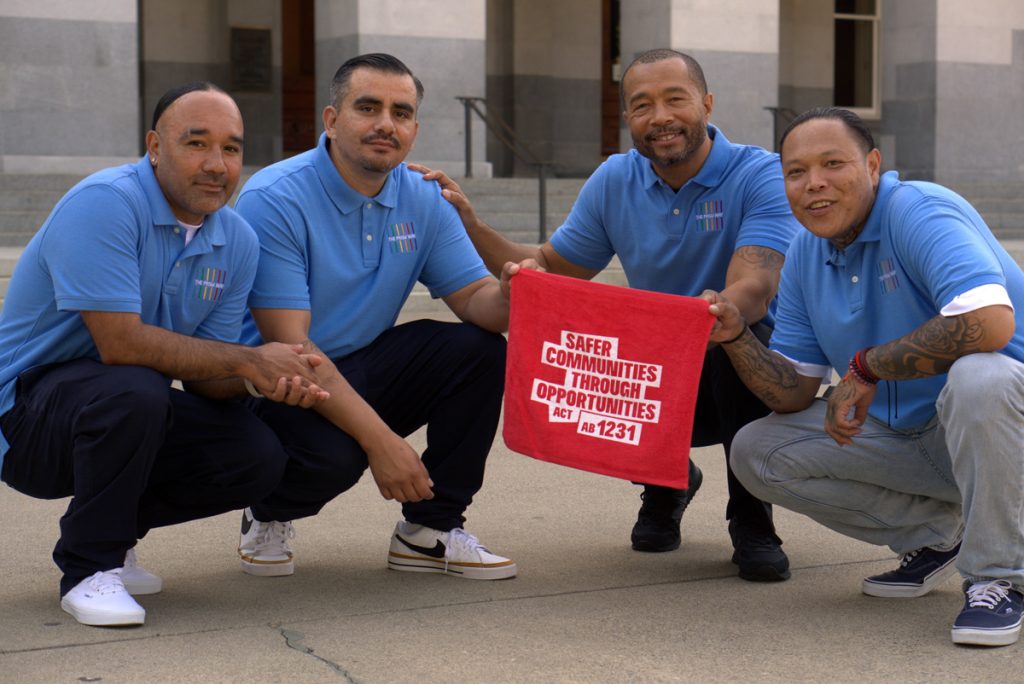
Dozens of formerly incarcerated people from across California gathered recently at the steps of the State Capitol in Sacramento. Alongside advocates for criminal justice reform, they were there to rally for legislation that would dramatically expand pretrial diversion opportunities for people charged with low-level, nonviolent felonies.
Assembly Bill 1231, the Safer Communities Through Opportunities Act, gives judges the discretion to use diversion and connect people to community-based programs that promote job training and outpatient treatment instead of incarceration.
The end of August was a pivotal time for the bill, which was in danger of not advancing out of the Senate Appropriations Committee. But after the rally and grassroots lobbying effort, the bill passed and moved to the Senate floor.
Earlier in the month, the bill’s co-sponsors tapped the California Community Foundation to help mobilize a coalition of support.
CCF snapped into action. In less than two weeks, the foundation was able to work with local groups – including several who have been connected with the Ready to Rise initiative – including the St. Joseph Center, InsideOUT Writers, the Success Stories Program and The Prism Way.
CCF then coordinated transportation for nearly 20 people to attend the rally and make their voices heard.
Allen Burnett was among those invited to travel to Sacramento. After serving 28 years in prison, Burnett is now executive director of The Prism Way, an inmate re-entry and behavioral health nonprofit in Los Angeles. After the rally, he had a chance to share his personal journey and voice his support of the bill to legislative staffers.
“Sending someone straight to jail for a few months and then letting them out, that’s not rehabilitation,” Burnett said. “Rehabilitation is helping people identify why they use drugs and join gangs in the first place. What’s the underlying factors to those things? When people get in trouble, you need to send them to a diversion program immediately so they can be in community with people exactly like them and they can get the help that they need.”
Shayna Englin, vice president of policy and advocacy for CCF, said her team has been focused on expanding community partners’ capacity to amplify L.A. residents’ participation in the policy-making process in Sacramento.
“The only way that you can move that quickly is if the relationship infrastructure is already there,” Englin said. “As a community foundation, CCF is uniquely situated to activate relationships, bring together diverse people around shared values and experiences and amplify community voice.”
The bill allows courts to send some individuals charged with certain felonies to a pretrial diversion program for up to two years. It wouldn’t apply to cases involving serious injuries, firearms, sexual offenses, domestic violence, stalking or terrorism. To qualify, judges would have to decide the person is not a risk to public safety and is likely to benefit from the program.
AB 1231 is sponsored by the Vera Institute of Justice, the Service Employees International Union, PICO California, the Drug Policy Alliance, the Immigrant Legal Resource Center and the Los Angeles Regional Reentry Partnership.
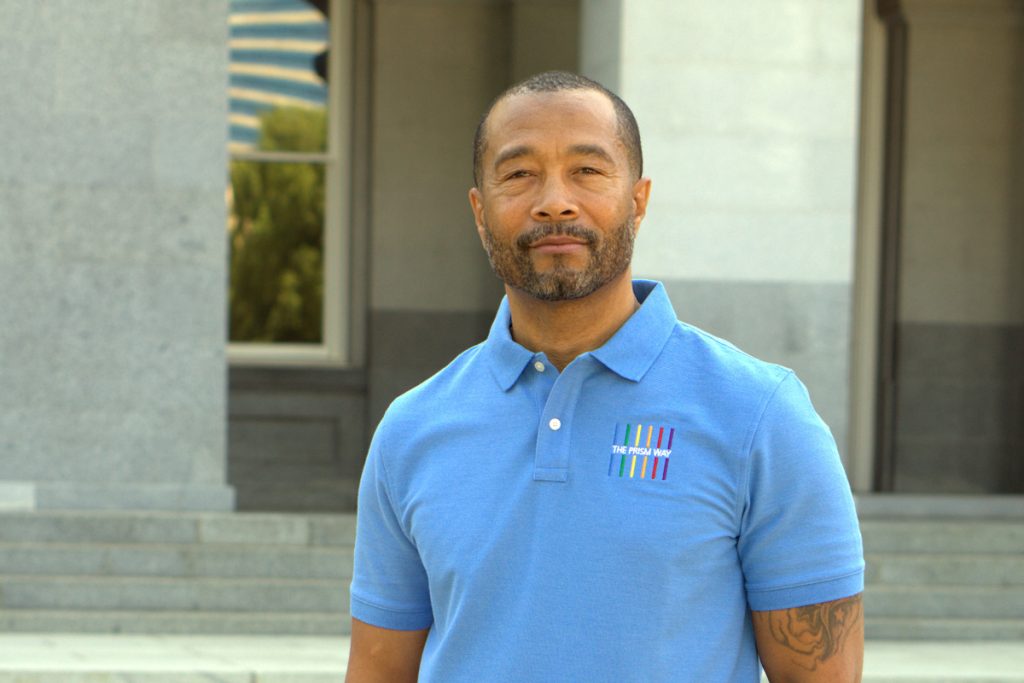
When Burnett was 18, he was involved in a fatal carjacking and he was sentenced to life without parole. He served nearly three decades before his sentence was commuted by Gov. Gavin Newsom. After his release in 2020, he continued to work with inmates on parole board preparation and eventually met Kristin Worthe, who co-founded The Prism Way. The restorative mission of his nonprofit aligns well with AB 1231, he said.
“A lot of people, myself included, we commit crime because of the underlying factors that are taking place in our lives,” Burnett said. “It could be mental health issues or unresolved childhood trauma or abuse. For me, this bill gives judges an opportunity to take those things under consideration and then give people an opportunity to not have to go to prison or to jail, but actually participate in a behavioral health program similar to some of the work that we do.”
For Burnett, attending the rally and getting a chance to tell his story was uplifting for him and his staff of formerly incarcerated men.
“Being at the state capitol for us was like a ‘I’m not supposed to be here’ moment,” he said. “It was such a good feeling to be able to come there and see the place – it was something that we never considered while we were incarcerated. All of us were speaking on behalf of this bill that essentially supports people like us. The feeling was electric. And so, I was just kind sitting back and watching them and I thought how beautiful life is in this moment to be free and to be participating in something that gives back to the community in a way that points towards public safety and points towards opportunity.”
— Ben Poston