



“So we created this particular initiative to engage this group of students emotionally and intellectually — to be there for them, [so they’d] know that even though they’re homeless . . . they can participate in theater.”
Before all that Valenzuela had led the Latino Theater Initiative at the Mark Taper Forum, while heading UCLA’s graduate theater directing program. And, before that, Valenzuela had been back at LATC, running the Latino Theater Lab while doing LATC’s books. Before that? A long, long road of performances stretching through American theater history.
The San Francisco native’s parents had been farm workers and, when José Luis was a boy, moved the family to Mexico, where he was raised and educated. He returned to the Bay Area in time for the great social upheavals of the late 1960s and early ’70s. The kind of theater he would soon develop with influential Chicano companies, including El Teatro de la Gente and El Teatro de la Esperanza, was part of a political movement fueled by music, poetry and manifestos. The aesthetic was often Brechtian and always confrontational – asking hard questions, demanding uncomfortable answers.
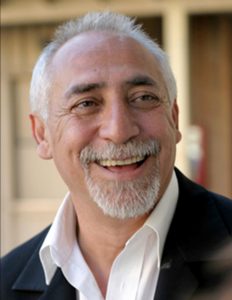
Now in his 70s, Valenzuela approaches conversations with a broad smile. He began as an actor, evolving into a director over a career that carried him from guerrilla theater in public parks to the esteemed Goodman and Guthrie stages, and the National Theater of Norway.
But the Latino Theater Company is Valenzuela’s monument, his 40-year invitation to long ignored communities of color to witness and to create stories about themselves, and to contemplate their place in America. Works like A Mexican Trilogy, Dementia and The Mother of Henry tackled the realities of race, war, AIDS and other issues that have ripped asunder the American conversation.
The company has confronted America’s demons without the financial support of Hollywood, whose celebrities have sometimes rescued other L.A. theaters.
“Movie stars, with the exception of Eddie Olmos, are not interested in the theater,” Valenzuela said. “They’re interested in Hollywood, in that life. They have so much money and very little invested in the city or in the artists themselves.” CCF and its donors have contributed more than $3 million to the company since 2006.
The one thing that threatened his company’s success was the COVID pandemic.
“We’d been together for 40 years as a company,” Valenzuela recalled, “and we thought, ‘You know, maybe we should give it up. We’ve done it a lot. We’ve produced a lot.”
The Getty’s LA Arts Recovery Fund, administered by CCF, stepped up with grants of $1.8 million from 2021 to 2023. When the company opened its doors after two years of lockdown, its attendance boomed to new heights.
“More people were coming — and younger people started coming after, which was really fantastic,” Valenzuela remembered.
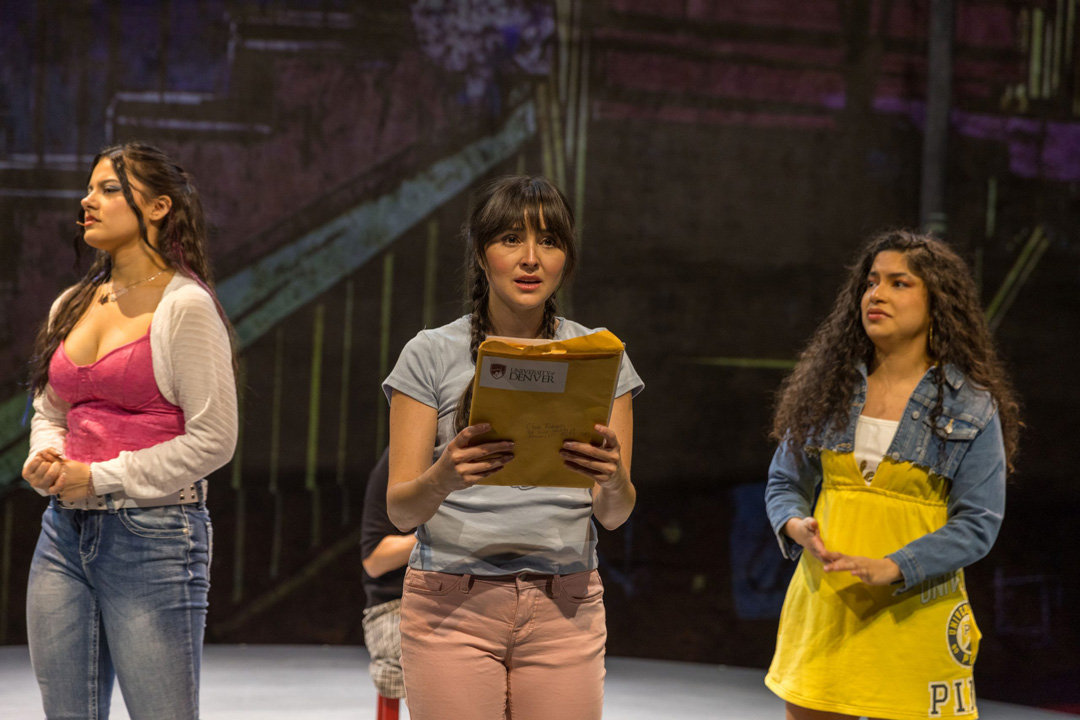
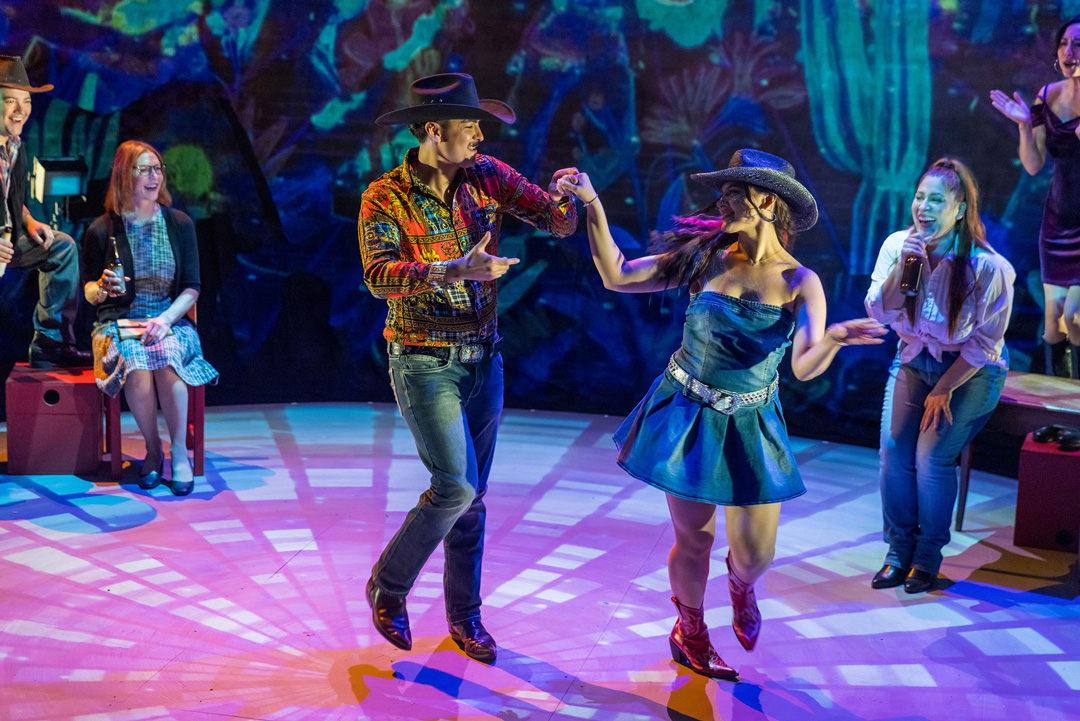
When he said this the theater’s season opener, Just Like Us, was in the third week of its run in Theater 2. Based on a nonfiction book by journalist Helen Thorpe, Karen Zacarías’ play is a presentational style story pulsing with music and song, and set in Denver, where it premiered in 2013. Zacarías’ Thorpe character (played by Elyse Mirto) chronicles the fates of four alpha Latinas from the time they are high school seniors through college.
The Fidel Gomez-directed play, which opens in 2004, is an unsettling reminder of how long the debate over immigration has been tearing the country apart. While U.S. citizens Clara and Elissa (Noelle Franco and Valerie Rose Vega, respectively) cruise into college with relative ease (after battling to find scholarship money), BFFs Yadira and Marisela (Newt Arlandiz and Blanca Isabella) are undocumented and face a world of obstacles to their efforts to even travel beyond their low-income neighborhood. We’re soon acquainted with the near impossibility of boarding a flight without a drivers license and the unlikelihood of “illegals” obtaining the driving privileges most Americans take for granted.
Onstage, Thorpe, who was the wife of Denver mayor and future Colorado governor and U.S. Senator John Hickenlooper, tidily if sometimes earnestly keeps the play’s moral and political issues in focus, while the four friends’ resilient optimism leaves audience with guarded hope for the future outside the theater walls. Still, ticket sales have lagged and at a recent Sunday matinee the show’s 318-seat theater was about half full at most.
“This is a crucial week right now,” Valenzuela said two days later. “Hopefully it will begin to be sold out this weekend, and then I will extend it for another week.”
The attendance for Just Like Us, whose regular run is scheduled to end May 18, is worrisome for a theater that doesn’t have a subscription base and relies on word of mouth to boost audiences. Valenzuela said that since its post-COVID reopening, it has been the norm for Latino Theater Company shows to sell out after their third week.
In any event, one outcome of the theater’s COVID lockdown was a company decision to set in motion a five-year succession plan that would guarantee success and continuity.
“We have 20 people, young people,” Valenzuela said, “a whole new generation of artists, who we’re beginning to hire for the next four years, who are going to replace the ensemble. And that transition is going to be in 2028.”
Not that Valenzuela will then kick up his feet and watch a lot of television.
“We are going to do a global festival in 2028,” he said, “which the new group is going to curate.” The festival will coincide with Los Angeles’ hosting of that year’s Summer Olympics. “The importance and the beauty — and everything that happens in this city — is the citizens who live here. That’s what I’m trying to leave.”
But for now, there’s a hole in the roof that needs fixing.
— Steven Mikulan