CCF’s New Vision: Listening to Angelenos to Shape a Path Toward a Good Life for All
Los Angeles is a city that has been defined, for better and worse, by big visions. But in recent years, the story of this place has often been told through numbers: soaring housing costs, rising homelessness, widening inequality, shrinking trust in institutions. What’s too often missing are the voices behind those numbers — the Angelenos who live with the consequences of policy choices every day.
Two years ago, the California Community Foundation (CCF), one of the region’s most influential philanthropic institutions, decided to change that. Before writing a new strategic framework, it chose to do something deceptively simple: ask people what a “good life” means to them.
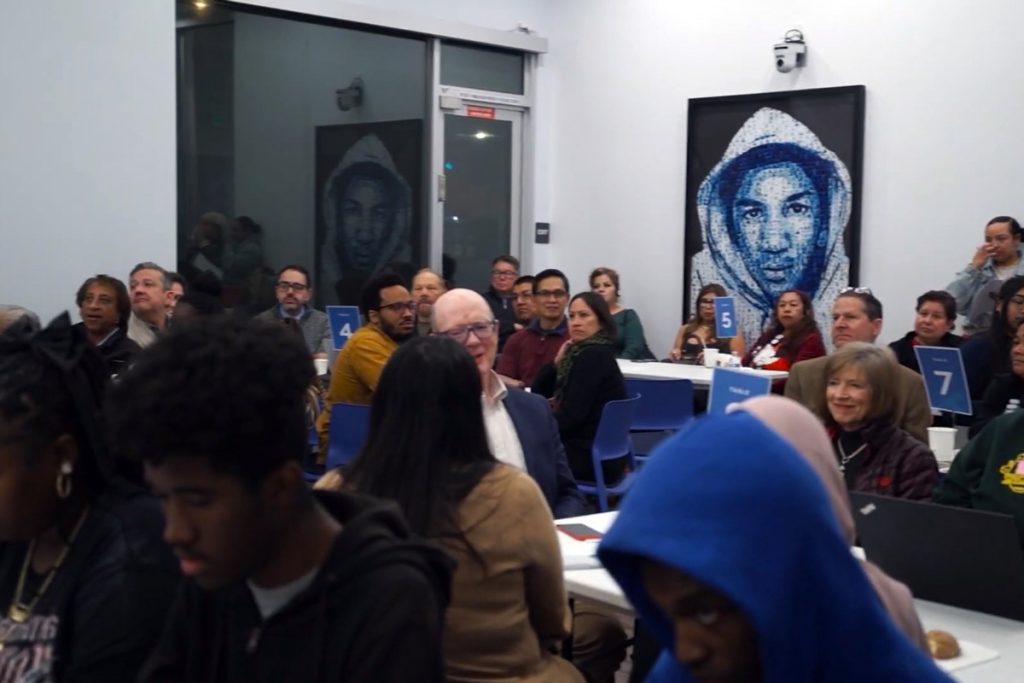
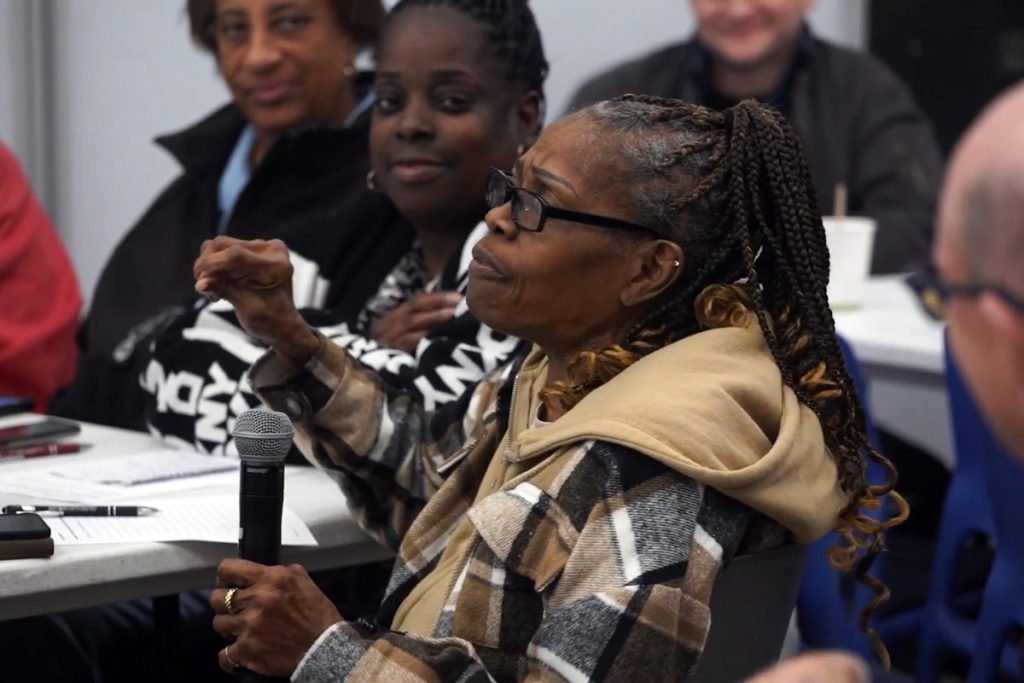
From June to December 2024, more than 2,000 people answered. They came from every corner of Los Angeles County — from Palmdale to Pico-Union, Wilmington to Whittier — gathering in school auditoriums, community centers, church halls and virtual rooms hosted by nonprofit partners they already trusted. They spoke in numerous languages, sometimes using translation devices, but always speaking honestly, sometimes painfully, about what stands between them and the futures they imagine.
The responses were not abstract. Before Angelenos dreamed bigger, they said they needed to be able to meet their basic needs. Affordability — rent, groceries, childcare, healthcare — was the single most urgent concern. “How do you talk about opportunity,” one mother asked in a South LA session, “when you’re one bill away from sinking?”
Others talked about housing: not just having a place to live, but having one that is safe, stable and within reach. They talked of jobs that pay enough to live on, and training programs that don’t require leaving their neighborhoods or juggling impossible schedules. They talked of wanting access to education at every age, and of wanting to walk through their communities feeling safe, connected and seen. They talked of loneliness. They talked of hope.
And, importantly, they reminded CCF of something essential: much of what constitutes a good life already exists in Los Angeles — vibrant culture, strong community networks, deep tradition, breathtaking public spaces. The challenge is not to invent these assets, but to invest in them, to remove the barriers that keep so many from fully participating in them.
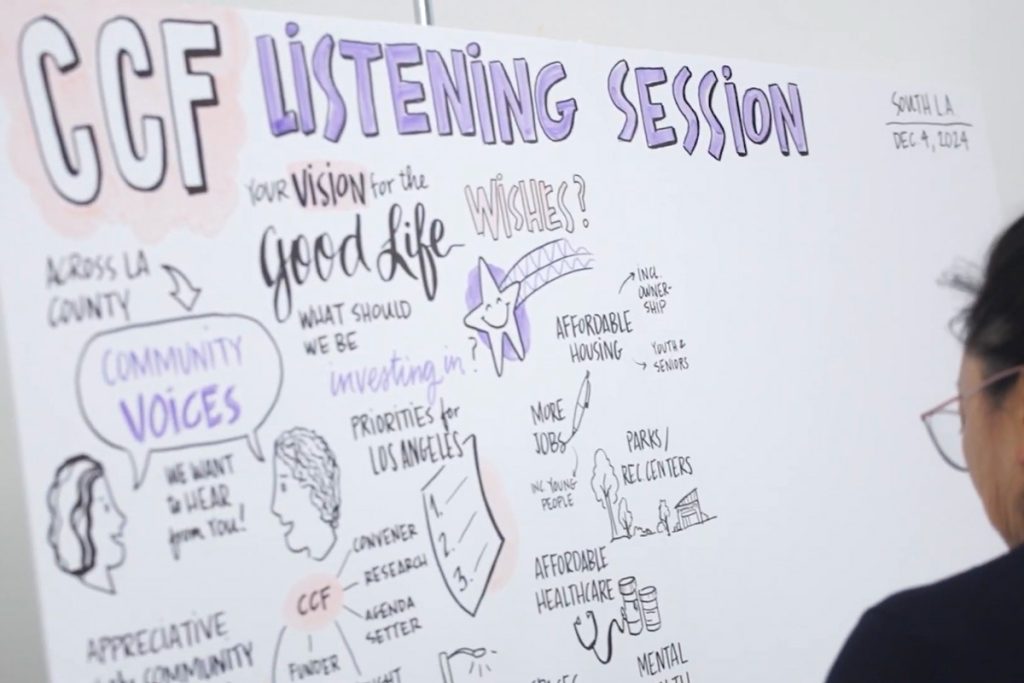
Listening to these thousands of voices reshaped CCF’s understanding of its own role. The foundation emerged from this process with a newly defined mission, vision and philanthropic approach — one that puts community voice at the center rather than at the periphery.
Its new vision is striking in its simplicity: A good life for all in Los Angeles County. Its mission is equally clear: To invest in, partner with, and amplify the power of community toward a good life.
Gone are the traditional programmatic silos — immigration, health, education, housing, economic opportunity, arts and culture — that so often fragment philanthropic work. In their place are five crosscutting institutional priorities grounded in how people actually experience their lives:
- Meeting Basic Needs: ensuring access to housing, healthcare and essential support systems.
- Building Economic Opportunity: expanding education, job training and local economic growth that builds community wealth.
- Creating Safe, Resilient, and Connected Communities: strengthening environmental health, public safety and shared spaces that bring people together.
- Ensuring Communities Have a Voice: supporting civic engagement, local journalism, transparency and accountability.
- Supporting Healing and Renewal: investing in land stewardship, community decision-making and collective healing from trauma.
These priorities are a direct response to what residents said they needed most and a recognition that no single issue can be addressed in isolation. Housing is a health issue. Economic inequality is a public safety issue. Civic engagement is a resilience issue. The lines between them blur in the everyday lives of real people’s pursuit of a good life.
By building its philanthropic approach around this reality, CCF is modeling something philanthropy too rarely does: humility. It is recognizing that community members are their own best advocates. That those closest to the problems are closest to the solutions. And that meaningful change requires not just writing checks, but listening — deeply, consistently and without defensiveness.
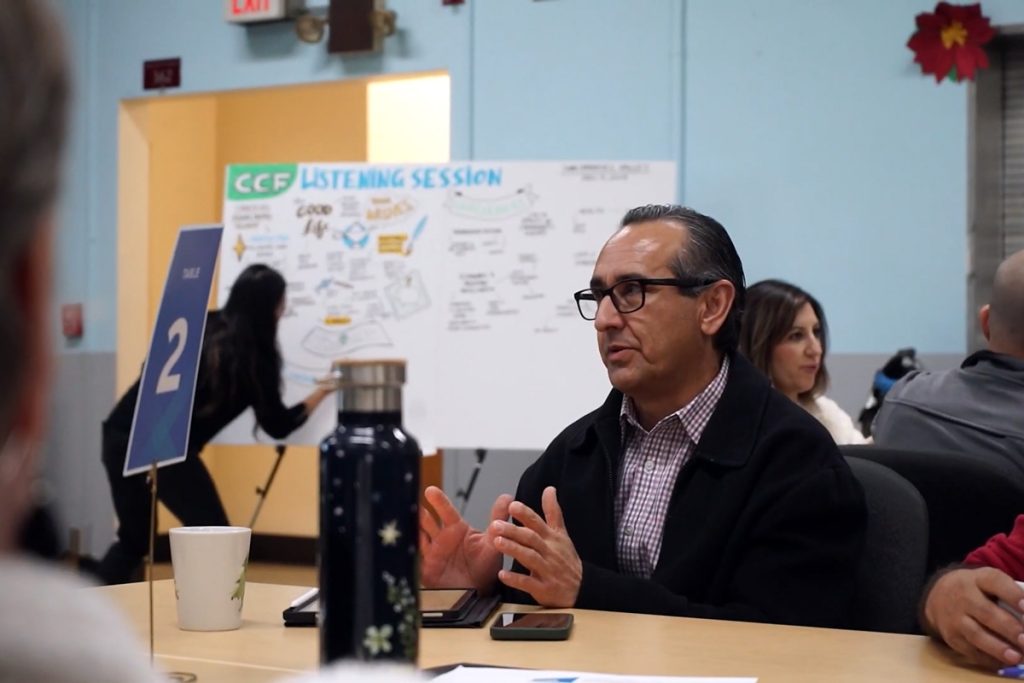
There is a quiet radicalism in this approach. At a time when institutions of all kinds are losing trust, CCF chose to turn outward, not inward; to become more open-minded, not more insular. It chose to let Angelenos articulate what the future should look like.
In an era of fatigue — including civic, economic and climate fatigue — this strategy offers something rare: a sense of possibility rooted in collective experience.
If Los Angeles is going to chart a path toward a better, more equitable future, it will not be because one foundation made the perfect plan behind closed doors. It will be because thousands of Angelenos, when asked what a good life means to them, answered honestly — and because an institution listened.
That, in today’s Los Angeles, may be the most important investment of all.
CCF’s new Strategic Framework is a testament to what becomes possible when institutions listen deeply and choose to act in partnership rather than in isolation. Los Angeles is writing its future in real time. Not through pronouncements from boardrooms, but through the lived wisdom of its people. For those who care about the future of this region, the invitation is clear: Join us on this journey to invest in, partner with, and amplify the power of community toward a good life for all Angelenos.
– Antwone Roberts