For more than a century, CCF has worked alongside donors, nonprofits and communities to expand access to a good life for all across Los Angeles County.
Our five interconnected priorities reflect the conditions that make a good life possible for every Angeleno.
CCF connects philanthropy with community priorities, investing in organizations and partnerships that strengthen communities and expand opportunity across Los Angeles County.
CCF helps donors turn their charitable vision into meaningful impact, with personalized expertise and deep knowledge of Los Angeles County.
Explore stories of the people and organizations shaping Los Angeles County, along with the latest news and updates from CCF.
The Pasadena Jewish Temple & Center (PJTC) has operated for the past 18 months without a permanent home after the Eaton Fire destroyed its historic campus. Yet from a network of temporary locations, the congregation is thriving.
Membership actually grew slightly to more than 430 families since the fire, a fact that PJTC Executive Director Melissa Levy still finds impressive for a congregation that lost its sanctuary, religious school and offices.
“We assumed we don’t have a campus – how are we possibly going to attract new families?” Levy said.
Instead, congregation members who had drifted to the margins of synagogue life re-engaged, making calls and delivering necessities to displaced neighbors. Grandparents moved to town to help raise grandchildren while parents searched for new jobs. Prompted by a sudden awareness of how quickly things can be lost, some families who might have waited years to join the temple enrolled their children early, Levy said.
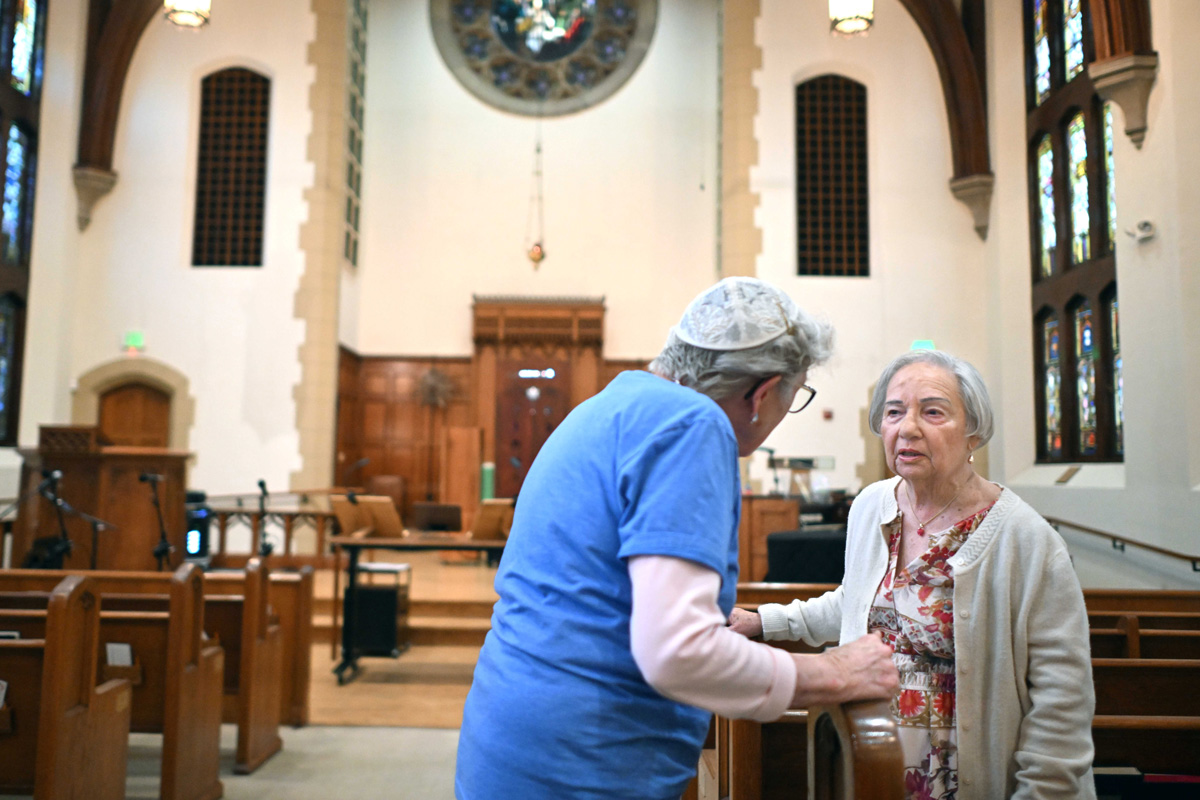
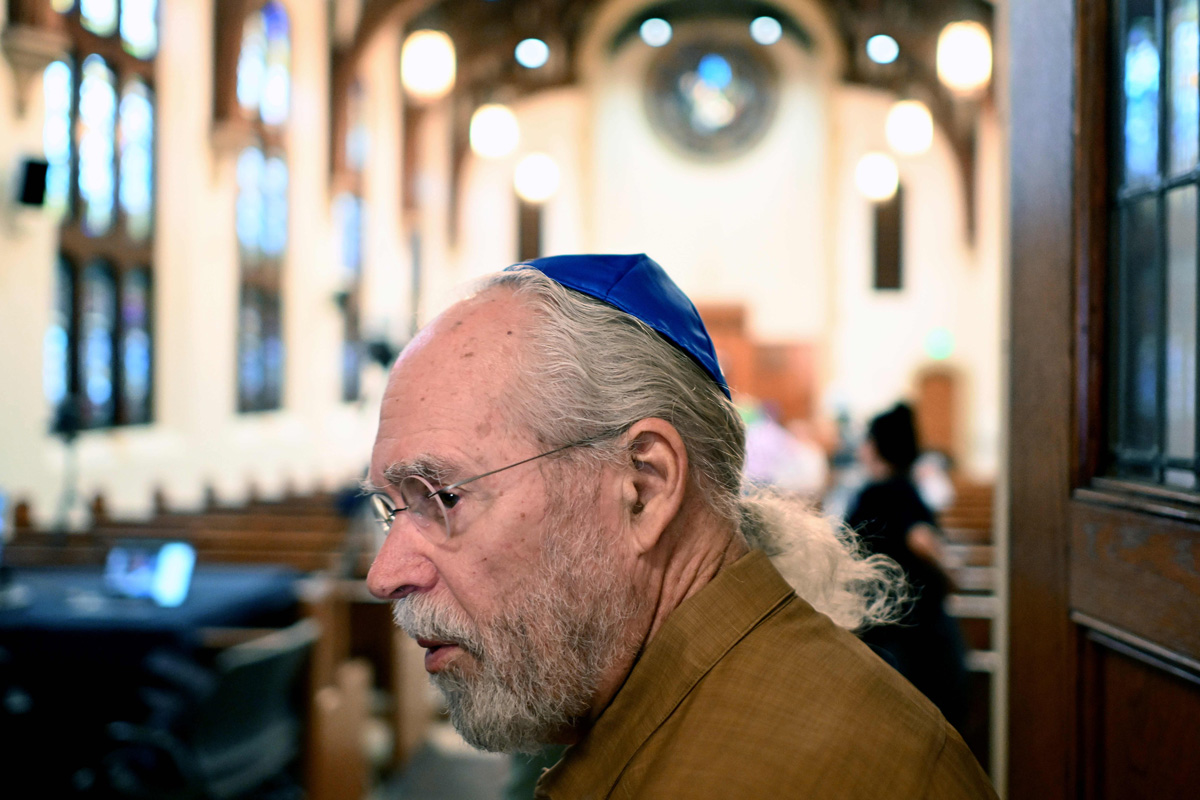
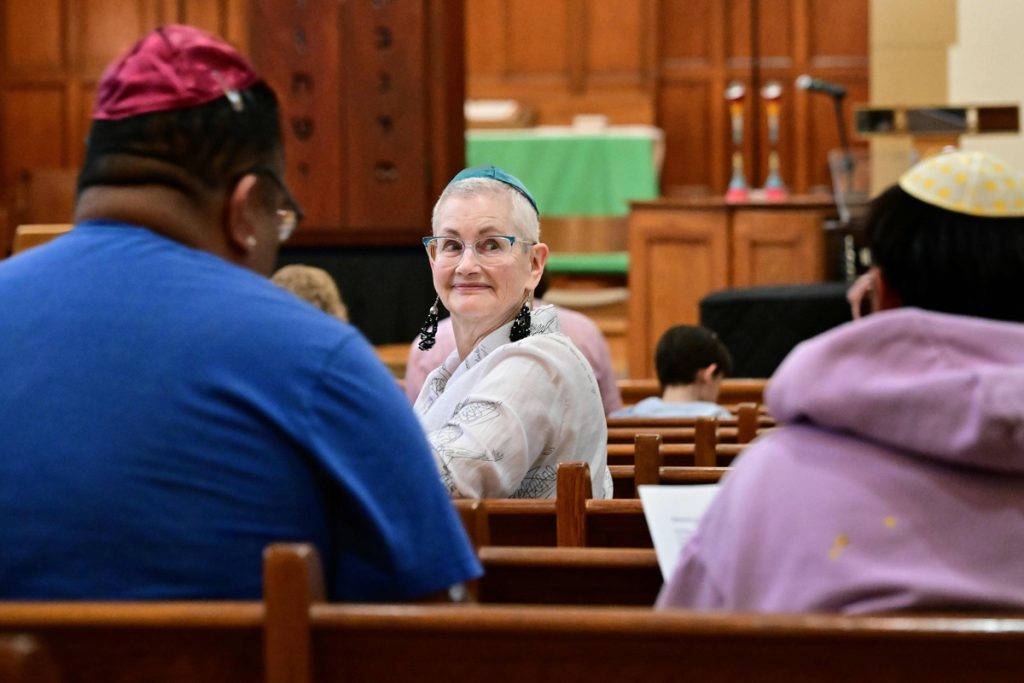
PJTC’s recovery journey has unfolded in temporary spaces: the first Shabbat after the fire was held in a Catholic girls’ school auditorium and for the past 18 months, the First United Methodist Church of Pasadena has hosted PJTC’s prayer services, a sukkah in its courtyard and church leaders even rearranged their own programming for a large shiva. Religious school meets at a separate Pasadena location and administrative offices sit a block from the church.
Sustaining operations without a campus has come at a cost. A recent grant from the California Community Foundation (CCF) has helped cover a variety of expenses, including catering, musicians and room rentals to allow the congregation to observe sacred rituals, Levy said.
Operating without a kitchen or permanent equipment for months, every Shabbat meal or holiday gathering had become a logistical feat. The CCF grant has helped alleviate this issue.
Instead of worrying about the high costs of kosher catering, the funds allow the temple to focus on healing programming: food, music, ritual and storytelling. Whether it is park playdates for toddlers or mental health sessions for teenagers who are navigating the trauma of displacement, the grant ensures that “every event is a recovery event.” Levy said.
“Food makes people come together,” she said. The CCF grant allows PJTC to elevate their gatherings, making them “feel much more like home.”
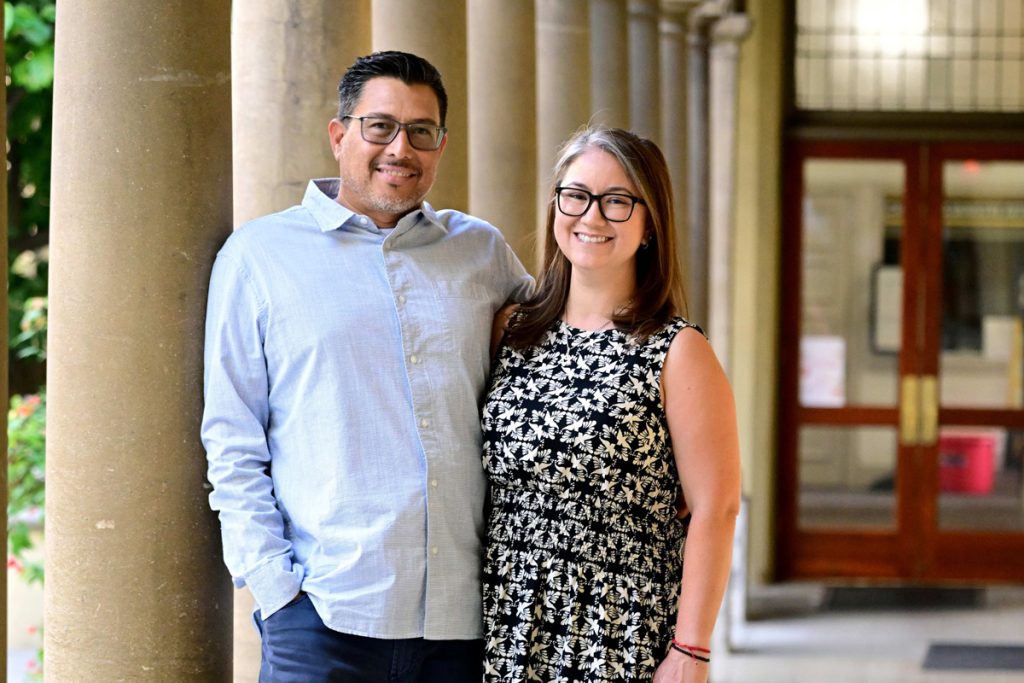
For PJTC member Heather Sandoval Feng, her husband, Oscar, and their two children, the 18-month journey has been a test of faith. She recalled the night of the wildfire, making split-second decisions of what to take from her home. While she grabbed essentials, she left behind a jar of thank-you notes from her daughter – a loss that still stings. When the news came that PJTC was gone, she was devastated.
“I remember thinking this night couldn’t possibly get any worse,” she said.
That was before she found out her family’s Altadena home was also destroyed that night.
The PJTC community rallied to support her family, she said. Just three weeks after losing everything, her daughter Hannah’s Bat Mitzvah went forward as scheduled in a Catholic chapel. As Sandoval Feng joked, the Torah portion doesn’t wait.
“You’re not off the hook,” her daughter’s teacher told Hannah at the time. “We’re still doing this thing.”
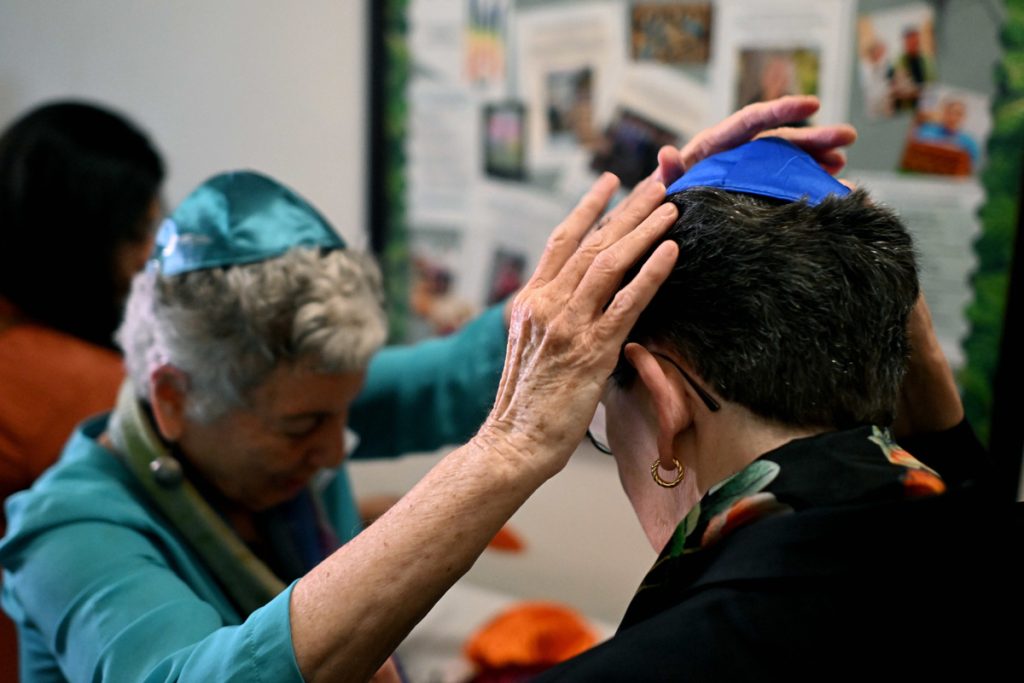
Congregation members donated a dress for Hannah and a suit for her brother, Noah. Hannah was also gifted a prayer shawl called a tallit that had been one of the few items rescued from the office of the education director before the PJTC burned, Sandoval Feng said. They later received a donated shawl for her son’s future Bar Mitzvah.
“That had a lot of meaning because it’s something that came from our community – from the kindness of people’s hearts,” she said. “That’s what life is about – being there for others both in the good times, but also in the really hard times.”
The PJTC was the scene of a dramatic rescue the night the Eaton Fire erupted. With winds ripping through Altadena and embers already falling on the building, PJTC’s cantor, her husband, and a longtime facilities staff member gathered all 13 Torah scrolls that were eventually moved to safety. The staffer remembered that his late father, who once held the same position at PJTC, had once raced to save the synagogue’s Torahs from a fire decades earlier.
The recovery of the PJTC community is twofold – while the wildfire destroyed the physical spaces and communal hub, it also displaced 70 member families from their own homes. Today, the recovery is entering a difficult new phase as many families are now seeing their insurance coverage for rent and mortgages expire, Levy said.
“I’m starting to see just in the last three or four months there are many more people that I am writing monthly checks to help them with their rent,” she said. PJTC’s Congregant Relief Fund has become a lifeline as members struggle with exorbitantly higher rent of the current market, she said.
Even as they gather in borrowed spaces, the congregation remains committed to returning to its historic location on Altadena Drive, Levy said. As the PJTC’s Rebuilding Committee navigates the challenges of FEMA and architectural design, the congregation’s goal is to move into a new facility at the original location by Rosh Hashanah in September 2028.
For Sandoval Feng, that timeline aligns with her son’s Bar Mitzvah. Fittingly, Noah’s Torah portion is the story of his namesake, the biblical Noah. The story, he has discovered, is about rebuilding and recovering.
“The whole idea behind it is, how do you rebuild something when you’ve lost everything?” Sandoval Feng said. “How do you come back after such a huge loss in so many parts of your life?”
For more information about the PJTC, visit https://www.pjtc.net.
– Ben Poston