New Wi-Fi Network Launches Along Crenshaw Boulevard, Providing High-Speed Internet to Over 40,000 South L.A. Residents
Jason Foster, president & CEO of Destination Crenshaw, thanked the California Community Foundation for being a “key partner” in developing the wireless network.
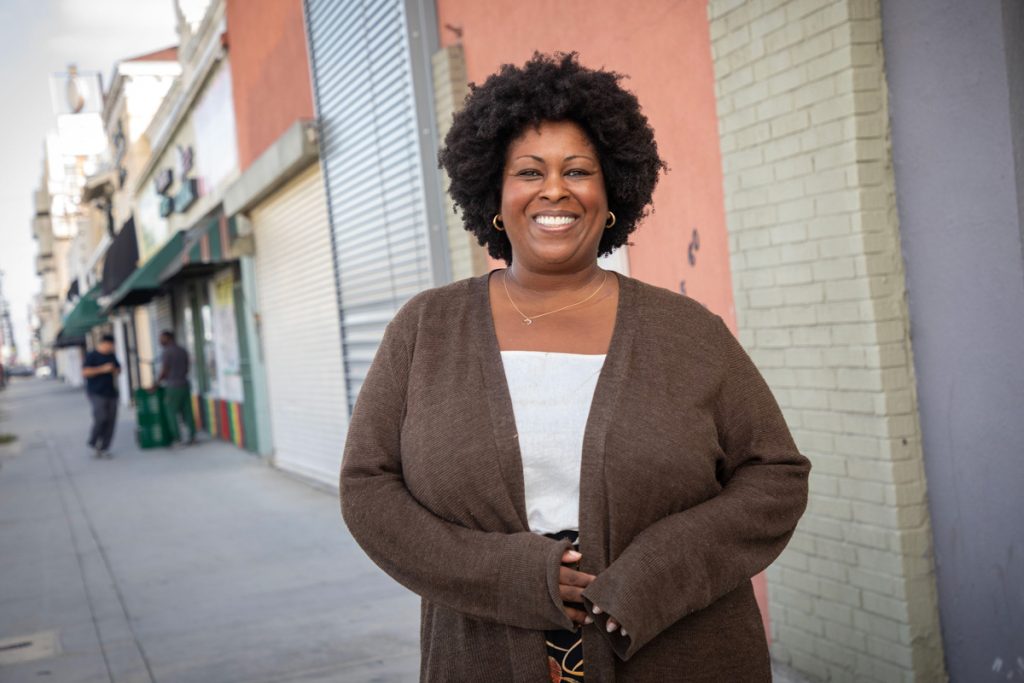
For years, when vendors arrived at the Crenshaw Farmers’ Market on Saturday mornings, they knew they would have to use their phones for Wi-Fi hot spots to process payments.
Internet coverage was often unreliable, causing delays and headaches for customers. The market’s information booth also relied on the same spotty connections to process SNAP and EBT payments.
That all changed when the farmers’ market recently got connected to a new public Wi-Fi network along the Crenshaw Corridor.
“To have access to Wi-Fi and not have any hiccups has been incredibly critical to the operations they use in their small businesses,” said Summer Vernon, senior manager for South LA Farmers’ Market operations.
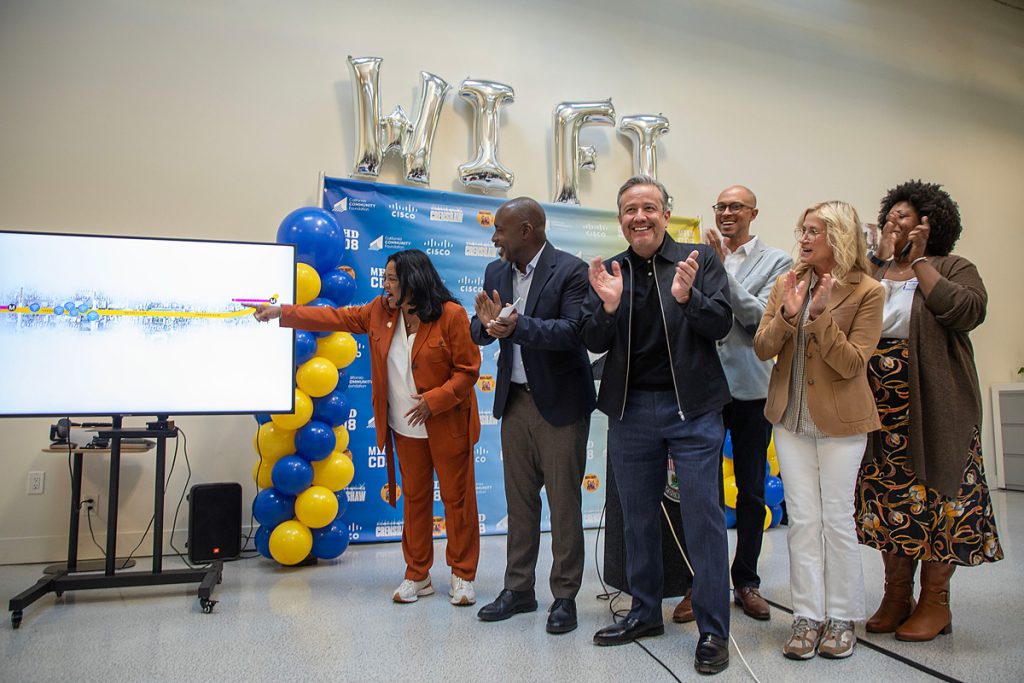
The community Wi-Fi network along a 1.5-mile stretch of Crenshaw Boulevard officially launched last week, offering free public internet access points across South Los Angeles.
Destination Crenshaw is a community-led cultural and infrastructure project along Crenshaw Boulevard that celebrates Black Los Angeles through public art, green spaces and community investment.
Jason Foster, president & CEO of Destination Crenshaw, thanked the California Community Foundation for being a “key partner” in developing the wireless network.
The COVID-19 pandemic was a wake-up call for the community that reliable internet is essential, Foster said. Destination Crenshaw surveys found that inconsistent, expensive service was a persistent barrier to education, employment and entrepreneurship.
Those findings mirror research from the Digital Equity LA (DELA) coalition, which showed that households in low-income, predominantly Black and Latino neighborhoods of L.A. paid up to $60 more per month for slower internet speeds compared to wealthier, whiter areas.
To develop and deploy the wireless network, Destination Crenshaw also partnered with L.A. City Council District 8, the L.A. Bureau of Street Lighting, Cisco and DELA.
The project was made possible in part with funds from the California Public Utility Commission’s California Advanced Services Fund (CASF), which is designed to expand broadband access and digital inclusion in California — especially in unserved or underserved areas like the Crenshaw Corridor.
DELA is supported by the Digital Equity Initiative, a multi-year project of CCF that aims to secure reliable and affordable broadband for all residents in L.A. County. Since the creation of the initiative in 2021, CCF has been actively engaged directly with the state utility commission and provided technical assistance and capacity building for local governments and community organizations to ensure their needs are built into CASF’s operations.
CCF President and CEO Miguel Santana described the multi-pronged effort required to ensure the public Wi-Fi project became a reality.
“For us at the California Community Foundation, it’s in our sweet spot to be able to access all of our tools: advancing legislation in Sacramento that allowed this to happen; partnering with the city and the leadership of our two council members and the mayor; working with community to insist that we not be taken for granted and forgotten; and then providing the financial support to help fill in the gaps, to make it all happen,” Santana said.
The wireless launch also marked a big step in the city’s broader push to end “digital redlining” and expand affordable internet service in neighborhoods long underserved by private providers, said L.A. City Council President Marqueece Harris-Dawson. The project aims to close gaps in connectivity that residents and small businesses say have limited access to education, jobs and civic life, he said.
“Access to secure, reliable Internet is essential to full participation in democracy,” Harris-Dawson said. “It protects our community from being silenced, exploited, or left behind.”
If you’re in the Crenshaw Corridor and want to get connected, look for “DestinationCrenshaw-Wifi” on your computer or phone. There is no password to join.
The project area spans nearly 400 census blocks, encompassing roughly 42,000 residents. The corridor’s population is majority people of color – about 50% Black and 42% Latino – reflecting communities hit hardest by the digital divide during the pandemic.
The new wireless network is providing a critical service to a community that has long been lacking adequate Internet access, Santana said.
“That is not coincidental. It is by design. This community has been historically redlined, not just of quality Wi-Fi, but of basic services,” he said. “In many ways, this project represents the best of L.A. It’s a statement of what it looks like when a community takes back control of their own story.”
– Ben Poston