Eaton Fire Survivors Network: Turning Loss into Resources and Accountability
The week after the Eaton Fire devastated Altadena, Joy Chen and her pickleball WhatsApp groups began sharing urgent information—everything from temporary housing options to where to find clothes. The conversation quickly expanded, touching on dozens of issues facing survivors, especially insurance claims. As word spread, the group welcomed the broader Altadena community. Today, more than 2,000 residents are connected through the Eaton Fire Survivors Network. With support from the California Community Foundation, Chen’s grassroots effort has drawn national attention and even prompted the California Insurance Commissioner to investigate State Farm’s handling of thousands of insurance claims from wildfire survivors. Chen, a former deputy mayor of Los Angeles, spoke about her effort and future goals of the network.
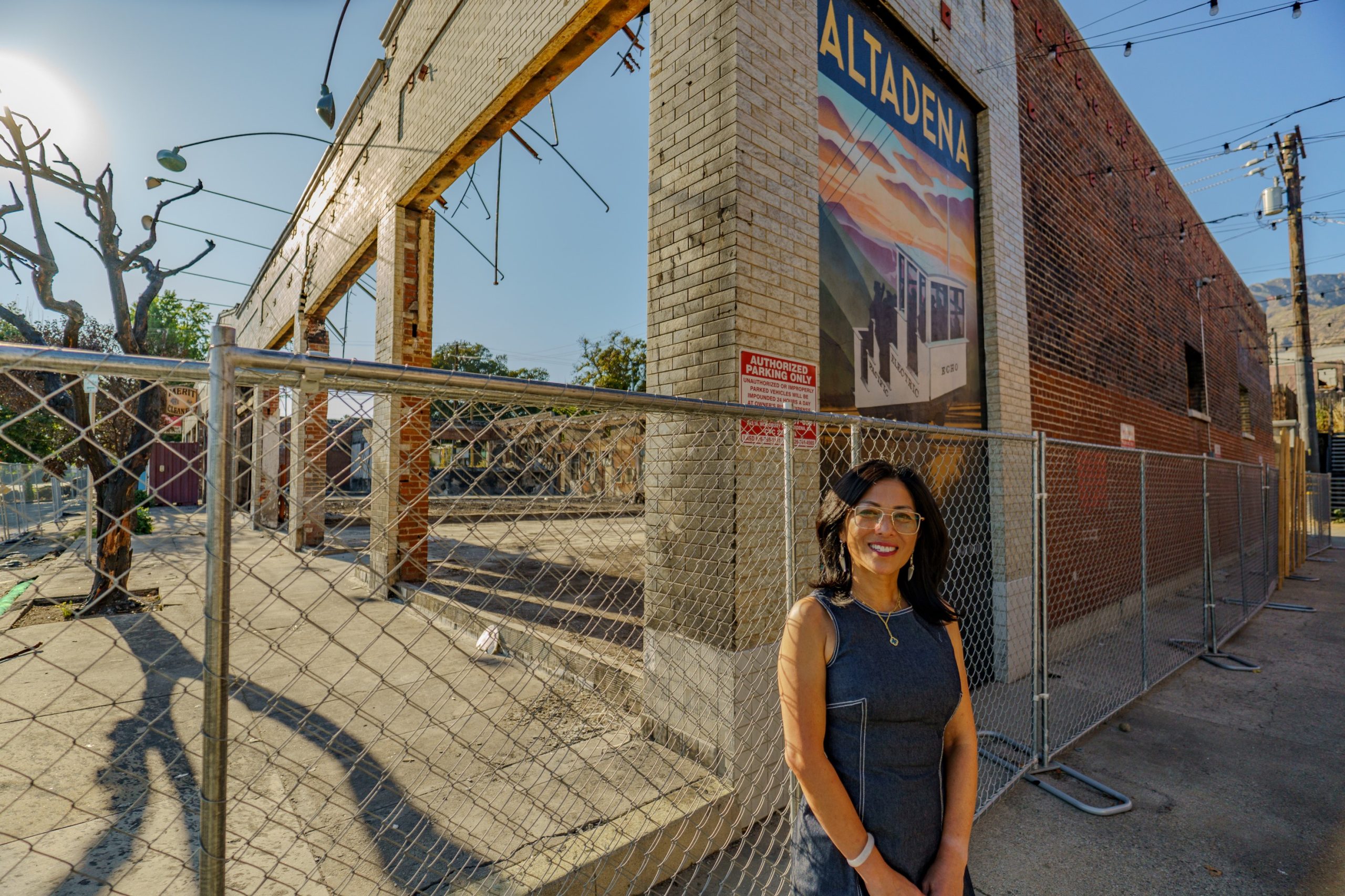
Joy Chen behind Eaton building
Within days of the fire, you set up a WhatsApp group. What led you to do that?
The WhatsApp actually started two years before the fire as the pickleball chat of the Altadena Town & Country Club. I was the admin. On January 7, someone typed, “There’s a fire on the mountain!” and just like that, it became our evacuation network.
There was no power that day in Altadena, and as you may know, the official evacuation orders came far too late. Eighteen people died, but none of us. We all got out in time.
The next morning, the club was gone, half our homes were gone, and everyone was displaced. Hotels were full, Airbnb’s were booked, and finding someplace to sleep became our first crisis. Our WhatsApp morphed into a hub for information and support. I renamed it and we started inviting everyone we knew, because no one should have to face this trauma alone.
Because WhatsApp has a 1,000-person cap friends I eventually moved the platform to Discord. I said, “But I’m a 55-year-old woman! Discord is for gamers!” But it turned out to be exactly what we needed: unlimited capacity, organized channels, and searchable history. Our Discord has over 50 moderated channels covering insurance, remediation, grants, mental health and more. It’s a place where survivors can connect and access resources 24/7.
The EFSN is now a community of 5,000 strong—by, for, and led by survivors—across Discord, Instagram, and email newsletters. We meet people wherever they are and in whatever technology they prefer.
How did your focus shift to holding insurers accountable?
Because insurers are supposed to treat their policyholders equally, we set up a separate channel for each insurer so everyone could trade notes. When one person got something approved, they’d post proof, and everyone else could push their adjuster for the same thing.
By March, I had this shocking realization: whether a family was getting back on their feet or sinking deeper into trauma mostly came down to one thing—who their insurer was. Some families, like ours, were moving steadily through their claims. Others were drowning in problems like rotating adjusters, ridiculously lowball estimates, claims that never moved forward, and denials that lawyers kept saying were flat-out illegal.
The worst issues were blowing up in our State Farm and California FAIR Plan channels. Meantime, I saw in the news that State Farm was pursuing a massive “emergency” rate hike. I thought: Our families are in an emergency too. Why should a company that’s not honoring its contracts walk away with a massive windfall?
So, what did you do about it?
With help from Christian Esperias at the Department of Angels, I drafted a letter to Insurance Commissioner Lara asking him to defer the rate hike until State Farm paid survivors what it owed. I built a public sign-on form, and added a text box where people could add a message.
Within days, my inbox was flooding with hundreds of gut-wrenching accounts of financial devastation, severe health effects, families out $100,000 or more while State Farm stalled. I thought, “I can’t be the only person to see these stories, so I built a second web page to publish them. Then we held a press conference where survivors shared their stories with extraordinary courage.
We’ve now collected over 400 firsthand accounts of State Farm delays and denials. If you want to understand what survivors are up against, read the letter I sent to Commissioner Lara with some of their stories, and try not to cry.
What was the response?
Our first press conference reached 36 million Americans. Since then, news coverage exploded: over 250 stories across print, TV, and digital media. We secured champions like Senator Sasha Renée Pérez. We’ve already secured over $43 million in payouts from State Farm, as they quietly paid claims to survivors we put on TV, and expanded payout policies under our pressure.
The New York Times published the backstory of how the EFSN forced California to launch an investigation into State Farm. Because State Farm dominates both the California market and the entire country—and California is the nation’s largest home insurance market—this win strengthens protections for every policyholder in America.
But now, the Commissioner says he’s in no rush to finish the investigation, and State Farm is already seeking another massive rate hike this October. So, our work isn’t done.
Do you feel survivors have a chance against the very powerful insurance industry?
There’s no question: the insurance industry is one of California’s most powerful lobbies. They spend millions each year to influence state leaders. And there is a huge power imbalance between a multibillion-dollar company and any one family trying to survive.
We never wanted this fight. None of us asked to battle our insurers while trying to protect our kids and get our lives back together. But they’ve delayed, denied and lowballed and left us no choice but to stand up.
When 5,000 survivors come together, that imbalance starts to shift. Advocates tell us that never before have regulators been forced to confront a major insurer because ordinary people demanded it. That matters—not just for us, but for millions of policyholders who need to know it’s possible to hold these companies accountable.
How did the Eaton Fire impact you and your family?
We were in the smoke-damaged category, but it still upended our lives. We moved nine times with two teenage girls and two cats. It was chaotic and exhausting, especially for our kids. Finding stable housing amidst the L.A. housing crisis was incredibly difficult.
Perhaps the hardest part of this fire is trying to shield our kids from the physical and emotional impacts. As a parent, it’s terrifying not to know how to protect them. And yet, my family has been among the luckiest of the L.A. fire survivors. Our insurer, USAA, paid promptly and fully for our testing and remediation. That gave us a lifeline. Five months after the fire, we finally moved home. The California Community Foundation also stepped in to support our community, and I’ve been able to regain some income to help stabilize our finances. For that, we are deeply grateful.