Pilipino Workers Center Empowers Community to Fight Wage Theft, Exploitation
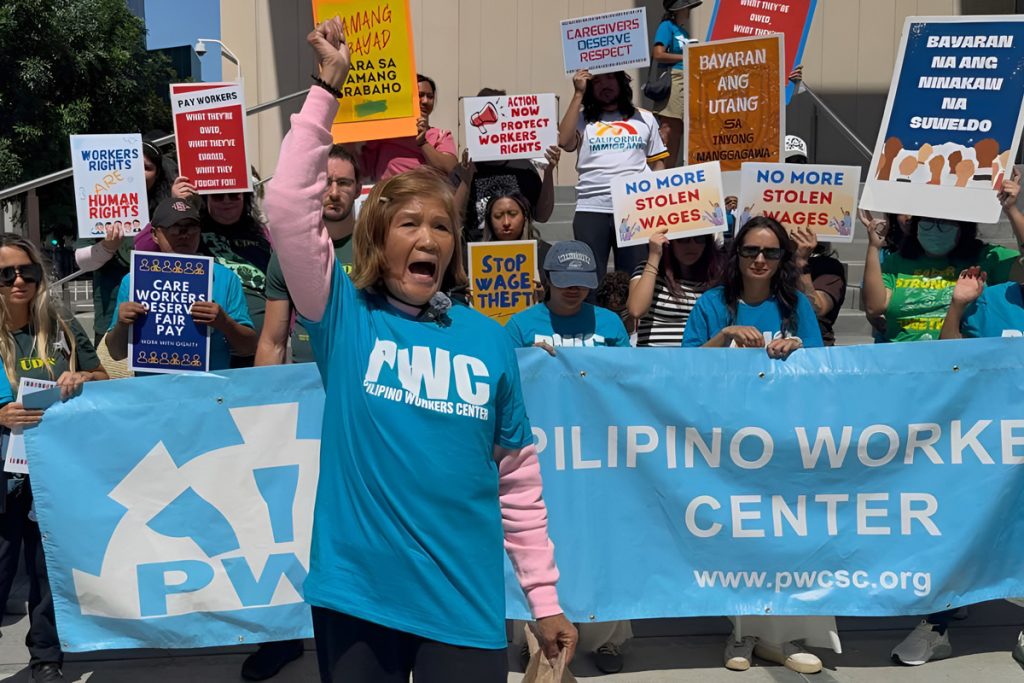
Sunshine Limbo arrived in Los Angeles via the Philippines and Saudi Arabia, and was grateful to find a job caring for elderly residents at a six-bed facility. She had no idea that earning a total $53 a day for her 24-hour shift was illegal.
But after she met organizers with the Pilipino Workers Center of Southern California, she learned her paltry pay amounted to wage theft. She found out she was entitled to overtime pay and breaks. So she joined the center’s complaint of labor law violations, along with 147 other workers – and won part of a $5.5 million settlement reached in 2023 between the state Labor Commissioner’s Office and the Adat Shalom Board and Care Inc. in West Hills.
“At the time, I didn’t know the law,” Limbo said. “The Pilipino Workers Center really helped widen my mind.”
For nearly 30 years, PWC has organized low-wage and immigrant Pilipino communities to demand better pay and working conditions in Los Angeles and beyond. The nonprofit membership organization, which is supported by the California Community Foundation, has taken on wage theft, labor trafficking, immigrant rights – along with worker training, policy advocacy, voter education, leadership training and more.
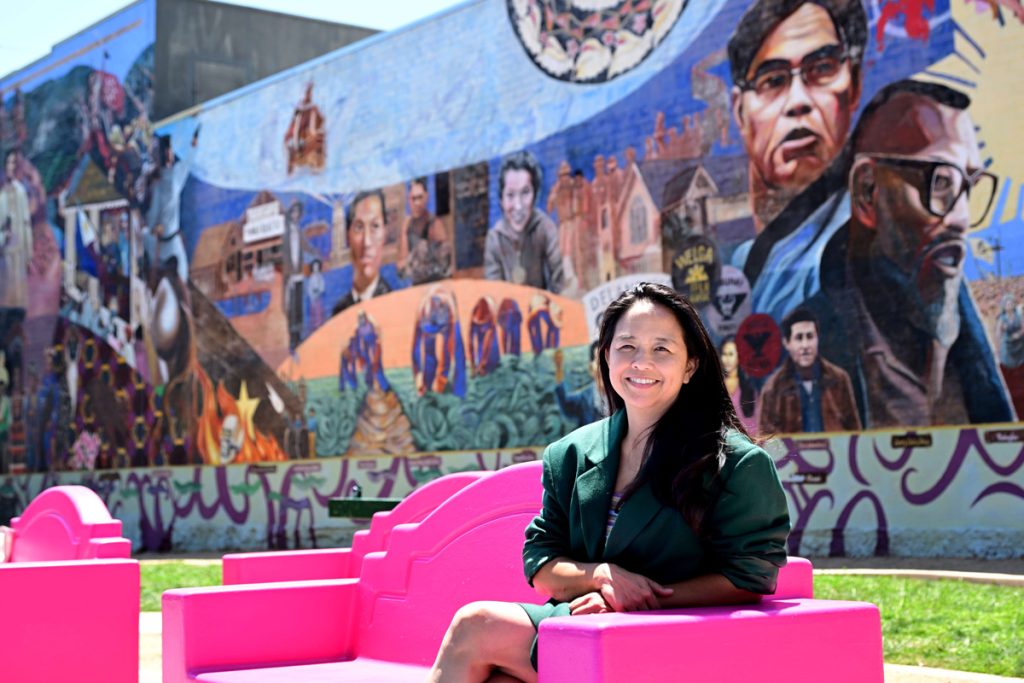
The heart of the center is Aquilina Soriano Versoza, the visionary executive director who founded the organization in 1997 after dropping out of UCLA and moving to the Philippines for a year. There, the Nebraska native immersed herself in the culture, mastered the Tagalog language and learned about the long history of community organizing in the Philippines – dating back centuries to the Spanish then American colonial eras and famously erupting in the People Power movement that ousted then-President Ferdinand Marcos, ending martial law.
Inspired, Soriano Versoza returned to Los Angeles with a mission to organize low-wage workers. Although Pilipino farm workers had played a major and largely unrecognized role in labor organizing – community icon Larry Itliong helped lead the 1965 Delano grape strike before Cesar Chavez joined – she saw an unfilled need for lifting up workers in urban communities.
“We knew the important role of workers in movements, the importance of their perspectives in overall social change,” Soriano Versoza said. “And we were really feeling that missing from the Pilipino community.”
But first she and other organizers had to find the community’s low-wage workers – who were less visible than the well-known corps of Pilipino nurses and doctors. With a model that combined service, education and organizing, the group partnered with a health clinic to offer TB tests for workers, many of them in the restaurant and grocery industry. They began food distributions at apartment buildings with many Pilipino tenants.
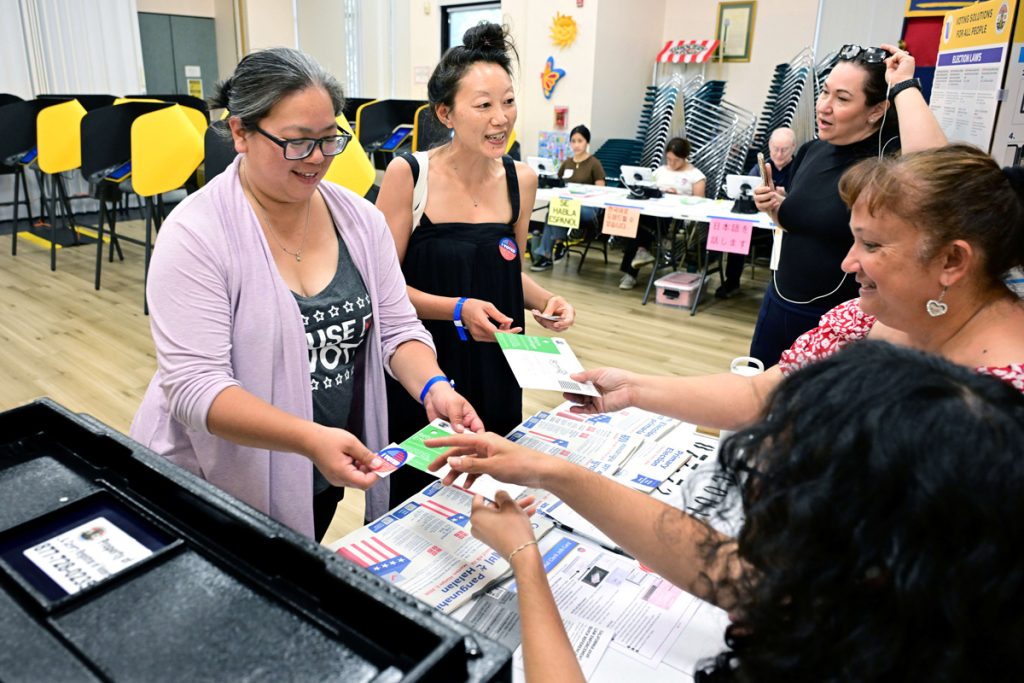
As Soriano Versoza and her team built relationships and trust, gaining entree into widening social circles, they learned about the community’s biggest concerns. They discovered that the home care industry overwhelmingly relied on Pilipino labor, that many workers were severely underpaid and that many of them were undocumented – a status they were shamed about known as “tago ng tago,” or “hiding and hiding.” They were often told to “just work and keep your head down,” Soriano Versoza said.
“Even some activists and community leaders thought no, we shouldn’t bring any attention to undocumented workers because we just want to stay under the radar,” Soriano Versoza said. “But that effectively shuts down their voice.”
The group began to organize the workers – no easy task since most of them worked behind closed doors in small board and care facilities or individual homes. They started a membership side of PWC, with regular meetings and annual congresses, along with training programs and social gatherings to provide the familial cohesion and warmth central to Pilipino culture. And they tackled labor abuses head on.
“We really saw that home care workers were a huge population experiencing some of the greatest exploitation,” she said.
The Adat Shalom case represented the biggest settlement reached so far. But PWC has brought more than 100 wage theft cases overall with more than $10 million in settlements awarded to both individuals and groups of employees. A new $3.5 million settlement between the U.S. Department of Labor and a Los Angeles care facility on behalf of 149 workers will be announced in coming weeks, Soriano Versoza said.
She said she expects wage theft cases to increase after the L.A. County Board of Supervisors approved a motion in May, pushed by PWC, to reframe enforcement strategy. Rather than waiting for workers to file complaints on their own, the county will proactively work with organizations such as PWC to build cases together in industries known for the highest incidence of exploitation, such as home care, garment making, car washes, janitorial services and agriculture.
The motion by Supervisor Holly J. Mitchell called Los Angeles the “wage theft capital of the United States,” where approximately 30% of low-wage workers have experienced serious minimum wage violations, with wage theft totaling roughly $1.4 billion annually. Workers lose an estimated $26 to $28 million every week to unpaid hours, overtime violations, stolen tips, illegal deductions, and non-payment of wages, the motion said.
Most recently, the center referred another labor exploitation case to San Diego County prosecutors, who have charged the Rose Garden Care Facility with human trafficking and wage theft. PWC also has lobbied on behalf of more than 200 Pilipino cruise ship workers with valid work visas who were detained and deported by U.S. Homeland Security agents.
PWC has been a partner of CCF for more than 15 years, first teaming up on U.S. Census outreach in 2010 and 2020. The center has been a key player in CCF-led coalitions advocating immigrant rights, including the Immigrant Integration Task Force and Immigrants Are Los Angeles, which develops immigrant-centered budget and policy requests for the L.A. county supervisors. The center’s work advances the foundation’s mission to lead positive systemic change and help all Angelenos access a good life, in part by building economic opportunity.
PWC supported displaced workers hit by the pandemic and the wildfires in Altadena, Malibu, Pacific Palisades and Pasadena, using CCF grants for emergency cash assistance and supplemental workforce training – how to care for patients with dementia and Alzheimer’s disease, for instance.
“A lot of the things that we do are about building long lasting infrastructure for workers to build more power for a goal, like the government actually functioning better in its job and being more effective in enforcing the labor laws,” Soriano Versoza said. “That can really change the landscape.”
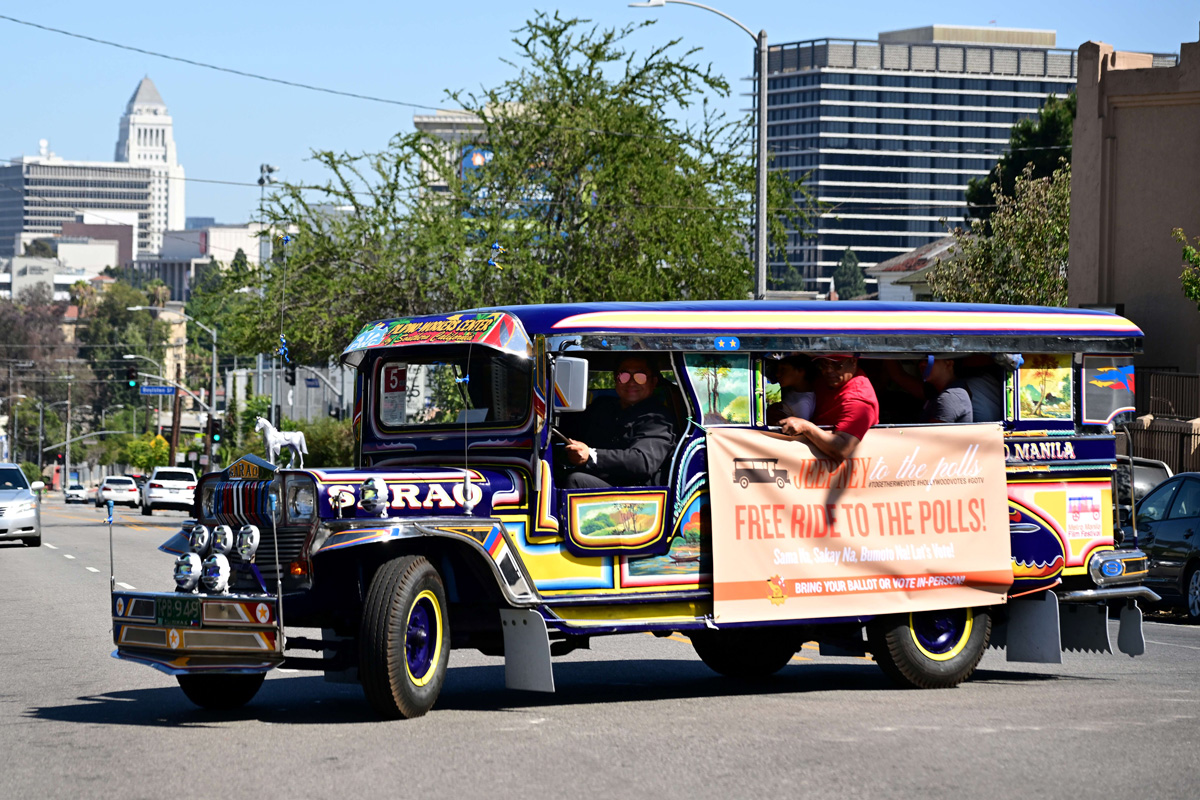
On a lighter note, the center also highlights Pilipino culture through tours of Historic Filipinotown in colorful jeepneys – repurposed military jeeps that have become icons of the Philippines with its vibrant colors, kitschy designs and chrome hood ornaments. During a recent outing, the center partnered with other nonprofits in a voter registration event, offering free Jeepney rides to the Los Angeles Public Library’s Echo Park branch. As the jeepney trundled down Temple St., drivers honked, waved and smiled.
“PWC is really a vehicle for the Pilipino American community to come together to improve their lives and make change,” Soriano Versoza said.
Limbo said that’s exactly what the organization has done for her. She will receive a six-figure payout from Adat Shalom, which has since shut down. She’s a member of a PWC worker-owned cooperative, featuring profit-sharing and democratic governance. She experienced the thrill of a trip to Washington D.C. to attend a national domestic workers conference. And she’s found a job she loves caring for elderly residents in a Chatsworth board-and-care facility, with a supportive owner who has helped bring her family members legally to Los Angeles.
“PWC gave me life,” Limbo said. “You learn a lot of things. You make friends. I can say 100% that PWC gave me strength to fight for everything. I’m in heaven.”
– Teresa Watanabe