New Leaders Aim to Create Good Jobs for All Angelenos
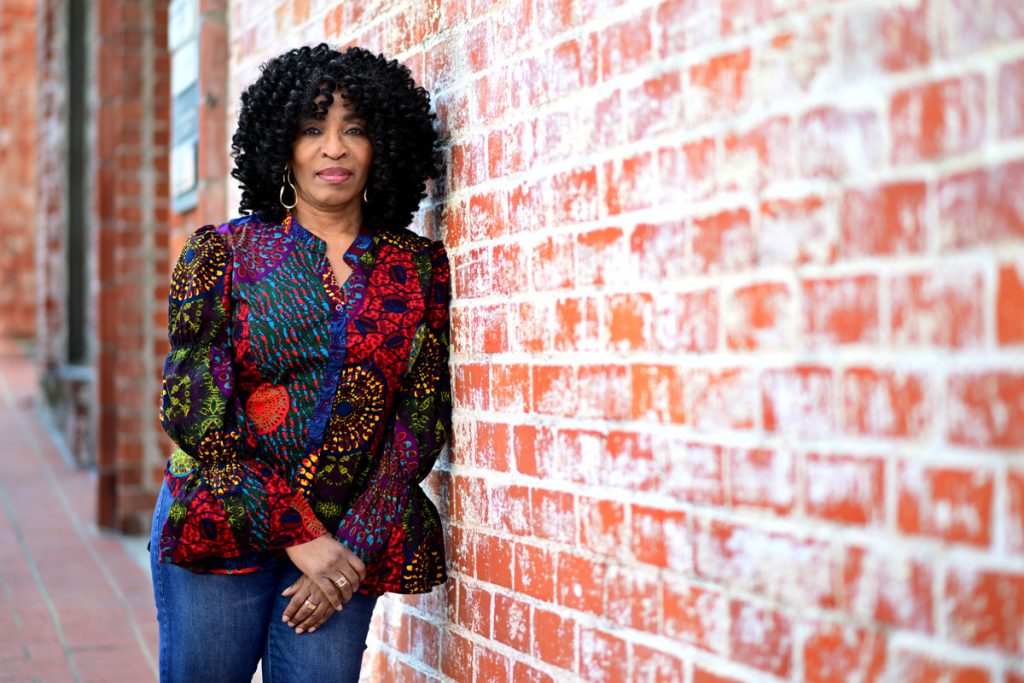
Kellie Todd Griffin devotes her life to helping Black women and girls overcome the challenges her nonprofit has documented – higher unemployment rates, lower wages relative to their education and more single-parent household heads than other groups.
Libby Williams is passionate about bringing economic opportunity to all corners of Los Angeles County, especially the Black and brown communities that have often been overlooked.
Now the two women are leading a countywide committee supported by the California Community Foundation and the Los Angeles County Economic Development Corporation (LAEDC) to help create, attract and increase good-paying jobs. A key priority is to make sure that all Angelenos share in the region’s economic prosperity. Their leadership roles, they said, underscore a major takeaway highlighted by February’s Black History Month: Progress and perseverance over centuries of hardship and racism.
“My ancestors survived slavery and sharecropping and civil rights, and we’re still here and still growing,” said Williams, who has worked on small business and economic development issues for the city, county, USC, Los Angeles Unified and her own consulting firm. “We’re resilient.”
Williams and Griffin are the newly selected co-chairs for the next phase of California Jobs First, a state initiative to help regions grow good jobs by investing in their local strengths, with a focus on equity and inclusion, sustainability, access to quality jobs, competitiveness and resilience.
The Los Angeles County Jobs First Collaborative, a group of more than 800 partners convened by the LAEDC, settled on seven key industries to promote after an unprecedented bottom-up approach based on listening sessions with hundreds of residents across the county. CCF supported the process by distributing $9 million last year in state grants to 26 innovative program proposals in aerospace, bioscience, transportation, clean energy, construction, health care and video production and distribution.
But the state initiative is set to sunset this fall, prompting local leaders to create a regional committee to continue driving the work forward. Williams and Griffin will help lead the new Investment & Sustainability Advisory Committee to develop the framework to secure sustainable funding, develop needed policies and continue efforts to make sure all communities equitably share in the economic growth.
Williams, for instance, recalls the county’s landscape of visible inequity she observed during a helicopter tour over the region. In South L.A., she saw blocks of concrete with few trees. As the helicopter headed west, the scenery abruptly changed to many more open green spaces.
“That disparity is something that drives me in terms of how I view my work,” she said. “Unfortunately, it always tends to be the Black and brown communities that are the ones left behind in terms of all of this growth. And that is what has always been my North Star in terms of focusing on economic development.”
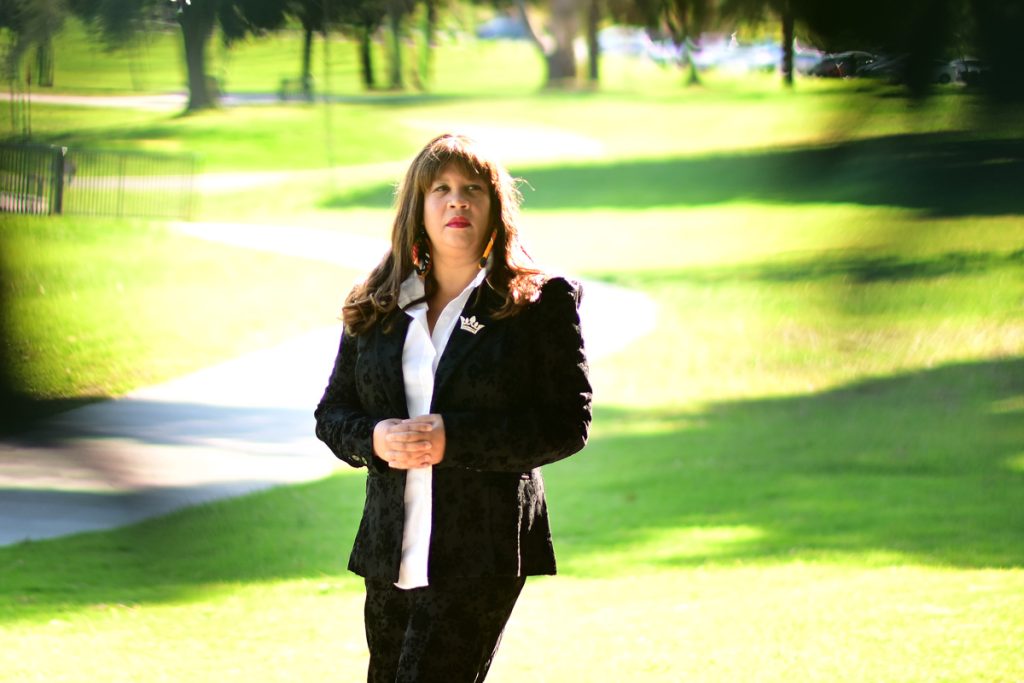
Griffin echoed that concern, noting that Black women don’t always follow the traditional ways of building economic stability. Her nonprofit, the California Black Women’s Collective Empowerment Institute, has found that family duties often take precedence over school because 67% of Black households are headed by single women. Those responsibilities contribute to lower college completion rates, Griffin said, and the need for more flexible paths to acquire postsecondary education, including certificate and apprenticeship programs.
Griffin’s own life reflects the winding direction that paths of stability and success can take. She was largely raised by a single mother, attended eight different schools, experienced homelessness for a year and dropped out of community college. But after both parents passed, she moved to Oakland to live with her uncle, a professor of Black Studies at San Francisco State University, and re-enrolled in college. She married, had a child and eventually moved to Texas, where she earned her bachelor’s degree in communications at the University of Texas at Arlington.
After moving back to Los Angeles, she landed several jobs – including the most transformational one at American Honda Motor Co., which opened its doors to more equitable hiring after being pressed to do so by the late Rev. Jesse Jackson, Griffin said.
“That journey has helped me understand that there is not a linear but a winding road of opportunities,” she said. “Sometimes the road is rougher than others, but the reality is that it all takes you to the same place.”
Williams was one of two family members to earn a college degree – her grandmother was the first, graduating from a Historically Black Colleges and Universities institution. Williams earned bachelor’s and master’s degrees in public administration at Cal State Long Beach and, at USC, a master of leadership degree along with a certificate in real estate development and finance.
Her resume is long, with positions at the LAEDC, Los Angeles Unified School District, the office of then-Mayor Antonio Villaraigosa, USC, the Vermont Slauson Economic Development Corp. and her own firm, Williams Consulting Group, LLC.
The two women say their leadership journeys reflect the progress made in their community even amid continuing struggles. The mayors of Los Angeles, Long Beach, Carson, Compton, Gardena and Lawndale are Black, they noted, as are L.A. City Council President Marqueece Harris-Dawson, County Supervisor Holly J. Mitchell and Yvonne Wheeler, who heads the powerful L.A. County Federation of Labor, AFL-CIO.
But they stress that their work on the new economic development committee will aim to enrich the lives of all Angelenos.
“I do see a lot of progress, especially with more Black leaders stepping up into these fields to make sure that our voices are represented,” Williams said. “But it’s not just about us. We want to bring everybody along with us as well.
“Just like with civil rights, we’re not the only ones who benefited,” she added. “All other communities of color also benefited. That’s just who we are.”
– Teresa Watanabe