
For more than a century, CCF has worked alongside donors, nonprofits and communities to expand access to a good life for all across Los Angeles County.
Our five interconnected priorities reflect the conditions that make a good life possible for every Angeleno.
CCF connects philanthropy with community priorities, investing in organizations and partnerships that strengthen communities and expand opportunity across Los Angeles County.
CCF helps donors turn their charitable vision into meaningful impact, with personalized expertise and deep knowledge of Los Angeles County.
Explore stories of the people and organizations shaping Los Angeles County, along with the latest news and updates from CCF.
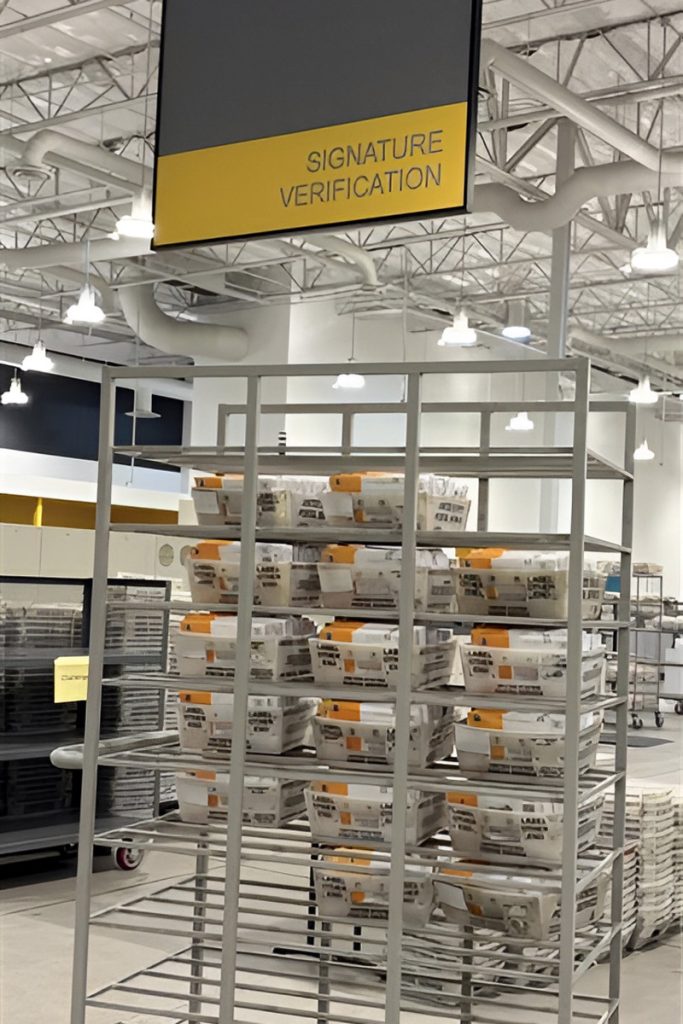
In a sprawling facility in eastern Los Angeles County, the ballot processing center for the nation’s largest election system is already buzzing with activity a few weeks before Election Day.
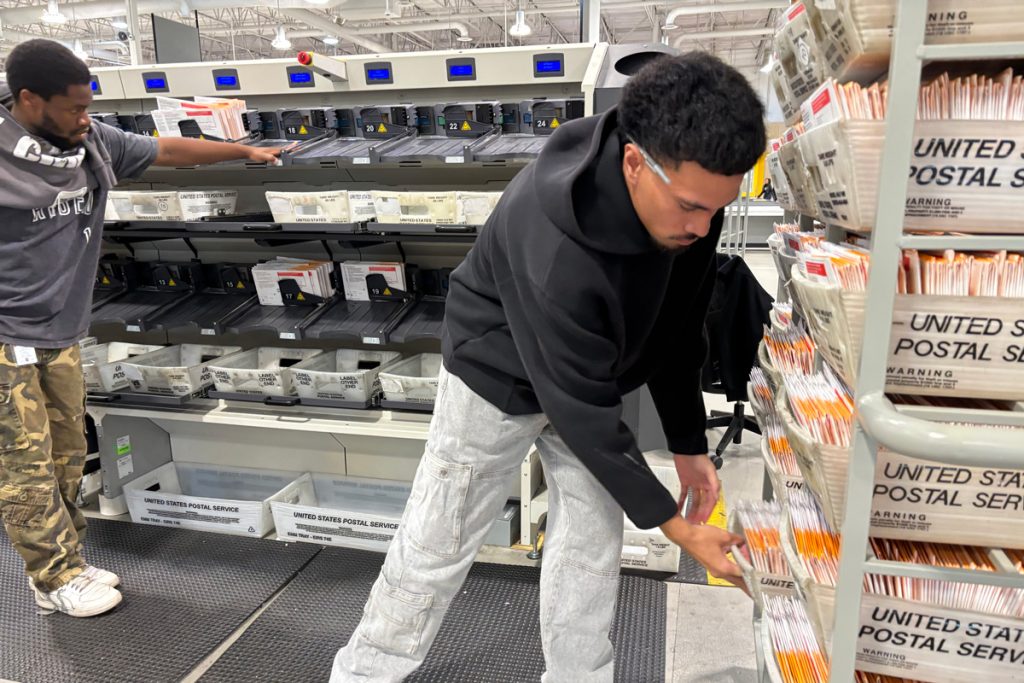
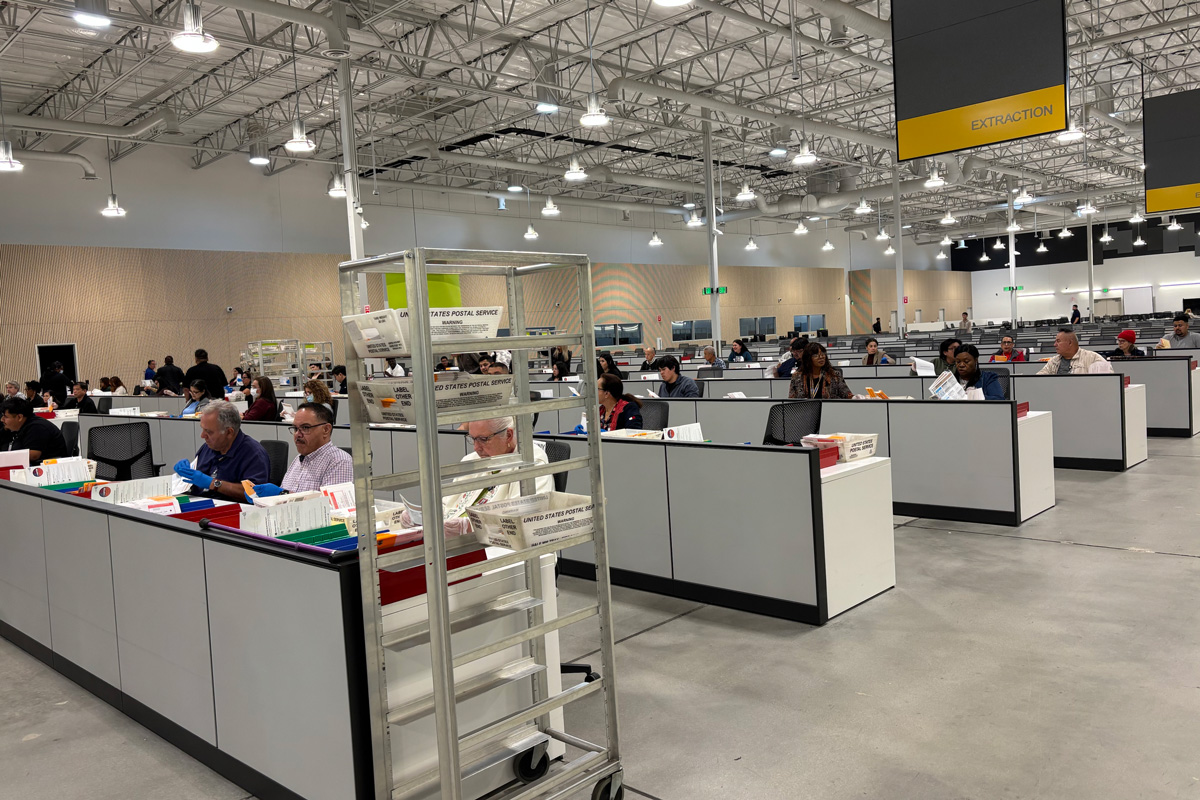
Specially trained detection dogs sniff ballot envelopes for any harmful substances. Sophisticated machines verify signatures on ballots – processing 40,000 an hour – and separate those that need human scrutiny. Workers who remove ballots from the signed envelopes are not allowed any writing instruments that could change a vote. Inside the ballot tally room, 24 scanners have been tested, ready to tabulate the votes on a computer system isolated from the internet and external networks to guard against hacking and tampering.
At a time of high political tensions and widespread questions about election integrity, L.A. County officials have this message: Your vote is secure.
“I want to reassure the voters of Los Angeles County that we are ready for this election, and that voters can have confidence that their vote is being handled in a secure, transparent and accurate manner,” said Dean Logan, L.A. County Registrar-Recorder/County Clerk, who oversees elections, voter registration and public records. “We are making sure that every ballot vote is going to be counted and properly handled before we certify the election.”
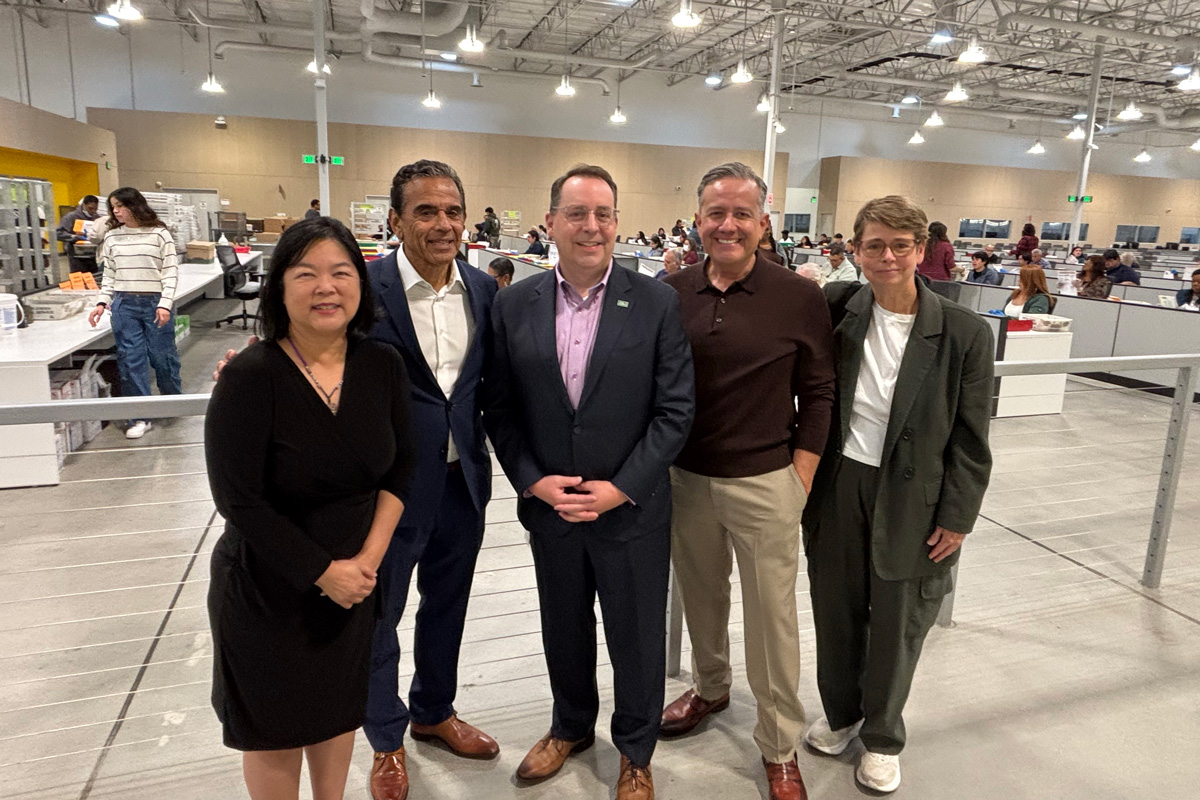
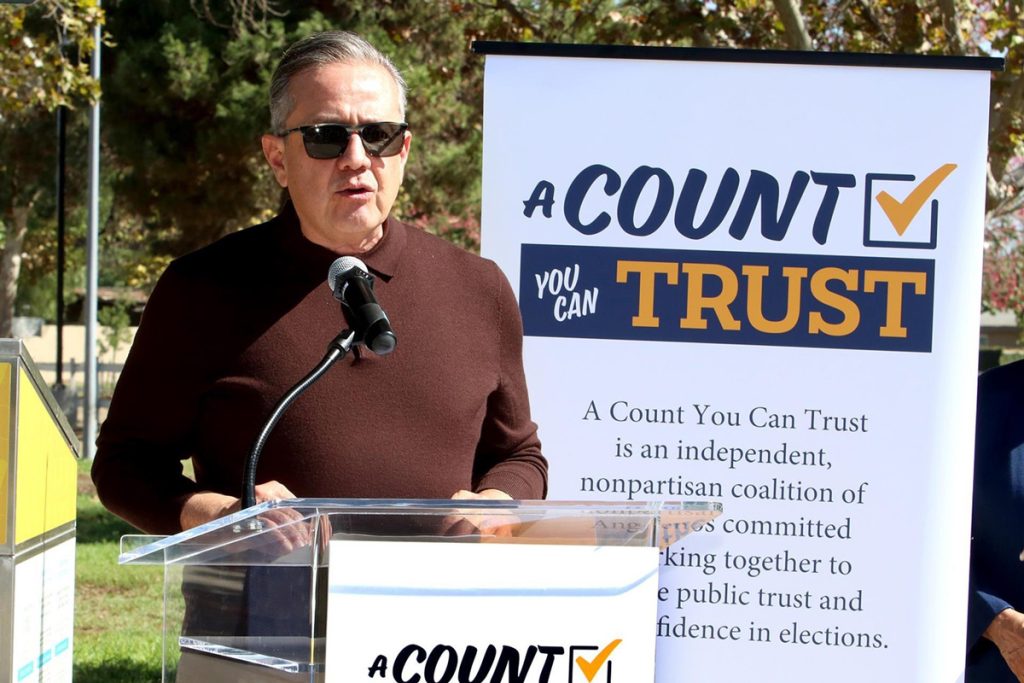
Election officials aren’t alone in trying to reassure voters. The California Community Foundation has joined forces with former Los Angeles Mayor Antonio Villaraigosa and other partners in a campaign aimed at strengthening public trust in elections by helping voters understand how ballot processing works and the safeguards in place. Coalition members include civic, religious, business and community leaders from throughout the county and across the political spectrum.
“Our goal is simple: help every registered LA County voter understand that their vote matters, and that they should have confidence in the largest election system in the country,” CCF President and CEO Miguel A. Santana said at a news conference launching the “A Count You Can Trust” campaign.
Villaraigosa, a Democrat, and Cameron Smyth, a Republican who formerly served as Santa Clarita mayor and state Assembly member, both recalled that even when they lost elections, they never questioned the integrity of the ballot counting process.
“I had full faith and trust in the process and in the voters’ decision,” Smyth said. “But I think we can all acknowledge that we have seen an erosion of that trust. That’s a reason why I wanted to be part of this coalition – to help restore that public trust, because open and transparent elections are really foundational to our republic.”
A recent survey by the UC Berkeley Institute of Governmental Studies, co-sponsored by the L.A. Times, found that one in three Californians was not confident in the integrity of the state’s election system and more than half had concerns about delays in the vote-counting process.
To build back trust, the coalition’s website provides information on how to register to vote, check your registration, track your ballot, find a vote center or ballot drop box. The public may also observe the ballot counting process in person or via the ballot processing center’s livestream supported by 270 cameras installed for both transparency and security.
Santana, Villaraigosa and other partners observed the process firsthand in a recent tour of the Los Angeles County Ballot Processing Center in the City of Industry. Here, in this cavernous 144,000-square-foot facility, all ballots cast by the county’s 5.9 million registered voters – a larger electorate than those in 41 states – are processed and counted. Nearly 3.8 million ballots were cast in the November 2024 General Election.
But since then, concerns have escalated about the security of the process. Election officials are approaching the November midterms with heightened vigilance, preparing for threats ranging from cyberattacks and voter intimidation to possible federal interference, even as they express confidence in the security of their voting systems.
County officials added new security measures at the ballot processing center – including armed guards and a metal detector – after the June 2026 primary, when people with “emotions” came to the center banging on the doors, said Kathay Feng, senior deputy for the Los Angeles County Registrar-Recorder/County Clerk. County officials have noted ballot seizures by federal and county officials in Georgia and Riverside, she said, and have made plans to guard against similar incidents.
“We’re making sure that we’re the only ones who are going to be touching those [ballots] because once it gets seized by any other entity, regardless of who they are, it breaks the chain of custody and it potentially puts into jeopardy the public’s confidence in what the results are,” Feng said.
County officials are also preparing for disruptions at vote centers. They will coordinate with local law enforcement, county counsel and the state attorney general if needed. They’ve collaborated in training staff and volunteers to deescalate and document any incidents and will deploy them to vote centers, particularly in communities most vulnerable to federal immigration enforcement activities, as identified by the L.A. Economic Development Corp. They include Mission Hills-Panorama City; Bell, Pico Rivera, Southeast Los Angeles and neighborhoods around downtown Los Angeles. County officials – and CCF – have also provided grants to trusted nonprofits to help train and mobilize observers.
Voters can call the county at 1(800) 815-2666 with reports of disturbances or any questions about ballots or voting.
Beyond safeguarding the voting process, county officials are also working to ensure timely results.
Feng said nearly 97% of all ballots are counted in the first week. Early voting would help speed that up – and avoid long lines and any possible disruptions on Election Day, she said. But, for the first time, the county will process ballots around the clock for at least four days after the polls close.
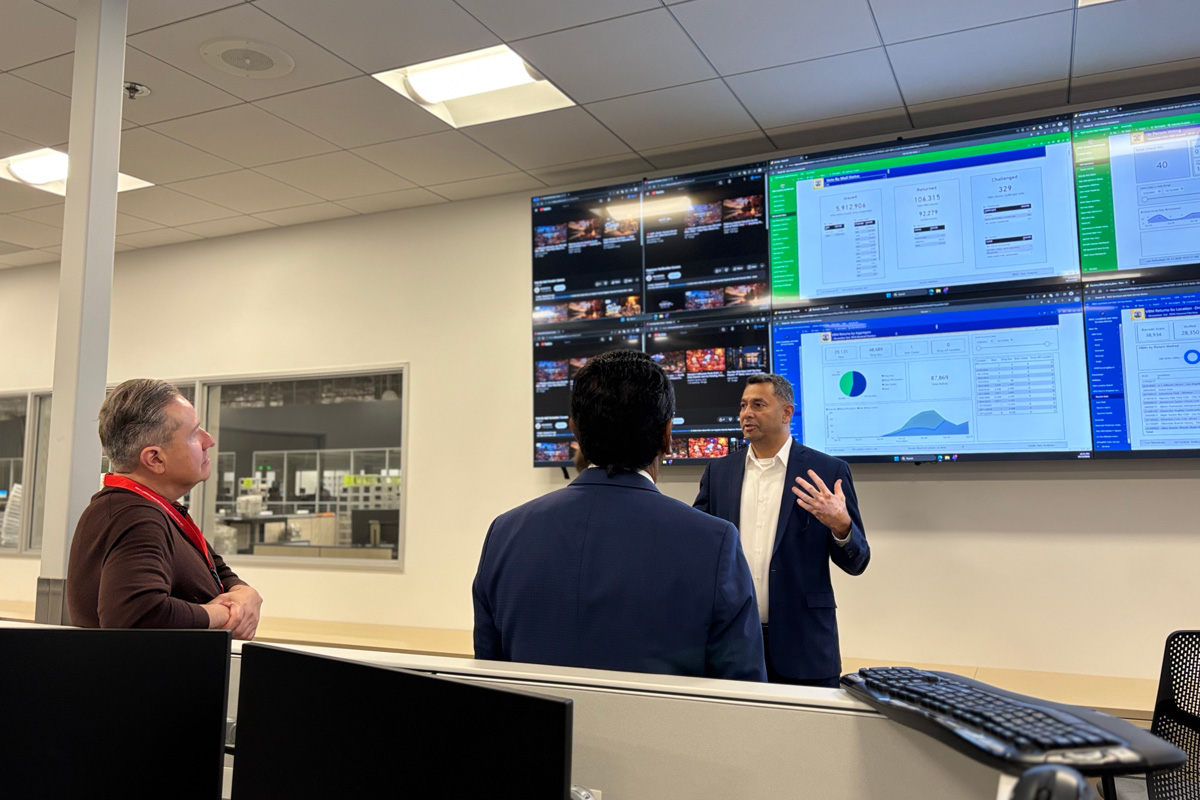
In the command center, multiple video screens display myriad data: how many ballots issued, returned and challenged. How many are mailed or put in drop boxes. How many people are voting in person. Aman Bhullar, assistant registrar-recorder, said officials can see whether lines are forming, how long the wait is and whether to dispatch additional resources, including mobile and pop-up vote center teams.
Santana said demystifying the ballot counting process will help build trust in it.
“When voters don’t understand the voting process or why a complete and accurate count takes time, the normal steps of the process can look to be problematic,” he said. “We believe that the answer is simple: provide clear information shared by people that you know and you trust.”
Feng added that celebrations around voting can also instill confidence and participation – ballot parties, haunted houses, Día de los Muertos gatherings.
“We want to change the approach to voting from just being a duty to something that is voting joy,” Feng said.
– Teresa Watanabe