ICE Raids Devastated Immigrant Entrepreneurs. This Nonprofit Stepped in to Help
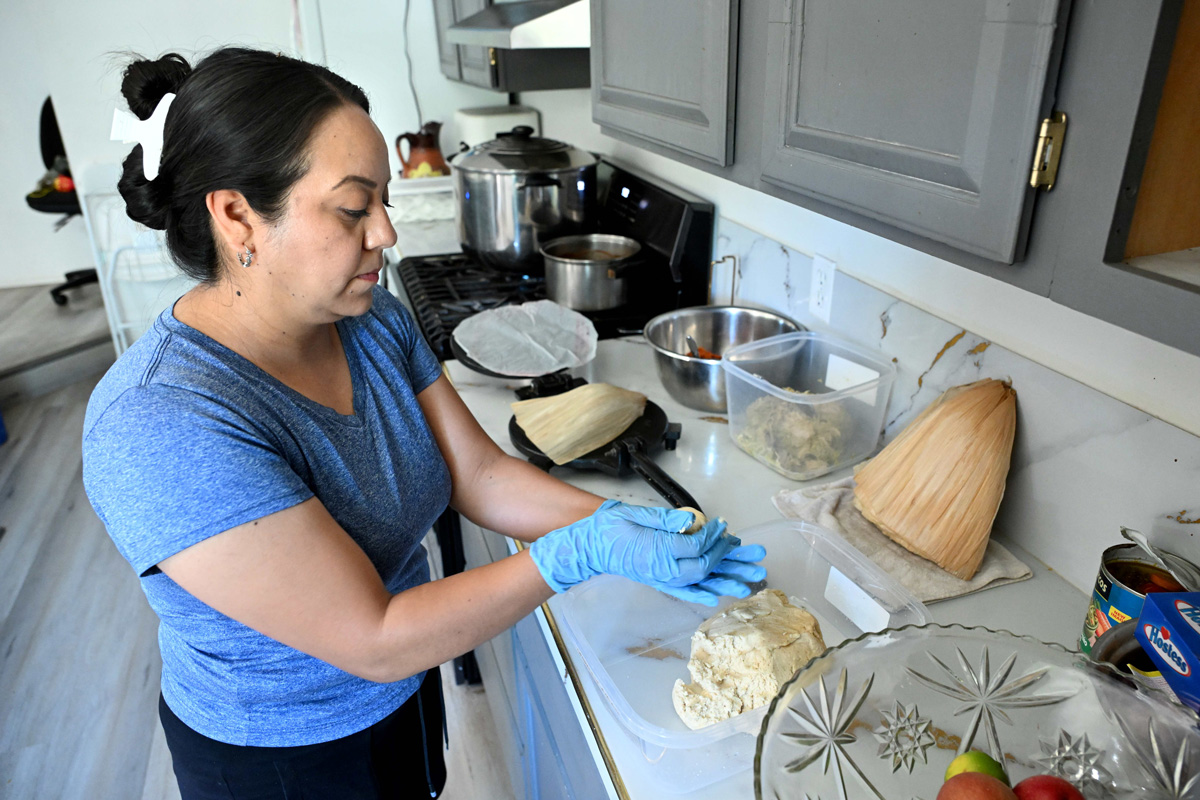
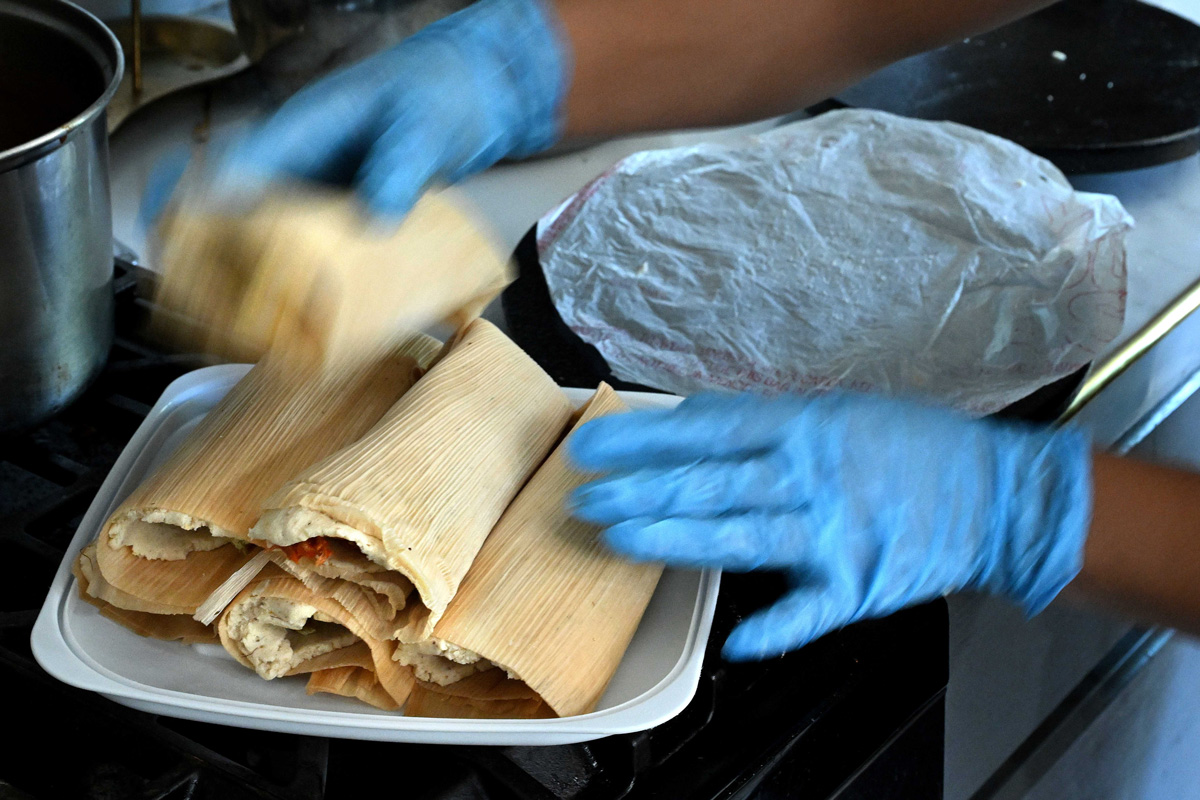
For years, Yedit sold tamales out of the trunk of her car near a freeway off ramp in the Santa Clarita area, bringing in essential cash to support her family of five.
Then her business collapsed. Federal immigration agents appeared “everywhere,” she said, taking her colleagues in aggressive raids beginning last June. She stopped working for five months, cutting off her financial lifeline. She and her husband, a construction worker, stressed over losing the house they had just bought as debt piled up. The family survived on rice, beans and canned tuna – forgoing chicken and most fresh fruits and vegetables. They stayed home, too scared to risk family outings.
But a friend told her about Inclusive Action for the City, a nonprofit supported by the California Community Foundation that promotes economic justice and opportunities for immigrant entrepreneurs and communities of color. Miraculously, Yedit said, the nonprofit’s training and support has helped her make more money now than before the raids.
“I can say it’s been a turning point to revive my business,” she said.
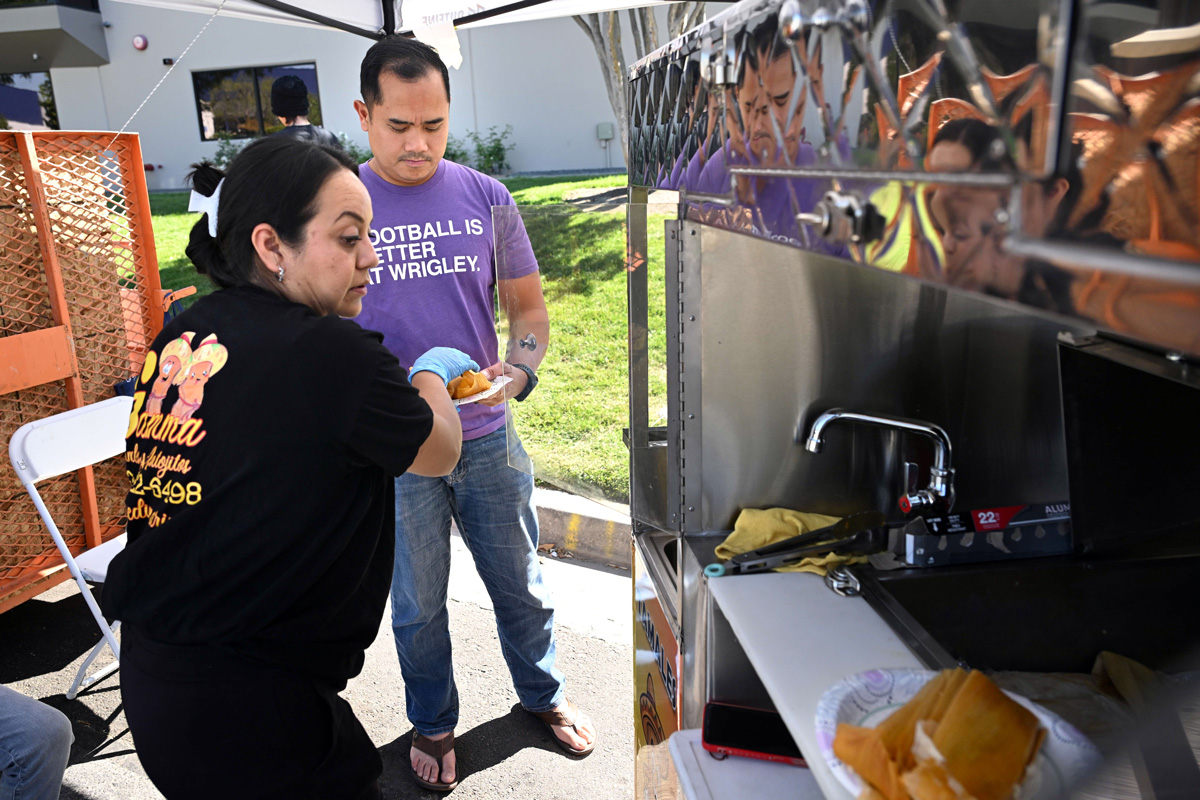
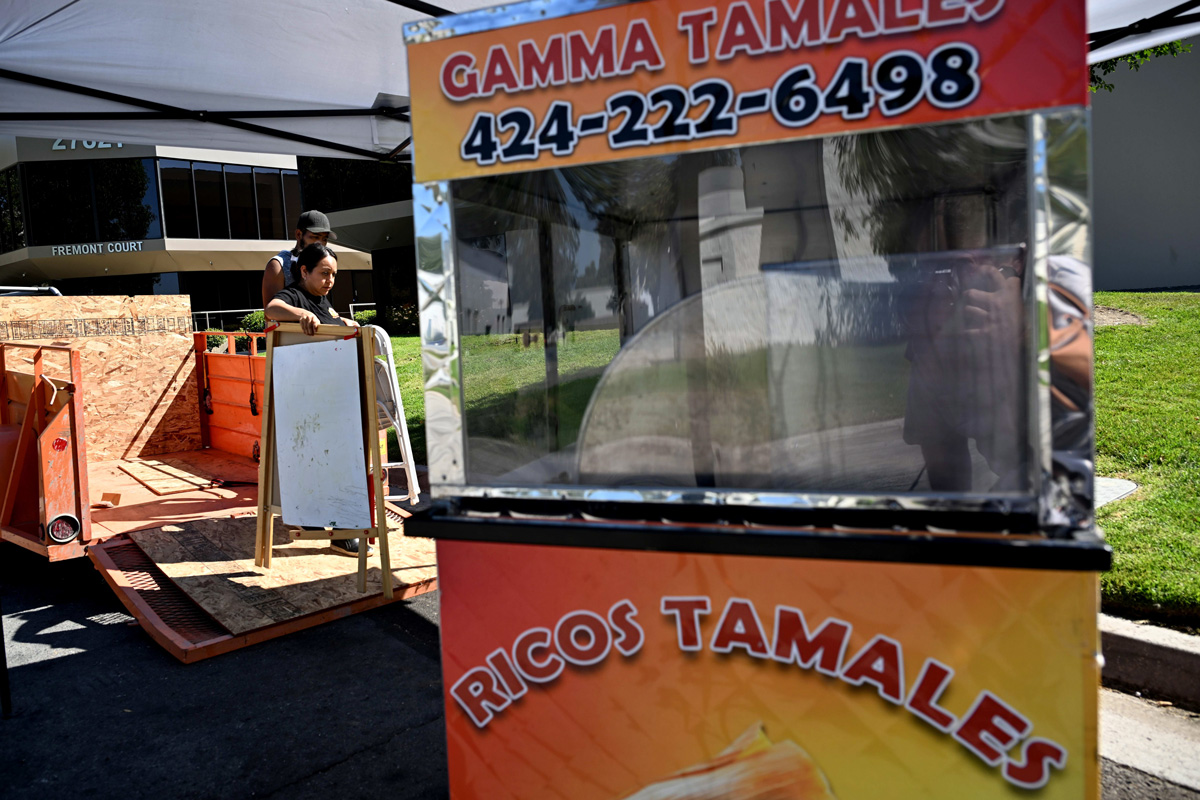
The nonprofit helped Yedit secure a professional food cart and legal vending permit from L.A. County. Trainers taught her sound financial practices. Two critical supports were courses in how to set up a catering business – allowing her to sell food in more protected spaces such as private parties or events – and a food management training process that has enabled her to sell from her home.
Before the raids, she was making $200 to $300 a week working every day selling tamales for $2 each. But with her legal vending license, she is now charging $3.50 per tamale and, through catering and home sales, bringing in far more in monthly income. During just the first two weeks in May, for instance, she made $4,200 from two events.
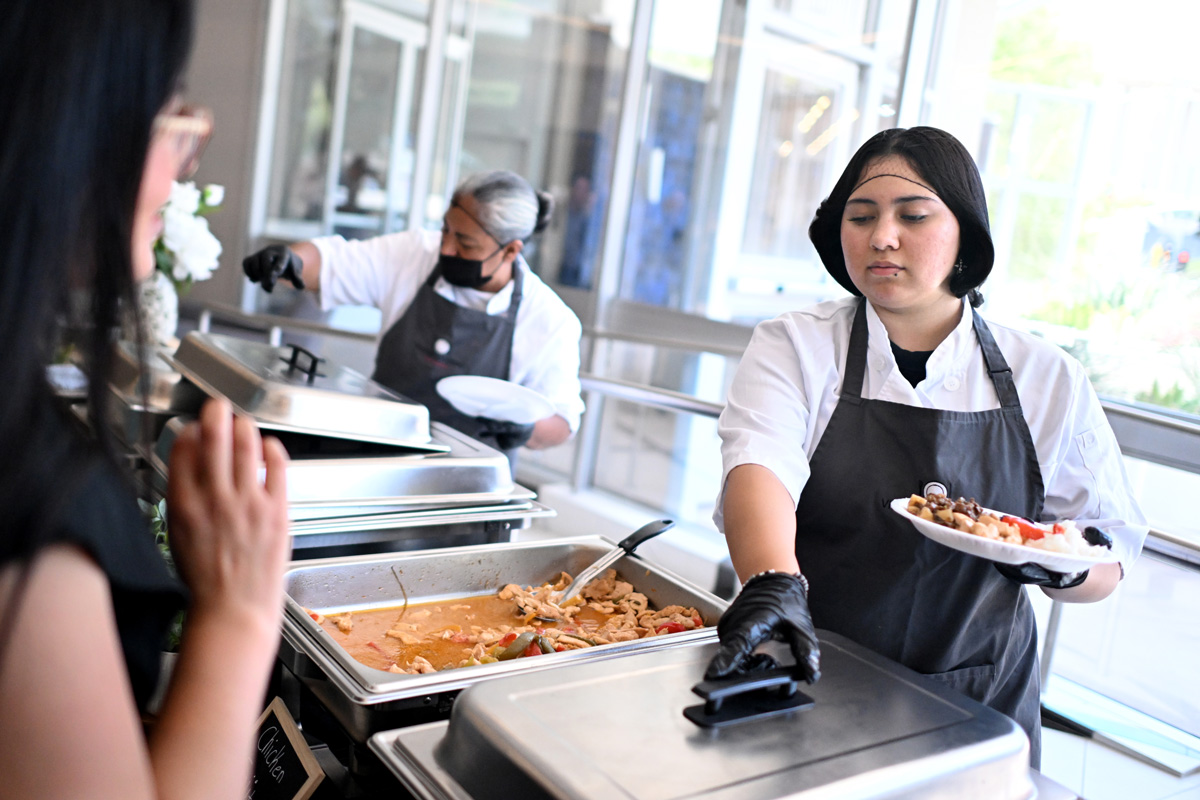
Empowering workers is at the heart of Inclusive Action’s mission. In the early months of the raids, the nonprofit used a grant from CCF’s Los Angeles Neighbors Support Fund to distribute $500 emergency cash cards. Inclusive Action also expanded its “Hire a Vendor” program, offering training on how to cater, along with courses on tax preparation, financial practices, home kitchen management and other skills.
The nonprofit, in partnership with other organizations, has also helped win passage of state legislation that requires all cities to set up a food vendor permit process and bar the state from sharing data about street vendors with the federal government.

And even as raids continue, creating fear and hardship throughout the community, Inclusive Action is staying the course.
“Despite all of the threats from the federal government, our team is really committed to the work we’re doing because it’s the right thing to do,” said Rudy Espinoza, Inclusive Action’s president and CEO. “The call to action for me is that we have to put our foot down and say we’re going to keep going. We can’t be afraid. We have to overcome our fear. That’s what our vendors are relying on us for.”
Other organizations are also stepping up, coming together to celebrate Immigrant Small Business Week that began June 21. CA4US, a statewide coalition of business, labor, philanthropy and civic leaders working to protect immigrant communities and speak out against the devastating economic impacts of immigration enforcement, has published a list of immigrant businesses to support during these fraught times.
“Our ask today is simple: show up,” said CCF Chief Impact Officer Cielo Castro at the immigrant business week kickoff. “This week and beyond, support immigrant-owned businesses in your neighborhood. Share a meal. Bring a friend. Buy from the shop down the block.”
Small businesses are a cornerstone of the Los Angeles economy and immigrants own a disproportionately large share of them. Although immigrants make up only 36.3% of the L.A. economy, they account for 51.4% of all business owners – numbering about 168,400 entrepreneurs who generate $4.3 billion in business income, according to research by the UCLA Latino Policy & Politics Institute.
But the ICE raids have devastated immigrant entrepreneurs, as detailed in an upcoming report by the UCLA institute and Inclusive Action. In interviews with 84 small business owners in food, furniture and other enterprises, 82% reported a “major” impact with nearly two-thirds of them forced to shorten hours, lay off staff, close down entirely or take other steps to survive. More than half of those interviewed lost more than half of their income.
Overall, federal immigration enforcement activity in L.A. County during June 2025 resulted in an estimated $1.4 billion in economic losses, including lost worker productivity, labor income, business revenue and tax revenue, according to an analysis by the Los Angeles County Economic Development Corporation.
Amada Armenta, the UCLA institute’s director, testified at a People’s Hearing on Immigration Enforcement this month that vendors have lost thousands of dollars in unsold food. An entrepreneur had purchased $5,000 of graduation supplies but was stuck with that inventory after every single client cancelled party plans. A furniture owner took on $100,000 in new debt.
She also shared data that documented, through mobile phone pings, a decline in foot traffic in retail areas near ICE raid sites – including Westlake, Paramount, Pacoima, Huntington Park and downtown L.A. The decline ranged from 3% to 8%; researchers are still calculating the potential business revenue loss but expect it to be significant, Armenta said.
A year after the raids launched, nine in 10 entrepreneurs interviewed were still losing money or barely breaking even.
“It was much worse than I thought it would be,” Armenta said in an interview. “People haven’t bounced back.”
Compounding the crisis, both federal and philanthropic funding to Inclusive Action has declined in the last year, Espinoza said. The nonprofit has been waiting for 18 months to receive an expected $500,000 grant from the federal government to support its small business loan program.

Such low-interest loans have been critical for many entrepreneurs – some of whom have been fleeced by predatory lenders who charged Yedit, for instance, $9,000 for a $3,000 loan.
In contrast, Gonzalo Monti was able to start his Inglewood furniture store, X-elence, with an Inclusive Action loan, which helped him buy inventory and ready his store with new paint, lighting and other improvements. An immigrant from Argentina, Monti worked three jobs, seven days a week – and lived in a garage with no windows or bathrooms – to save money to realize his dream of starting his own business.
He survived the pandemic – but is not sure he’ll be able to weather the huge drop in business ever since the ICE raids began. About 80% of his customers are Latine, he said, and they’ve disappeared. His monthly sales revenue has plunged from $70,000 to about $25,000; he’s laid off five of six employees and has had to dig into his savings to survive. If things don’t pick up within a year, he’s afraid he’ll have to liquidate his business.
“Nobody is in the streets. Nobody comes in,” he said. “Every day is heavier and heavier.
“This country was made by immigrants,” Monti added. “We want to work. We want to pay taxes. Give us the opportunity.”
Monti and Yedit said that Inclusive Action has been invaluable in supporting them during this fraught time. Yedit said she feels more secure and empowered now than ever before.
“If I have any doubts or fears, I know Inclusive Action will be here for me,” Yedit said.
– Teresa Watanabe