ICE Detained Their Children, Siblings, Partners and Parents. Now, Families Are Building Power to Bring Them Home.
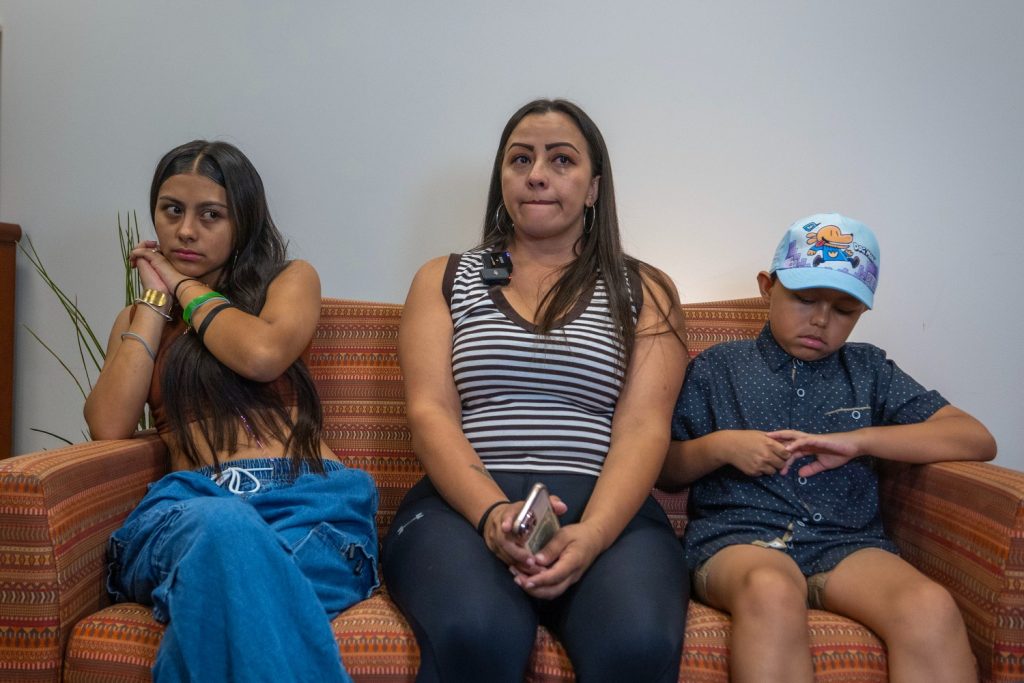
Jenifer’s parents, both in their 50s, were detained after a court hearing, separated, and are in custody in Adelanto and Florence, Arizona.
Miriam and Edgar fled to Los Angeles last year, seeking protection from persecution they say they faced in their home country of Colombia. But when their asylum petition was denied at a court hearing in July, immigration agents were waiting outside to detain them.
The married couple in their 50s are being kept in separate detention facilities – Miriam in Adelanto and Edgar in Florence, Arizona. Their family is especially anxious about their frail health, as Miriam is a two-time cancer survivor and Edgar suffers from epilepsy, their daughter, Jenifer, said.
Other families have also received distressing messages from their loved ones who were picked up in the U.S. Immigration and Customs Enforcement raids that began in Los Angeles in June . The detainees have described meager diets, humiliating treatment, illness and depression – which only heightened their families’ anxiety, terror and fear over the raids. Some people have shuttered themselves inside their homes, too frightened to go to work, school or other outside venues.
But about 30 families found solace and strength Saturday, when they gathered with others whose loved ones had also been taken by immigration agents. They came together in person for the first time to build community solidarity, obtain information and learn how to mobilize for change in a daylong event organized by the Coalition for Humane Immigrant Rights (CHIRLA).
The event was held at the California Community Foundation, which has long supported CHIRLA, most recently through its new Los Angeles Neighbors Support Fund. The fund supports community nonprofits to deliver groceries, provide cash for rent and meet other community needs during the humanitarian crisis caused by the raids.
Angelica Salas, CHIRLA executive director, said she and her staff had been meeting with many families on Zoom to ask if they would be willing to join the fight to win the release not only of their own loved ones but those of other families as well. The nonprofit has received more than 1,600 messages and calls about the raids and more than 1,000 requests for direct assistance in partnership with the Immigrant Defenders Law Center, she said.
At the in-person gathering, the families met with activists, legal experts and elected officials.
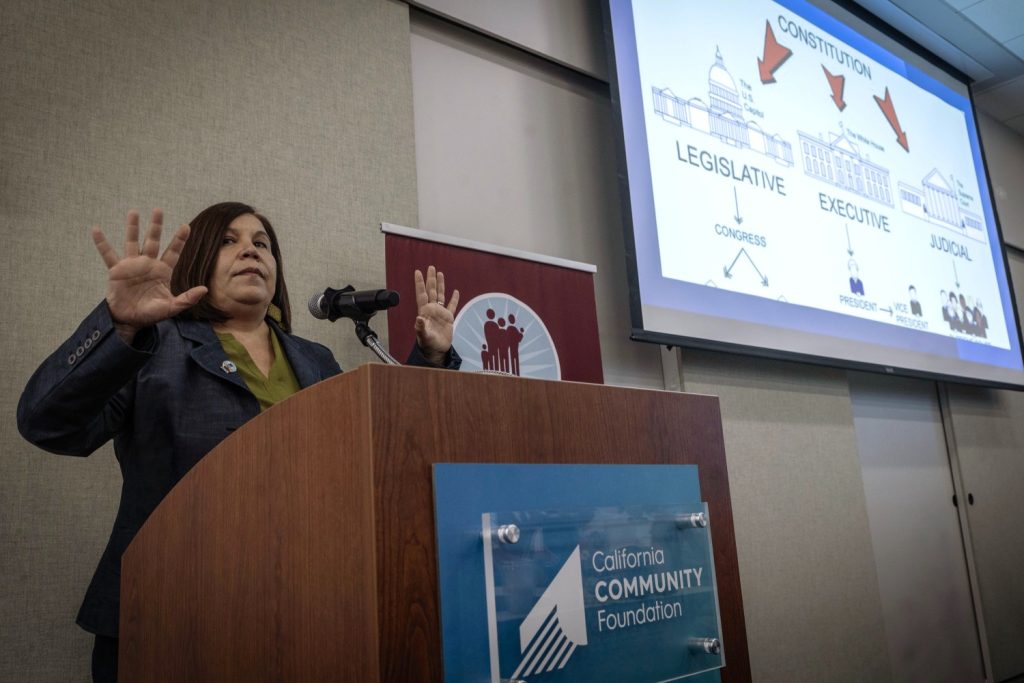
CHIRLA executive director Angelica Salas tells families that with courage and unity, they can create change.
L.A. Mayor Karen Bass reassured them with a strong pledge of support: “I just want you to know that the city stands behind you,” she said. “Los Angeles has your back.”
The families learned how successful organizing scored big wins in California, including in-state tuition, financial aid and drivers licenses for undocumented immigrants. The information prompted the audience to break out into chants of “Si se puede!”
State Senator Maria Elena Durazo, a child of migrant workers who became a prominent labor organizer and union leader before entering electoral politics, told them participation is critical to change.
“If we don’t organize, there will be more injustices,” she said. “That is the lesson of all of these years.”
Other elected officials who came to pledge support included state Assemblymembers Nick Schultz and Mike Gipson.
CCF President and CEO Miguel A. Santana said it was important for elected leaders to witness firsthand how the raids impact the people they represent—and how those communities are organizing to protect themselves and their families. “Their presence made it clear they cannot be ignored,” he said.
The families were repeatedly told that their voice matters in a big way.
“Our strength is based on…each and every one of you who are here, because no one knows what you’re going through more than you,” Salas told them. “You are the people who have to educate and make others understand why what you’re experiencing is a great injustice and why we have to do everything possible so that nothing like that happens to other people, but more importantly, organize ourselves so that our loved ones are returned to us.”
In another session, the families had the opportunity to ask myriad questions about the legal process involved in detentions and deportations: How do you get bail to win release from detention while the process plays out? What happens if it’s denied? How do you know if you have qualified legal representation? Is it better to leave the country voluntarily or fight until and unless you are deported?
Speakers presented information on the current political landscape, how to contact your elected representative and legislative proposals to ban law enforcement officers from using masks to hide faces, for instance, and requiring officers to display their names and badge numbers.
Most importantly, the families connected with each other. They cried together. They shared mementos of their loved ones – a grey t-shirt, a brown hat. They told stories of husbands and parents and brothers and cousins who wanted only to build a good life for their families and they expressed bewilderment, anger and anguish that they were now suddenly gone.
At first, Mary, a U.S. citizen, had refused to believe that her husband Jose had been picked up by immigration agents at his Whittier car wash. Not when her daughter sent her a video on TikTok that showed a man who looked like Jose being taken away by a masked man. Not even when she got a brief message from him on WhatsApp: “They got me.”
But when day turned to night and she had not heard from him, Mary began to worry. After 10 days, he finally called from a Santa Ana detention facility, shaken and tearful.
Her world collapsed as fears flooded her: Where would he end up? How would he be treated? How would she manage their rent, car payments and other bills on her own? And how could she emotionally survive without her life partner, a kind and generous man who never came home from work empty-ended, but always brought her flowers, perfume, ice cream and other treats?
“My husband means everything to me,” she said. “What am I going to do?”
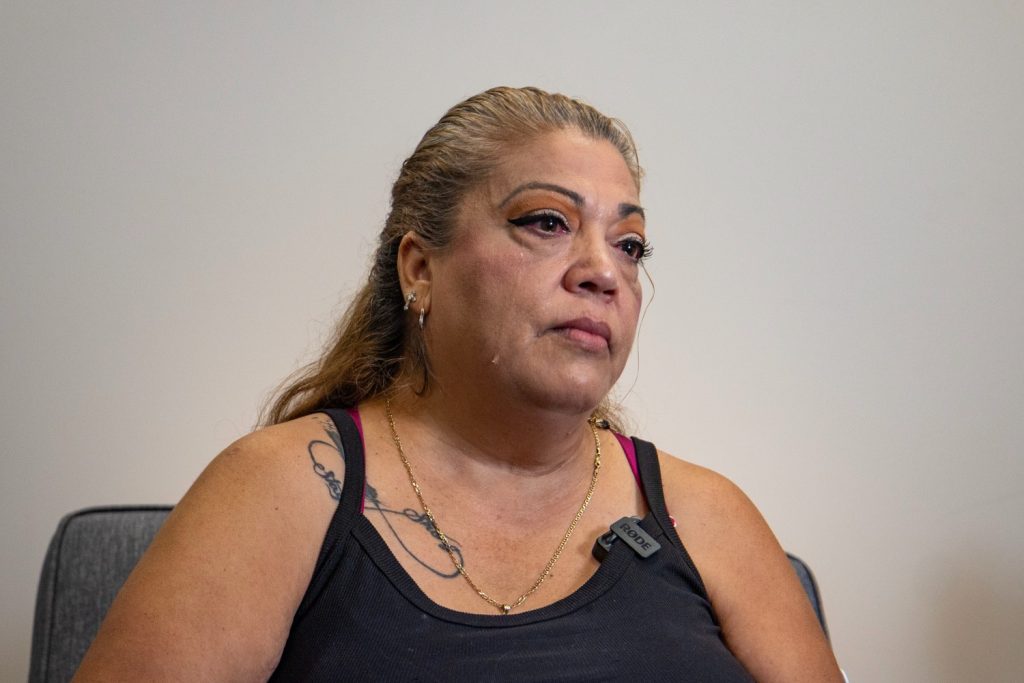
Mary saw a TikTok video of her husband being detained by a masked man at a Whittier car wash. She did not hear from him for 10 days. He is now in custody in New Mexico.
CCF President Santana said in an environment of fear and trauma, engaging with others can be affirming for vulnerable people. “When people experience trauma, sharing their stories helps them see they are not alone. Working together fosters healing, shows them they can improve their own situations, and even change the laws and systems that may be working against them,” he said.
Mary said she and other families now have many more friends, allies and supporters after the day of networking and strategizing at the CHIRLA event. Mary made two new friends whose loved ones, like her Jose, are also being detained in New Mexico; they plan to keep each other updated on their cases.
“I feel like I’m not alone,” Mary said.
Her message to the community: “Stay strong. Have faith. Everything will be better.”
Salas, of CHIRLA, said more gatherings will be planned. She said she is hoping that the families who attended Saturday will spread the word to others to join the fight and increase their community power.
“The first most important thing is that they showed up. It’s an act of courage to show up,” she said. “They’re willing to fight with each other, and struggle as united families to change things.”
–Teresa Watanabe
The Los Angeles Neighbors Support Fund provides groceries, cash assistance and basic necessities to families affected by immigration raids. Donations to the fund go to trusted community organizations like CHIRLA to directly assist families in need.