From Internship to Impact: Student Journalist Creates Printed Guide for Immigrants Amid ICE Surge in L.A. County
Karina Soriano spent her summer internship at Los Angeles Public Press doing something her community desperately needed: creating a bilingual guide telling immigrant families in L.A. County what to do if ICE agents knock on their door.
Soriano, of Norwalk, started the internship last June just as Immigration and Customs Enforcement agents were ramping up efforts in nearby neighborhoods like Paramount. She quickly grew alarmed at the lack of clear, Spanish-language information available to her community.
Soriano, whose first language is Spanish, helped create a bilingual zine titled “How to Navigate Living in an ICE-Occupied Neighborhood in L.A. County.” The goal was straightforward: help people stay safe, informed and prepared if they encountered ICE in their daily lives.
The pocket-sized zine includes know-your-rights information, digital security tips, guidance on avoiding high-risk areas and phone numbers for organizations assisting those targeted by ICE. It also includes role-playing scripts for what to say and do if stopped by immigration officers—an element drawn directly from Soriano’s own family experience.
The internship that enabled Soriano’s reporting was made possible through a newsroom partnership with Cerritos College Journalism and Media Studies department.
LA Public Press CEO and founder Matt Tinoco said partnering with local colleges is central to the non-profits outlet’s mission of developing diverse local talent and staying close to the communities it covers. Funding from the California Community Foundation helps make these internships and public-service projects possible, he said.
CCF’s financial support has been “integral” to sustaining newsroom operations and community-centered journalism projects, Tinoco said. The investment gave Soriano an opportunity to enter the newsroom at a critical moment and work on a project that blended lived experience with rigorous reporting, delivering life-saving information directly into the hands of those who need it most, Tinoco said.
“Journalism is one of those things that you learn by doing,” Tinoco said.
For Soriano, a central inspiration for the project was her mother’s encounter with federal agents at a gas station in Paramount. Her mother, a green card holder and nurse at a convalescent hospital, was stopped by officers as she was pumping gas after work. They questioned her in English about where she lived, where she was coming from and how long she had been in the country. Soriano, who tracks her mother’s location on her phone, had grown worried as she watched her linger unusually long at the gas station.
But Soriano had already role-played such scenarios with her, walking her through how to answer questions and assert her rights. Soriano believes that preparation helped her mother navigate the encounter and ultimately be allowed to leave. But the experience left her mother shaken; she stayed home from work for about a week, fearful for her safety.
Not long after, Soriano said she was followed by unmarked vehicles while driving her mother’s car along the 105 Freeway for more than 30 minutes.
Shaken, she called her editor Mariah Castañeda, LA Public Press audience director and co-founder. The newsroom arranged for her to receive free therapy sessions to help her process the anxiety and fear. That level of support, Soriano said, reshaped her understanding of what a healthy newsroom should look like.
“It was life-changing for me,” Soriano said. “Mariah really made me feel like I had a family there, and I had a group of people who cared for me.”
Publishing the zine took about two months of intensive reporting, drafting and editing to complete. The first print run was for 4,000 copies, all of which were quickly distributed. Libraries and community centers began requesting more, prompting additional printings.
Soriano focused her distribution efforts on the people she felt were most vulnerable — Spanish-speaking workers such as flower vendors, fruit sellers and day laborers outside places like Home Depot. The zine was designed to fit easily in a pocket or be folded and hidden quickly if necessary.
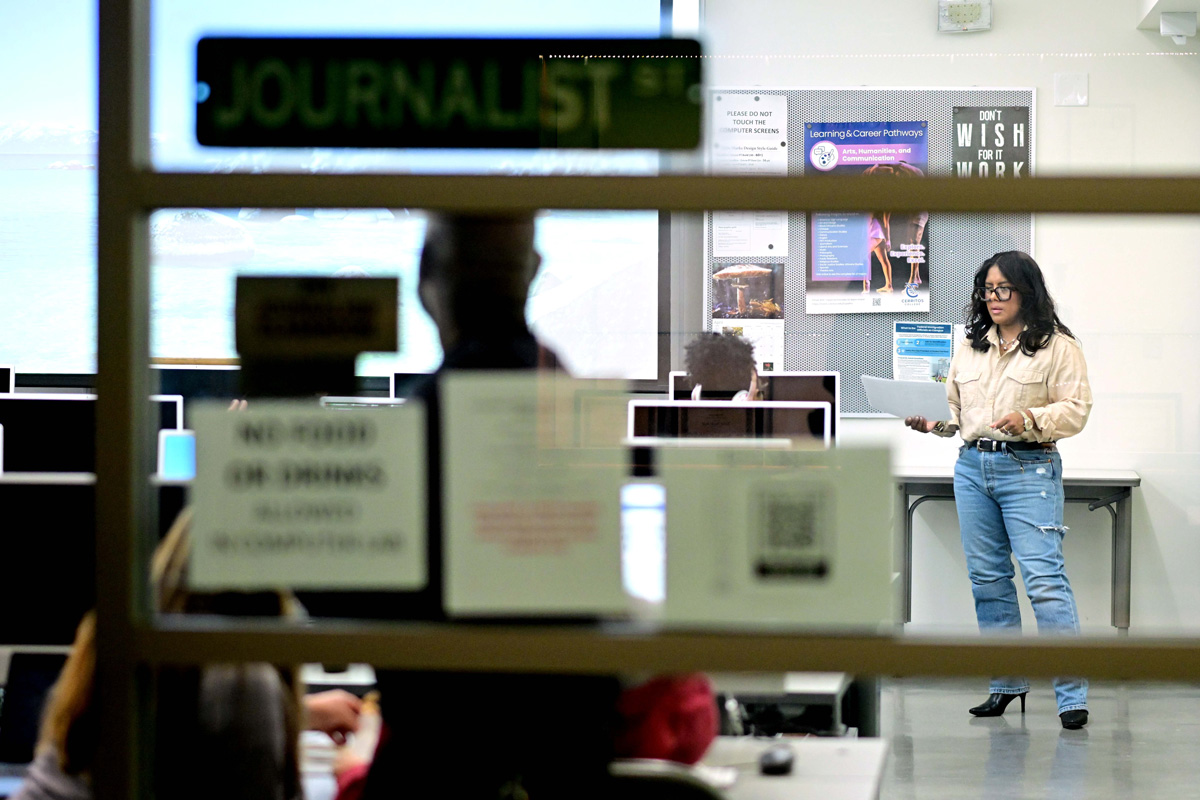
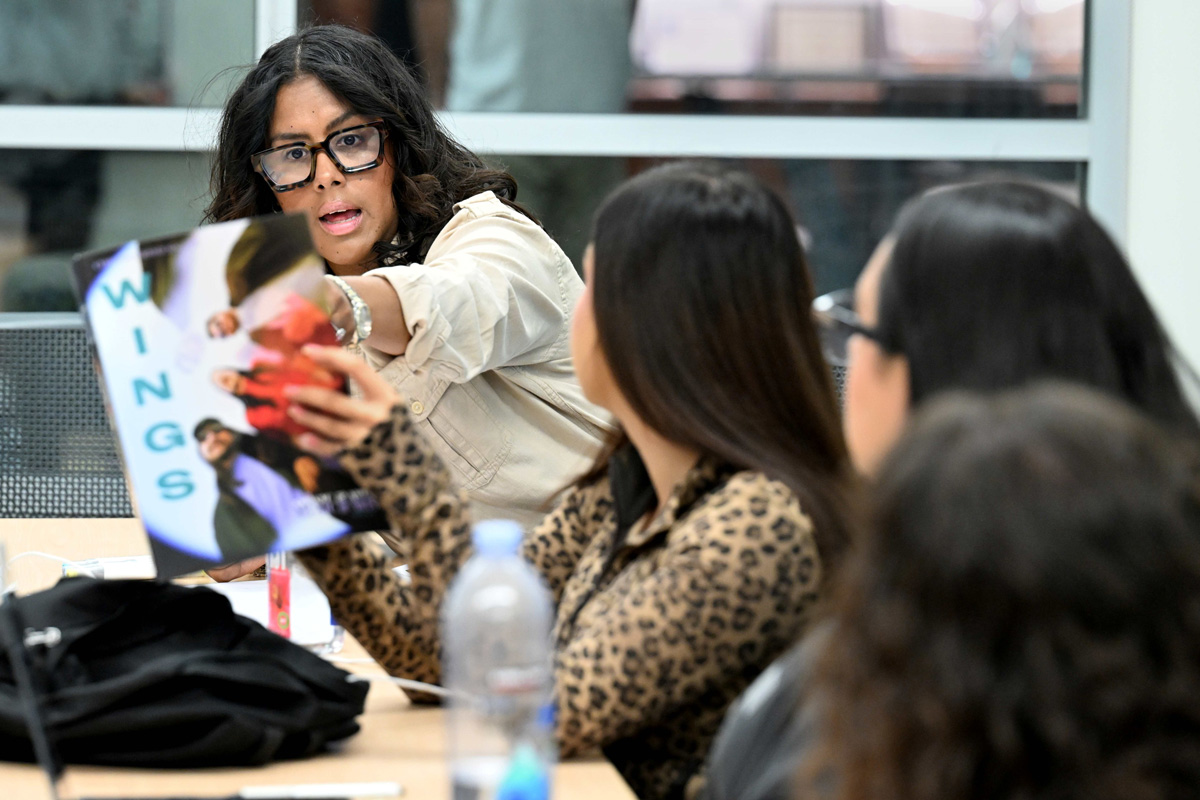
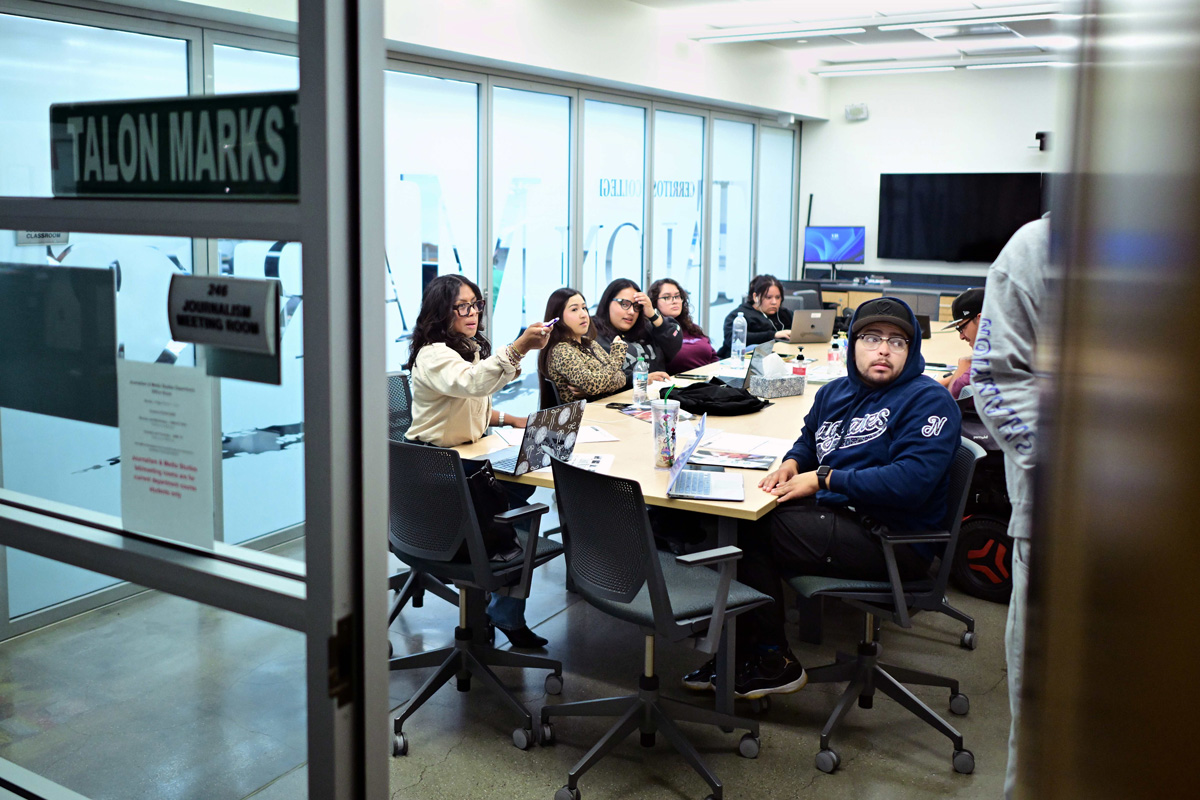
Beyond the project, Soriano said the internship has had a lasting impact on her career trajectory. She serves as editor-in-chief of Talon Marks, the student publication at Cerritos College, where she has led magazine projects and written multiple feature stories. Encouraged by mentors at LA Public Press, she is applying to transfer to USC’s journalism program, seeking scholarships to make the move financially feasible.
The newsroom’s partnership with Cerritos College grew organically out of conversations between newsroom leaders and faculty, said Christian Brown, department chair of Journalism and Media Studies at the community college.
Cerritos has been working for several years to develop an internship pipeline that channels underserved student journalists into local newsrooms through hyperlocal journalism grants, he said.
Brown said he has pressed his students to focus on telling stories that center vulnerable regions such as Southeast L.A. County.
“I trained them that way,” Brown said. “I’ve told them: ‘You’re going to be in the newsroom and you’re going to know in your core and your gut that somebody’s story is not being told here and we are not covering this equitably enough. I need you to be the person that raises your hand and says something. I’ve been teaching my students that for years now, so it is fulfilling for me to see that happened.”
Read more about the bilingual zine here:
https://lapublicpress.org/2025/07/how-to-survive-living-in-an-ice-occupied-neighborhood/
– Ben Poston