CCF Co-sponsors Summit to Plan Resistance to Attacks on Immigrants, Democracy

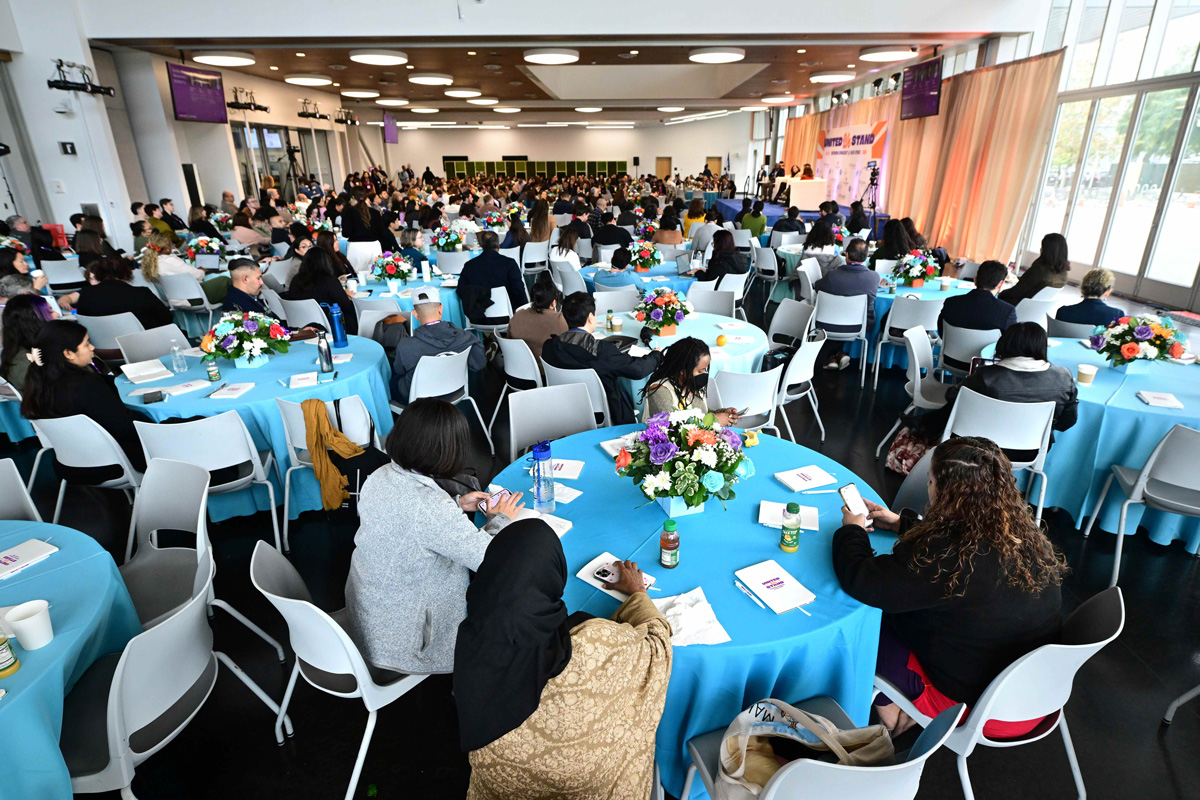
As violence against immigrants and peaceful protesters by federal immigration agents roils Minneapolis, more than 500 people recently gathered in Los Angeles to decry the authoritarian attacks and plan a collective path of resistance.
A daylong summit – United We Stand: Defending Democracy and Each Other – drew an exceptionally diverse group from across California and the nation, representing philanthropy, business, labor, law, faith, civil rights, immigrants and community nonprofits. They pledged solidarity, commitment and action to rise up in what many called a singular moment of crisis for Americans and reclaim the nation’s centuries-old rule of law, civil rights and democratic ideals.
In opening remarks, California Community Foundation President and CEO Miguel A. Santana said that widespread raids launched in Los Angeles by U.S. Immigration and Customs Enforcement agents last June were a precursor to the federal mayhem being unleashed by ICE today in Minneapolis. There, 3,000 federal agents have been deployed – one of whom fatally shot a 37-year-old intensive care nurse Alex Pretti.
Santana and other summit speakers said authoritarians bent on power often go after cities like Los Angeles first because they highlight what despots try to destroy: the strength of a multiracial democracy and culture of belonging. But Angelenos stood up to ICE, demonstrating a model for other cities.
“Angelenos came together in an unprecedented way, and we built a multi-sector coalition,” Santana said. “We have demonstrated that family separation is not acceptable, and that cruelty is not normal. Not here. Not now. Not ever.”
“Protecting our democracy demands a coalition as broad as the one we’re bringing together today,” he added. “Each one of you are here because you understand the urgency of this moment, and because you know that standing alone is not an option. Attacks on our immigrant communities are not isolated. They are attacks on democracy itself. When fear is used as policy and communities are targeted to test the limits of power, the harm reaches all of us.”
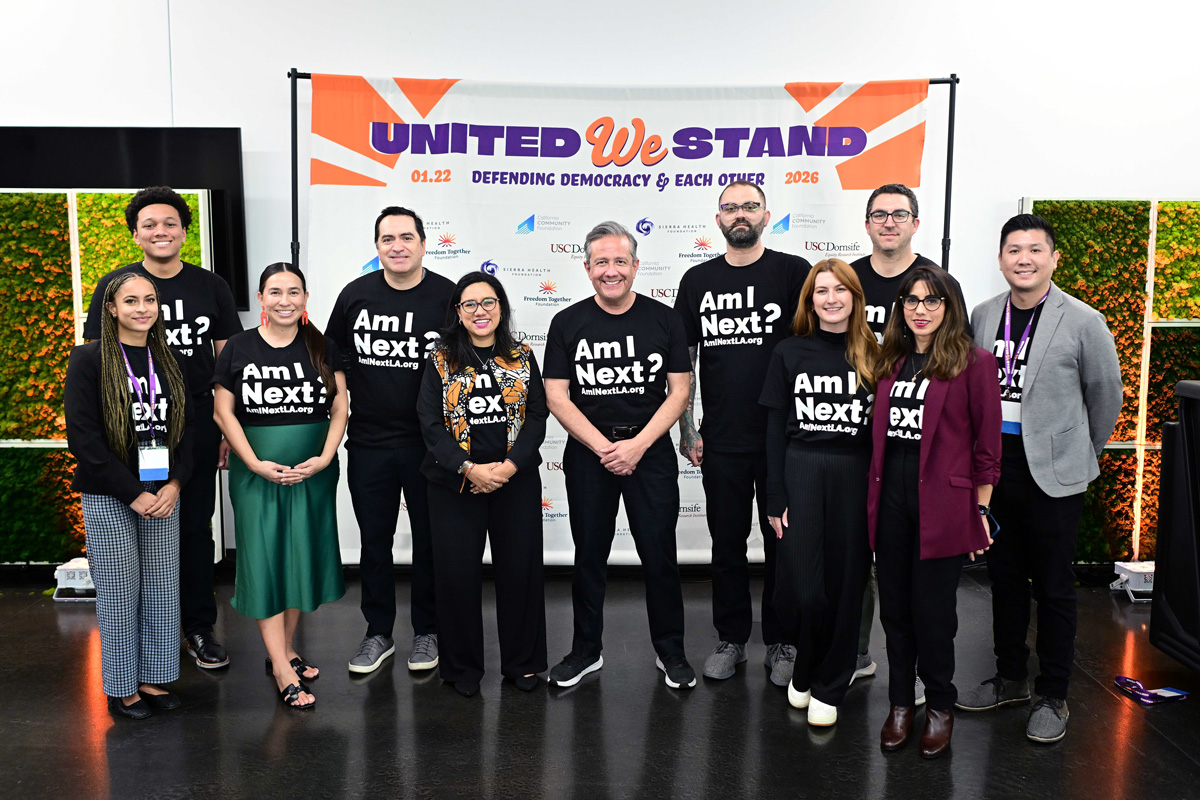
CCF co-sponsored the summit, along with the Sierra Health Foundation, Freedom Together Foundation and USC Equity Research Institute, at Los Angeles Trade-Technical College. The Jan. 22 gathering marked CCF’s sixth immigration summit, but foundation leaders responded to the moment by broadening its agenda to include issues of democracy and economic impact and widening outreach to bring in business and other sectors from beyond Southern California. For the first time, more than half of the participants came from outside Los Angeles.
Mary Leslie, president of the Los Angeles Business Council, said the federal intervention in the city was “undermining our business environment at a critical time where investment in our economy and in our people is critical.” She said Los Angeles draws strength from the region’s diversity, including immigrants representing more than 140 countries who play an indispensable role in powering the economy and should be welcomed to succeed.
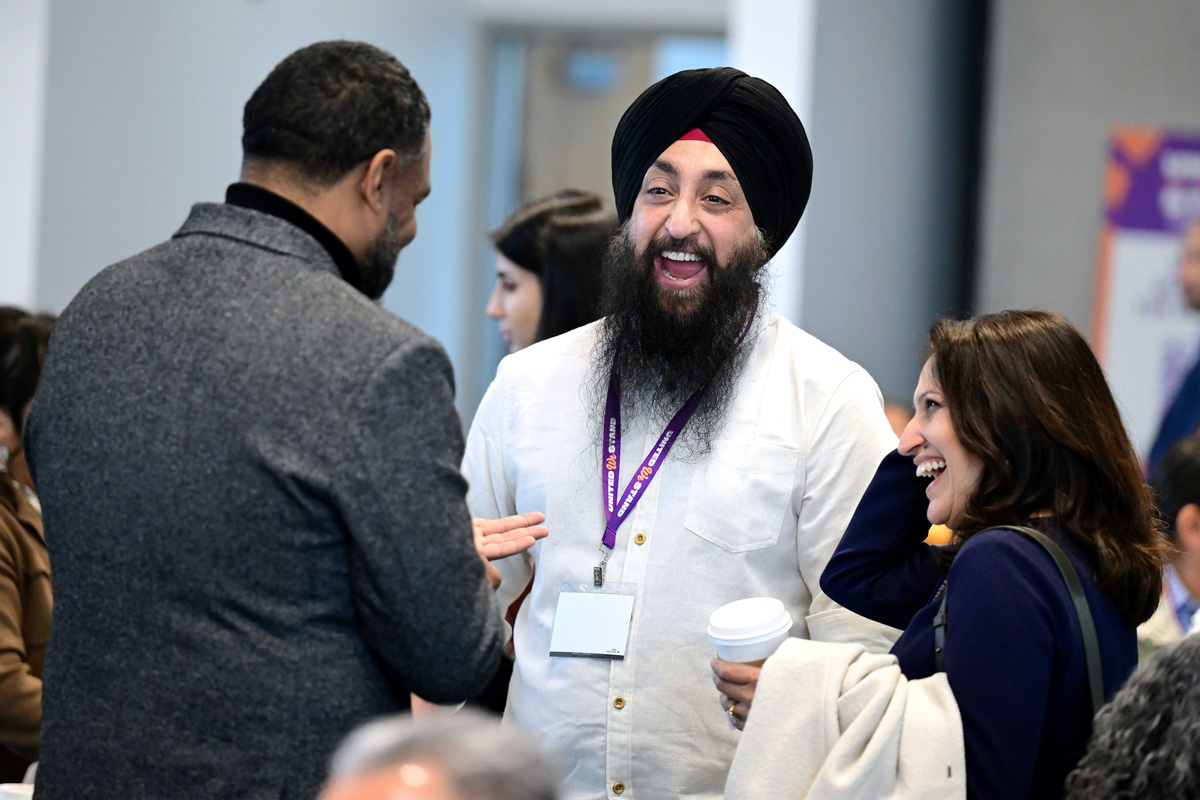
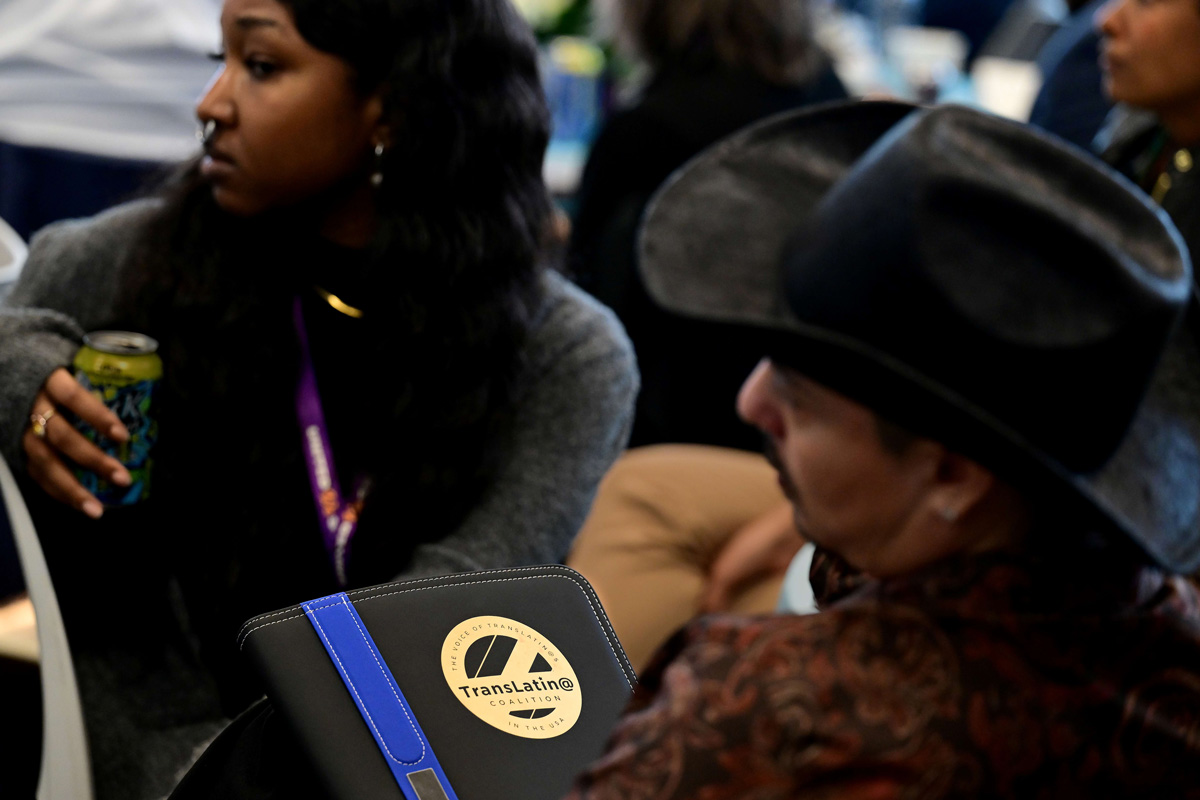
The summit explored the global rise in anti-immigrant sentiment and its ties to hate and authoritarianism, how movements across the world are pushing back against that trend and how people can and are fighting it in the U.S. Ambassador Nina Hachigian, an international affairs expert who served as U.S. ambassador to the Association of Southeast Asian Nations in the Obama administration and as the first Deputy Mayor of International Affairs for Los Angeles, said the global wave of authoritarianism began even before the current U.S. administration took power in 2025, sweeping Hungary, Turkey, Venezuela, India and elsewhere. Elected autocrats have acted out of the same playbook, she said, as they’ve closed independent media outlets, silenced opposition leaders, made courts less independent, used their power to enrich themselves and their cronies and attacked LGBTQ communities, immigrants and women.
The U.S. administration is “supercharging” the trend, she said, with brazen tactics even worse than those seen in Turkey or Hungary – such as sending militarized agents into cities.
But Hachigian also shared good news: people have thrown out autocrats in Brazil, Poland, Slovenia, Tunisia, Armenia and other countries. One main strategy, she said, was to build “really big tents” that unified groups not always in agreement but able to coalesce around the common goal against corruption, kleptocracy and incompetency.
Deepak Bhargava, Freedom Together Foundation president, shared four tactics that have been successfully used to defeat authoritarianism: nonviolent disruption, such as boycotts and work stoppages. Delegitimization, or making autocratic policies broadly unpopular. Recruiting defectors and leaders of key institutions to speak out, as Pope Leo XIV and the Roman Catholic Church have been doing. And offering alternatives to authoritarianism, such as a just economy and immigration system that work for more people.
“What we can take away is that authoritarian tactics travel across borders. So do the strategies for fighting back. We are not alone in this, and what we can do here will inspire the champions for democracy all around the world,” Hachigian said.
Eric Ward, executive vice president of Race Forward, said the current assault on immigrants and democracy should be understood as a backlash to 75 years of civil rights gains rooted in the Black radical tradition that “everyone, regardless of race, religion, gender, right, has the right to live, love, worship and work, free from fear and bigotry.” But he cautioned that progressive forces must deliver on actual benefits to people, such as affordable housing, to win them over.
“We have to show tangible radical changes that people can touch and feel in real time,” Ward said. “Otherwise, all we are putting forth are words.”
In other sessions, leaders representing immigrants, LGBTQ people, Black community members and others who are underserved examined how solidarity across movements can and must create a path to resist authoritarianism and rebuild a multi-racial democracy that protects everyone.
Angelica Salas, executive director of the Coalition for Humane Immigrant Rights, said truth-telling required acknowledging that some community members failed to object to immigration raids with a “not me” attitude – until it became evident that federal agents were taking not only violent criminals but were vastly expanding their targets to include U.S. citizens.
Amid cutbacks in federal funding and philanthropic support for communities targeted by the federal administration, such as immigrants and LGBTQ people, panelists said new ways to generate revenue are needed. One experiment is the Progressive Multiplier Fund, which helps nonprofits brainstorm and activate ideas to raise money – such as a water justice walking tour of the French Quarter in New Orleans, offered by a local nonprofit through Airbnb Experiences.

Another discussion centered on how to expand the anti-authoritarian coalition. Joseph Tomás McKellar, executive director of PICO California, a faith-based community organizing network, said demands for ideological purity have sometimes limited efforts to create a bigger tent.
“We have to reach not just the woke but the still waking,” he said, to wide applause.
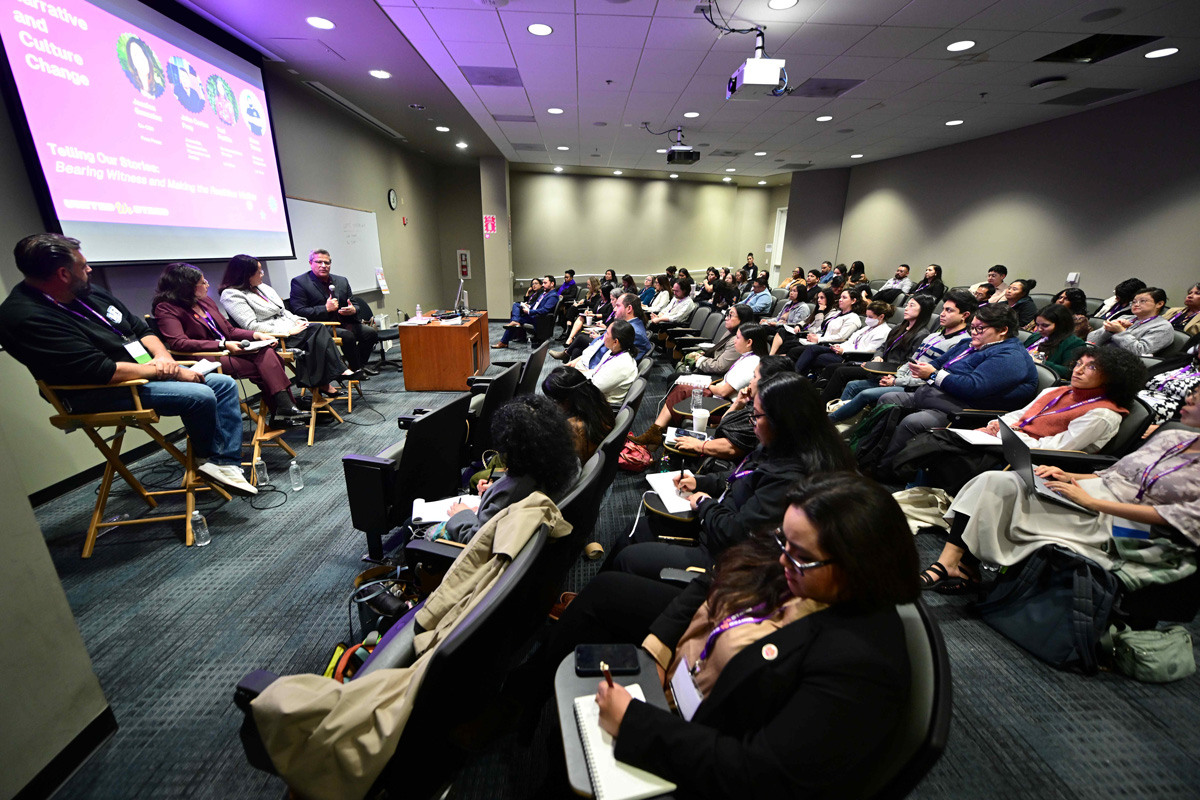
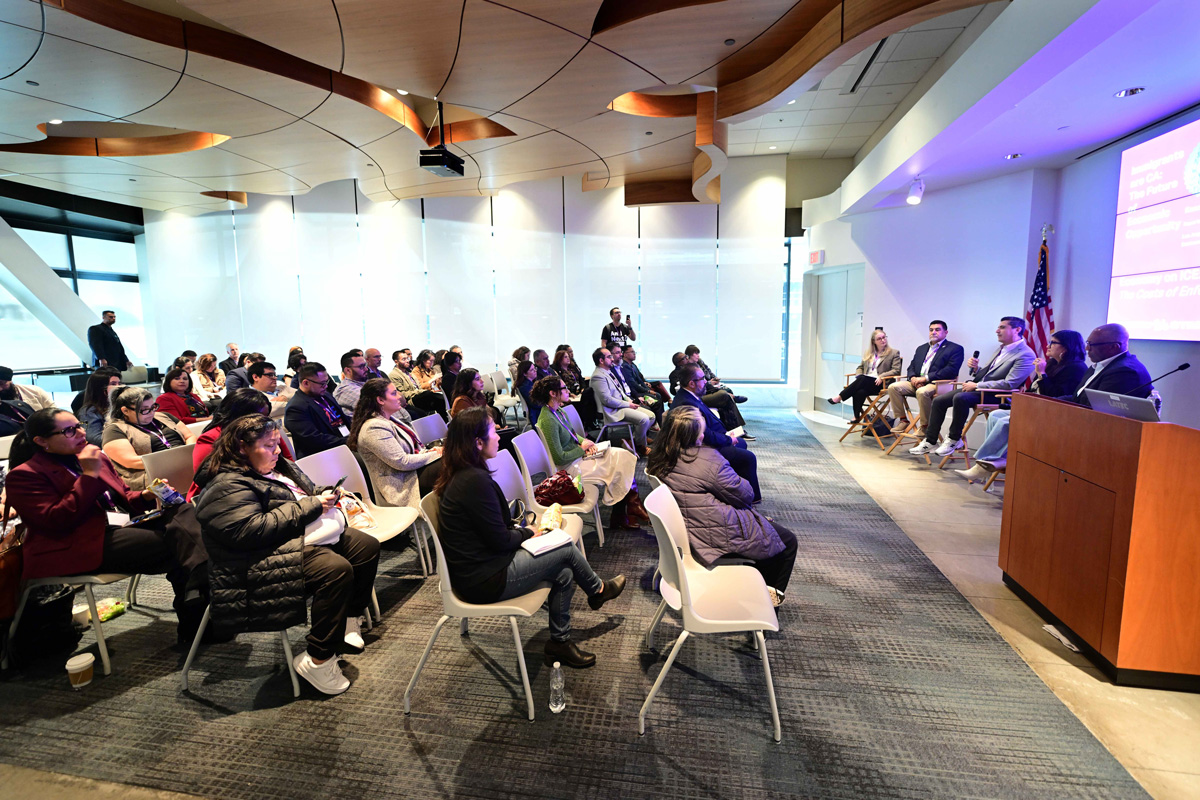
Breakout sessions took deeper dives into defending democracy in the courts; narrative storytelling to make visible the lives of those being harmed; voting rights and budget issues, and the economic impact of the federal raids.
Paulina Lopez, co-owner of the Guelaguetza Restaurant and Market, said business at her family’s acclaimed Oaxacan eatery plunged by 60% overnight after ICE launched its raids last June. But the close-knit employees all showed up – to cry together, to figure out how to prepare their families in case they were deported. Despite the economic challenges her three-decade old business is facing, she said, her community would not back down.
“What they want to do is shut us down,” she said. “We have to get up everyday and go in and continue to fight.”
A highlight of the day was a gubernatorial candidates forum, featuring Xavier Becerra, Antonio Villaraigosa and Betty Yee, focused on immigration issues. All candidates agreed that health care was a right for all, including undocumented immigrants, and outlined ways they would protect family stability, support mental health needs, ease community fears and fight back against federal funding cuts.
Manuel Pastor, director of the USC Equity Research Institute, summed up several key takeaways of the day. Dig in for a long-haul fight. Embrace your “crazy cousin” who disagrees with you and others missing from the big tent. Summon the courage and discipline to remain nonviolent. Lean into culture with a “poetry of solidarity” that creates more joy, music, storytelling. Care for others. Examine your personal calling in this moment and step up to follow it.
Participants traded notes and impressions at a closing reception, which featured a CCF-sponsored public art project protesting abusive federal immigration enforcement and raising the question for all Americans: Am I Next? Many said they felt inspired, invigorated and supported.
Darline P. Robles, a CCF board member and professor of clinical education at the USC Rossier School of Education said a sense of helplessness had transformed into empowerment. She said she learned that there are many ways to make a difference – write a letter, attend a City Council meeting, put up a yard sign.
“I left with more optimism,” she said.
Hussam Ayloush, executive director of the Greater Los Angeles Area office of the Council on American-Islamic Relations, said he was thrilled by the solidarity and unity of purpose – a stark contrast to the days after the 9/11 attacks, when his community felt isolated, alone and under siege.
“The best part of it is being reminded how many allies we have and how many good people there are,” he said.
Martha Sanchez, a Los Angeles Mission College instructor and L.A. City Council candidate, said she came to the summit because “I can’t stand anymore the attacks on every single person who looks like an outsider.”
“What I learned is that we are not alone,” Sanchez said. “We have people power. When people are united, they can turn the tables.”
– Teresa Watanabe