
For more than a century, CCF has worked alongside donors, nonprofits and communities to expand access to a good life for all across Los Angeles County.
Our five interconnected priorities reflect the conditions that make a good life possible for every Angeleno.
CCF connects philanthropy with community priorities, investing in organizations and partnerships that strengthen communities and expand opportunity across Los Angeles County.
CCF helps donors turn their charitable vision into meaningful impact, with personalized expertise and deep knowledge of Los Angeles County.
Explore stories of the people and organizations shaping Los Angeles County, along with the latest news and updates from CCF.
Adriana Bautista still can’t believe her Altadena home did not burn to the ground nearly two years ago, when hurricane-force winds whipped embers through the air and enveloped her neighborhood in a blizzard of black ash.
But she is running out of time – and money – to get her home back to its original condition before the embers singed her roof and contaminants permeated the insulation. Her family has shelled out tens of thousands of dollars in repairs, but her insurance company has denied her claims for coverage, she said, asserting it doesn’t cover “pollution cleanup.” And a deadline to file legal claims against insurers for losses caused by a disaster is drawing near.
To highlight potential pathways for help, the California Community Foundation and partners are launching an educational campaign urging fire survivors to take action before the window to do so closes. Test your home now. Document everything in writing. Seek legal help before time runs out. State law generally sets a 24-month deadline for property owners to sue insurers over disaster-related losses – just three months away for survivors of the January 7, 2025 Eaton and Palisades fires.
“You have rights and it’s not too late to act,” CCF President and CEO Miguel A. Santana said at a news conference this week. “A home could survive the flames and still be damaged. You deserve to know whether your home is safe, what needs to be done, and who is responsible. No one should go home to bed wondering if they’re safe.”
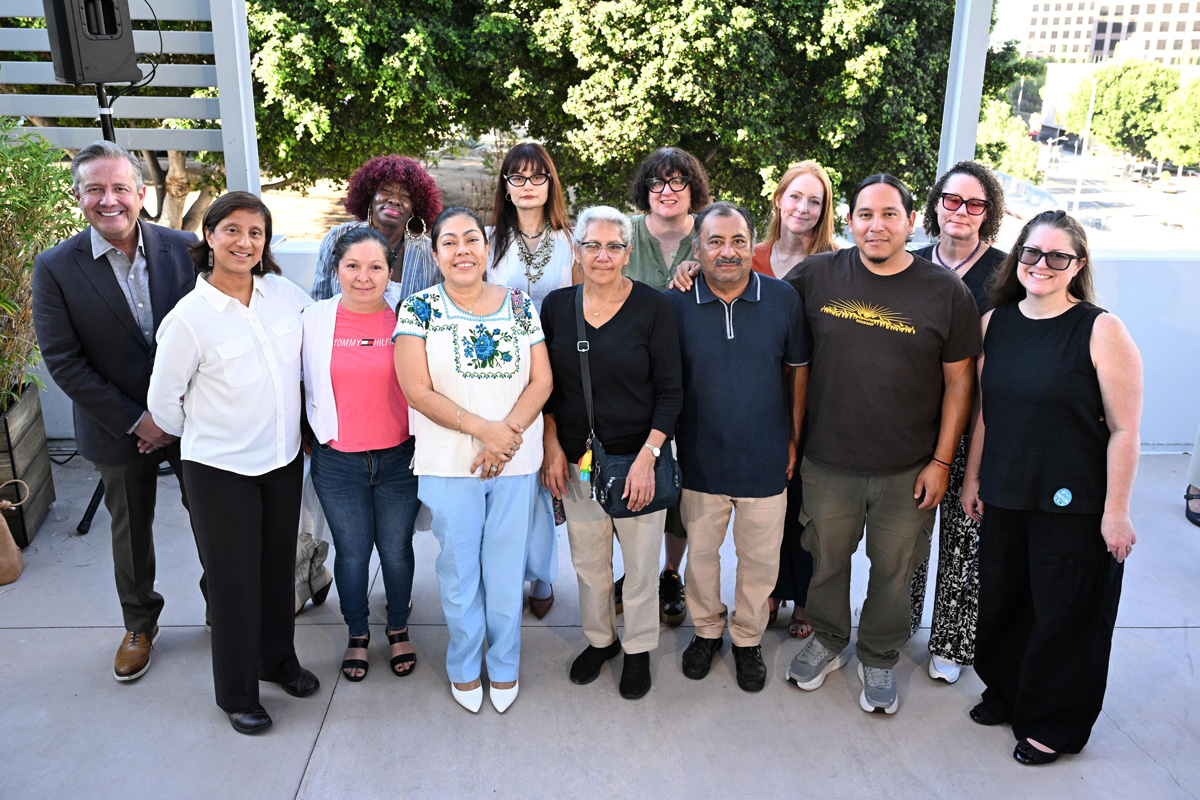
Santana was joined by Los Angeles County Supervisor Kathryn Barger and L.A. Mayor Karen Bass, along with environmental researchers, community organizers, legal aid attorneys and survivors. Bass told insurance companies to “step up, investigate claims thoroughly, provide appropriate testing and pay for full remediation covered by your policies.”
“You took the premiums. Now honor the policy,” Barger said.
A new campaign website, standinghomes.la, provides survivors with a step-by-step process of how to take action, along with a timeline, resources and data on the health threats posed by contaminants still embedded in homes and surrounding outside areas.
An estimated 13,000 survivors of the Eaton and Palisades fires whose homes are still standing have filed claims involving smoke damage with insurers, according to a state report, and many have reported complaints about denials, the scope of investigation, the extent of remediation, and whether homes have been sufficiently restored to pre-loss condition.
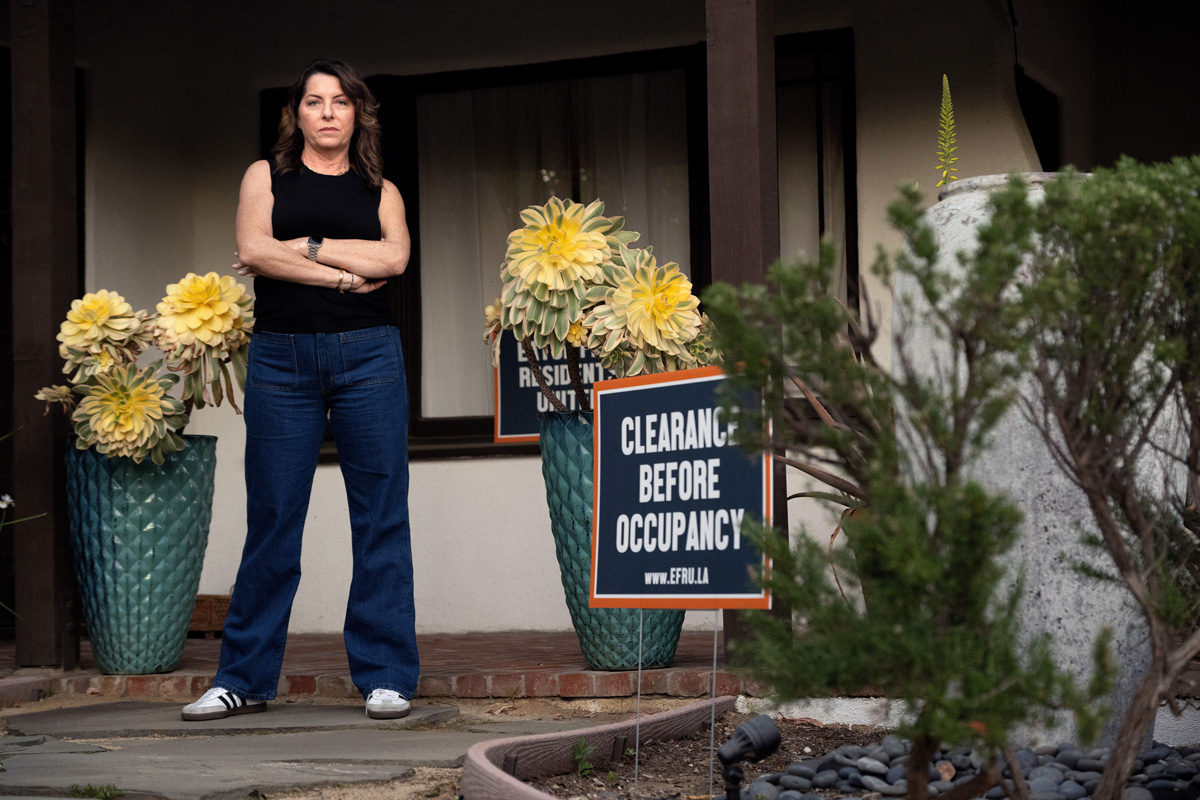
Nicole Maccalla, a USC faculty member and director of data science for Eaton Fire Residents United, said her nonprofit created a contamination mapping project involving hundreds of standing homes that had been inundated with smoke and ash from thousands of burned cars and structures. Toxic chemicals detected included arsenic, asbestos, beryllium, chromium, lead, lithium and zinc. Even after one round of remediation, she said, the majority of homes were still not safe to live in – including six of 10 that remained uninhabitable due to lead and/or asbestos.
Kari Nadeau, dean of the UCLA Fielding School of Public Health, added that a consortium of more than 10 universities collaborating on the L.A. Fire Health Study identified toxins whose potential long-term health effects remain unanswered and unaddressed. One of them, she said, is benzene, a known carcinogen.
But survivors have faced uncertainty over what should be tested and remediated and when their homes are safe to live in. Many are also mired in lengthy battles with some insurance firms over what should be required to cover.
Santana and others highlighted new state laws that address those issues, offering stronger protections to survivors. Last month, Gov. Gavin Newsom signed into law the groundbreaking AB 1642, which directs the state to set the nation’s first scientific standards for testing and remediating homes damaged by wildfire. He also signed a companion bill, AB 1795, which requires insurers to pay for necessary testing and sampling, restore covered homes to pre-loss condition and continue covering additional living expenses until the home is cleared for occupancy.
The laws take effect on January 1, 2027. Legal aid attorneys are working to see how the laws can be used to help survivors whose losses occurred before that date in the Eaton and Palisades fires.
Nicholas M. Lampros, directing attorney of the Homeowner Protection Team of Bet Tzedek Legal Services, said every case is different and that pathways for relief for both current and future wildfire survivors will depend on myriad factors. The Los Angeles-based nonprofit, which provides free civil legal assistance to low-income individuals and families, is supported by CCF.
“The big takeaway is that these are very individualized questions,” he said. “I encourage people to get legal help to assess their situations sooner rather than later to see what can be done now and after Jan. 1.”
Blanca Perez lost her dress-making business in the Eaton fire, but the 47-unit Altadena apartment building where she lives was left standing – though it was inundated with ash and smoke. Her own unit was remediated by trained specialists with the Pasadena-based National Day Laborer Organizing Network, a CCF grantee. But she worries about her family’s health because the landlord has not initiated testing or cleaning for most of the other units or remediated outdoor spaces. People can track contaminants into her home, she fretted.
She is hopeful that the new laws will help – and that the looming deadline for legal claims will push her landlord to act.
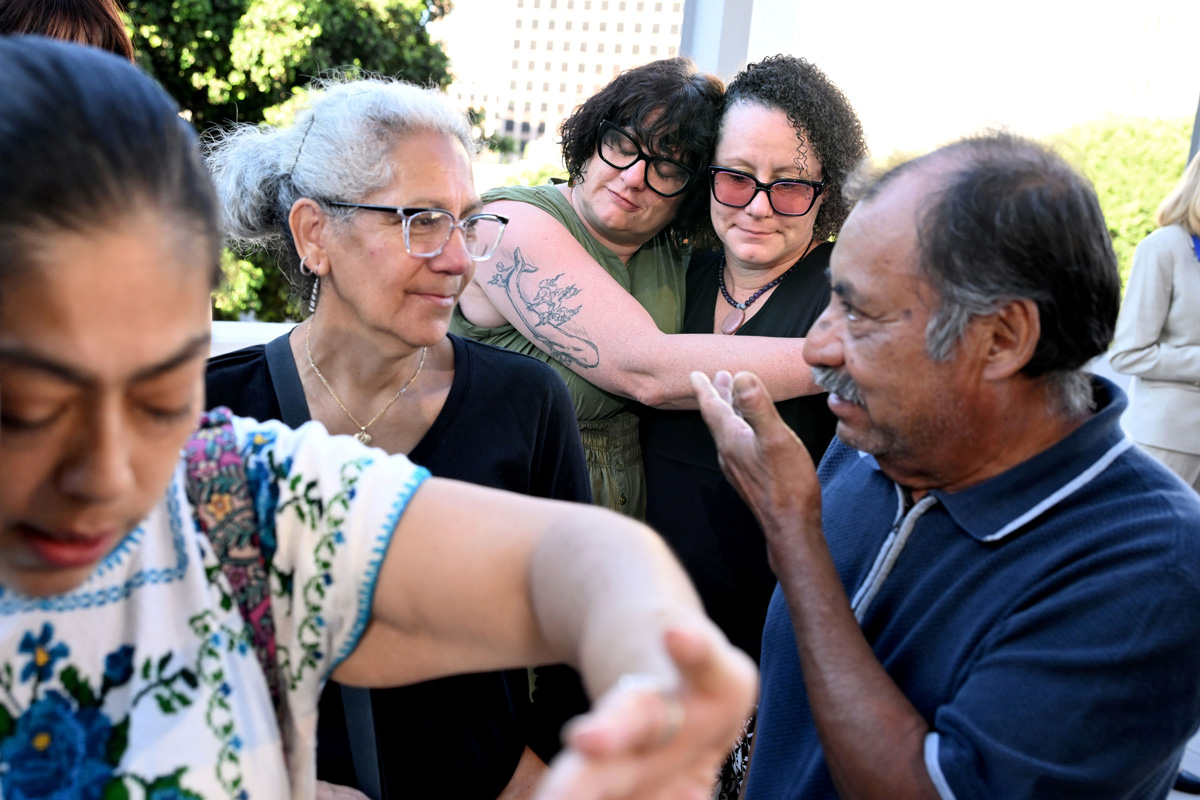
Bautista said she is gratified that the laws will better protect future survivors regardless of her own situation. She was one of many survivors from Dena Rise Up, along with Eaton Fire Residents United and other groups, who successfully lobbied in Sacramento for the changes.
“It really takes a lot of people power to move something like this – the unity of people sticking together, the community solidarity,” Bautista said. “We have to keep pushing because we’re protecting our future generations.”
– Teresa Watanabe